English



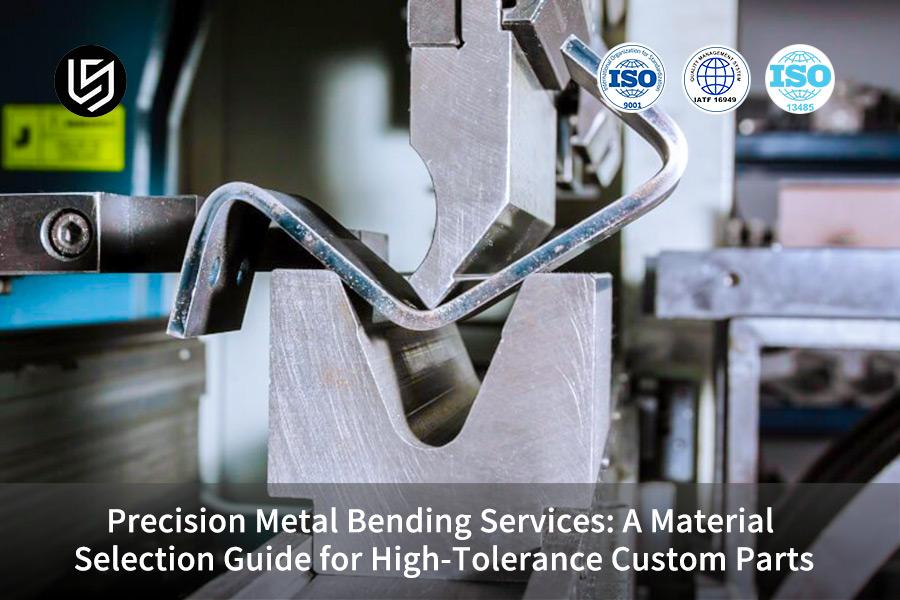
Precision metal bending services are commonly associated with costly issues in terms of post-bending dimensional drifts and material fractures, which ultimately result in batches of metal parts failing automated assembly processes. This is a result of dynamic variables such as material batch differences and bend deduction, which are commonly ignored by standard material suppliers. LS Manufacturing, on the other hand, offers a solution through its in-depth knowledge of material science and DFM, which enables a deterministic metal bending system with unwavering precision for continuous 24/7 processes.
Our solution offers exclusive material parameters through simulation-based stress analysis, which are exclusive to materials such as 1018 steel, as well as aerospace-grade aluminum metal bending. We demonstrate real-time compensation using pressure sensors, which enables locking in metal bending accuracy for high hardness levels within a ±0.05mm tolerance range. The first step in achieving high tolerance assembly is a thorough audit of metal micro-behavior after cutting, which forms the basis of our material and process guidance.
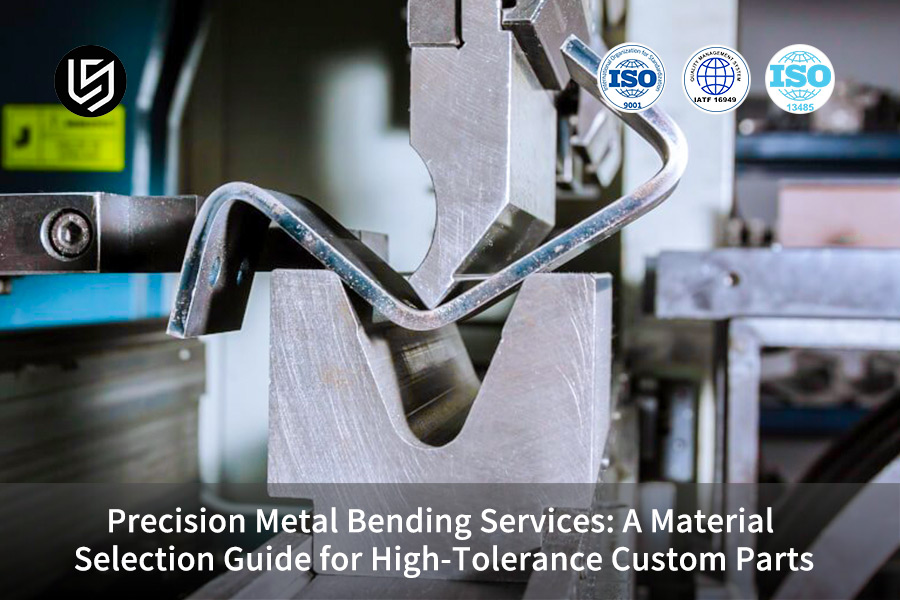
Precision Metal Bending Services: Material Selection Quick-Reference
| Material Type | Key Bending Characteristic | Common Applications |
| Cold Rolled Steel (CRS) | Predictable springback; suitable for tight tolerancing. | Brackets, enclosures, structural supports. |
| Stainless Steel (304/316) | High springback; work hardens; requires accurate tooling. | Medical devices, food processing, marine hardware. |
| Aluminum (5052/6061) | Softer, more formable; scratch-prone; 5052 has higher bendability. | Aerospace frames, electronic enclosures, heat sinks. |
| Galvanized Steel | Crack risk on Zinc finish at outer bend radius. | Outdoor fixtures, HVAC parts, electrical enclosures. |
| Pre-Finished/Coated Steel | Risk of finish damage on parts. | Appliances, consumer products, architectural parts. |
| Titanium | Very high springback; expert skill level required. | Aerospace, medical implants, sports equipment. |
| Result: Dimensional Accuracy | Accuracy tolerances meet accurate angular and positional requirements. | Ensures a seamless fit in assembly. |
| Result: Material Performance | Bending process maintains material integrity. | Ensures long-term performance in metal bending application. |
We help you resolve the material selection problem for precision bending of high-tolerance parts. With our advice, you can select the best material for your precision bend that meets your part's performance and appearance demands. This expertise ensures the integrity of your custom parts, giving your finished product the strength and lifespan it demands.
Why Trust This Guide? Practical Experience From LS Manufacturing Experts
Unlike other guides on metal bending, this one is written by experts, not theorists. At LS Manufacturing, we live in a world of constant conflict between high-strength metals and tight tolerances. Precision is not optional. The integrity of a bent piece for an aerospace engine or a housing for a medical device has serious consequences.
This guide on precision metal bending services offers practical information on material selection based on our hands-on expertise. We also use information from credible sources such as the Aluminium Association (AAC) and NIST Materials Data to aid our strategies for materials such as aluminum and stainless steel. This guarantees our bending parameters offer precise and accurate accuracy for custom parts requiring high tolerances.
Our advice is based on our experience of overcoming problems such as springback, fracture, and ensuring accuracy. We have also learned from our failures and successes to perfect our process for complex parts. The information shared in this guide is what we use every day to achieve precision and help you choose materials and avoid common problems in your projects.
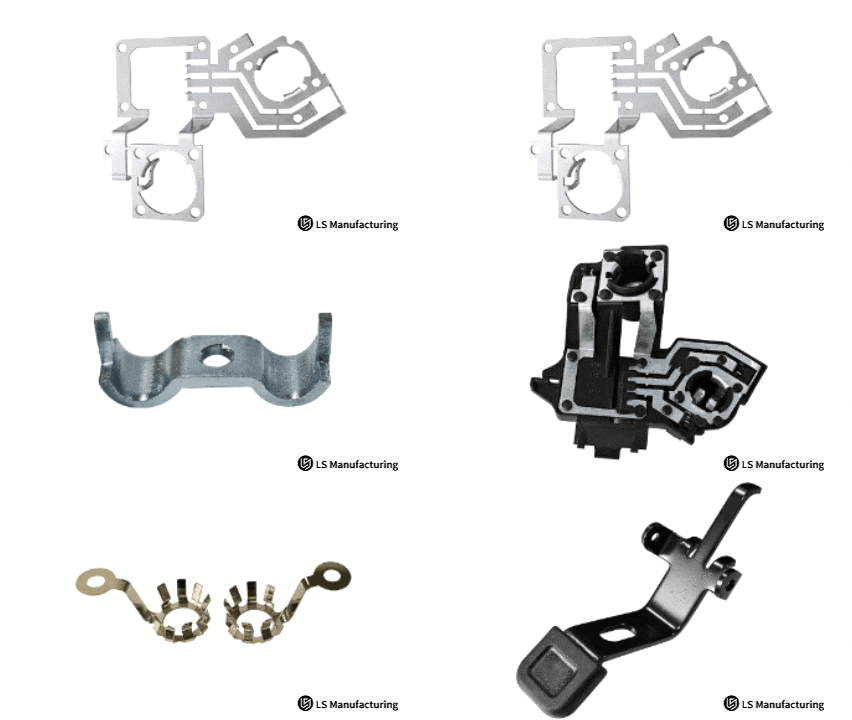
Figure 1: Preparing laser-cut 6061 aluminum sheets for bending into electronic enclosure or chassis components.
Why Is A Precision Metal Bending Services Matrix Essential For Reducing Your Total Assembly Costs?
One of the main cost drivers in the fabrication of high-tolerance enclosures and chassis is the inaccurate bends, which can cause fit-up and welding difficulties. By using the data-driven metal bending, this variable process can be transformed into a deterministic one, which can directly reduce labor and rework costs. The main steps to achieve this involve:
Integrating Real-Time SPC for Bend Angle Control
In this step, Statistical Process Control (SPC) is used to control the springback coefficient of every batch of materials in real-time. This enables the dynamic control of the bend deduction in the CNC program before the start of production. This way, the first part and the thousandth part can be made to the same stringent angular tolerances, laying the groundwork for fit-up.
Quantifying the Impact of Tolerance Stack-Up
The cost of poor bending compounds. For example, improving bend angle consistency from ±1.0° to ±0.2° through our precision metal bending services can save 35% in robot recalibration and fixture adjustment time. Precision in high tolerance metal bending eliminates gaps and misalignments, thus enabling faster automated welding without human intervention.
Leveraging a Material-Specific Forming Database
Our employ a proprietary database of forming parameters for different materials ranging from aluminum to high-strength steel. This scientific approach, employed in every custom sheet metal bending project, dictates the optimal tooling, tonnage, and speed required for the job. This science-based approach to custom sheet metal bending prevents micro-fractures in sensitive materials and controls springback in high-strength materials.
Enabling Design for Efficient Manufacturing (DFM)
From the design phase, we can evaluate the parts to ensure assembly cost optimization. We can also recommend the best bend sequence, radii, and grain direction to ensure the maximum rigidity and ease of assembly. By working together early on, using the expertise gained from our sheet metal bending services, we can eliminate designs that are hard to fixture and/or weld, thereby "locking in" the efficiency benefits early on in the process before any metal is even cut.
This technical brief has shown how true cost reduction is actually achieved through predictability in the process, not through trying to negotiate the cost of individual pieces. Our methodology, based on quantifying the process control and our understanding of the material sciences, is the deterministic input required to drive the assembly lines. It is this methodology which can turn the process of automated metal bending into a cost reduction element of your value chain.

How Can A Custom Metal Bending Services Partner Mitigate Springback Risks In High Strength Alloys?
The springback problem, particularly in high-strength alloys, is a challenge that affects accuracy and reliability. This document presents a deterministic engineering approach to accurately forecast and compensate for springback, thereby reducing it to a controllable variable. This approach is based on three pillars:
Employing Advanced Dynamic Compensation
- Integrated CNC Adjustment: Leveraging the 6-axis press brake dynamic crowning system to provide real-time calculated counterforces.
- Data-Informed Programming: Leveraging material databases to pre-compensate for the exact yield strength of the material batch.
Implementing a Data-Driven Forming Strategy
- Optimized Parameter Selection: For 2.0mm stainless steel, the inside radius is set to 1.5t to prevent micro-cracking during custom metal bending services.
- Calibrated Over-Bending: Applying an exact degree of over-bend, as determined through test data, to arrive at the final desired angle.
Applying Proactive Design for Manufacturability (DFM)
- Early Technical Collaboration: Delivering high tolerance metal bending knowledge to determine the best sequence for bending operations and grain direction.
- Prototype Validation: Testing the first article parts under load to empirically validate the final production recipe.
This process proves that controlling springback is an exact science. By incorporating predictive CNC compensation, optimized custom metal forming services parameter definition, and proactive DFM, we ensure the integrity of your parts before they are finished. This eliminates the need for correction operations on your complex metal bending project, ensuring reliability in your final product.
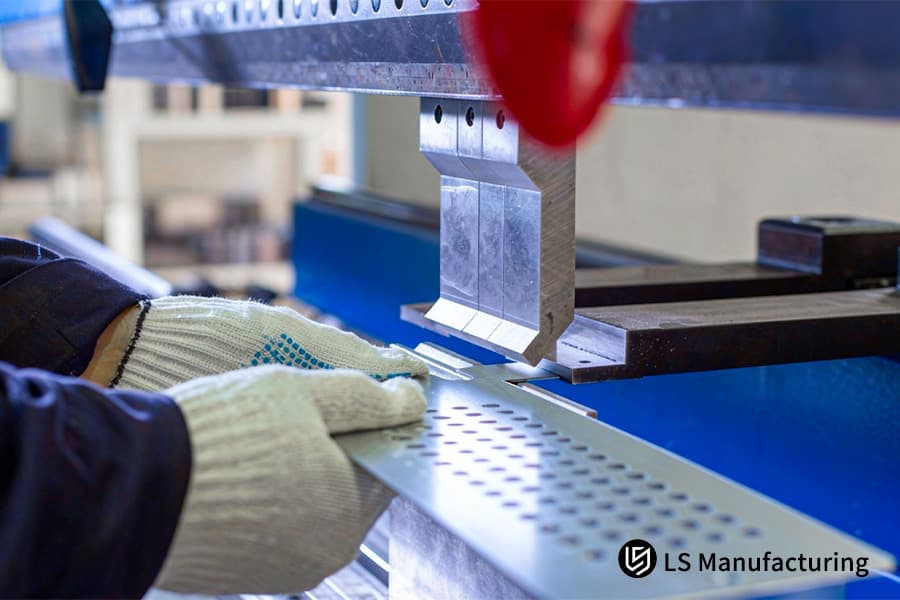
Figure 2: Bending a perforated carbon steel strip for industrial ventilation grilles or filter panel frames.
Which Parameters Define A Professional Metal Bending Material Selection Guide For Complex Custom Components?
To determine the most appropriate material for complex, tolerance-critical parts, there are many factors to balance, such as formability, strength, and material integrity after the process and any subsequent treatments. To this end, a general list of properties is not enough, and a professional metal bending material selection guide needs to provide comparative, data-driven decision-making criteria to predict process outcomes and material performance, directly relating material properties to manufacturability and usage. The following table represents a summary of key comparative properties for common materials in metal bending services for custom parts.
| Material Category | Key Selection Parameter for Bending | Data-Driven Insight & Typical Value |
| Cold-Rolled Steel (e.g., 1018) | Elongation at 90° Bend | High formability, with a minimum inside radius (R) of 0.5t, where t is thickness, without material cracking. |
| Hot-Rolled Steel (A36) | Surface Decarburization Impact | Scale on hot-rolled steel can negatively impact surface quality, with cleaning processes or a pickled and oiled surface finish required. |
| Aluminum 6061-T6 | Elongation vs. Bend Angle | Lower elongation rates, ~10-12%, require a greater value of R; for 90° bends, R ≥ 1.5t is recommended. |
| Titanium 6Al-4V | Springback Factor & Work Hardening | Extreme springback and work hardening require greater over-bend and precision metal forming services. |
| Galvanized Steel | Coating Integrity Post-Bend | Coating on the outer radius can micro-crack; a powder coat over the bend is recommended if in a high-corrosion application. |
| Stainless Steel 304 | Work Hardening & Tooling Marks | Prone to galling; tooling should be polished or hardened for complex metal bending. |
This guide has shifted the selection of materials from a theoretical exercise to a risk mitigation and optimization methodology. Through these comparative factors, engineers can proactively solve for various challenges in advanced metal bending processes, such as fracture, work hardening, and springback. This information-driven approach, critical metal bending, will allow engineers to select materials that will ensure first-pass manufacturability, performance, and cost savings in competitive markets.
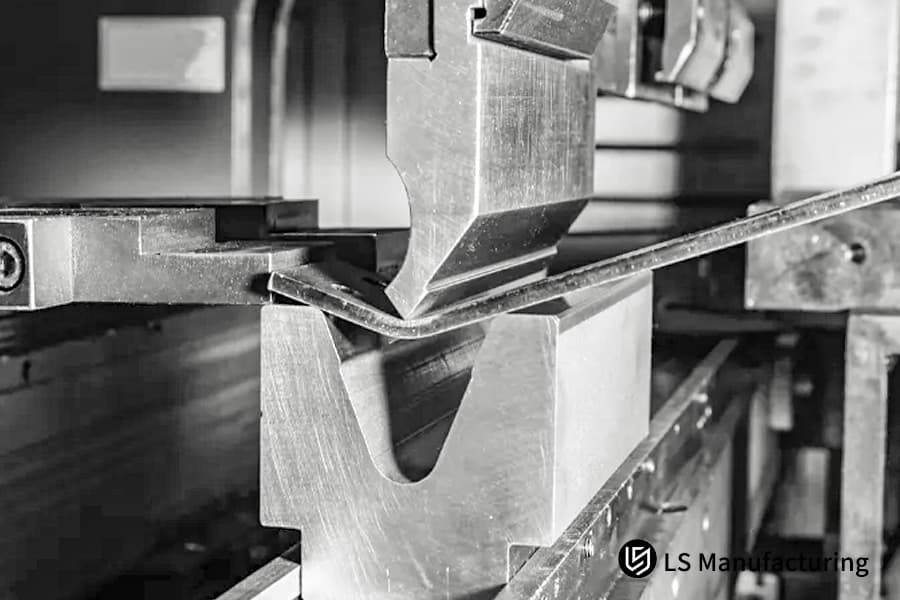
Figure 3: Bending a thin aluminum sheet into an angled part for aerospace equipment housing with high tolerance.
Why Is High Tolerance Metal Bending The Key To Long Term Structural Stability In Medical Device Housings?
For medical device housings, long-term performance relies heavily on the ability to maintain structural stability, which, in turn, is driven by initial forming precision. Any compromise in flatness or surface integrity, caused by bending, can have serious implications in terms of seal failure, internal misalignment, and particulate issues. This can be achieved by employing a process that focuses heavily on the preservation of the material and deterministic dimensional control:
Implementing No-Mark Bending for Critical Aseptic Surfaces
We utilize specialized polyurethane die shoes to ensure that there is no surface galling or scratching of the material, which can be either stainless steel or aluminum. This controlled force precision metal bending services process ensures that the original surface roughness remains intact, which in turn ensures that the housing can be subjected to stringent cleanability and sterilization procedures.
Maintaining Extreme Flatness for Internal Component Alignment
In order to achieve precise optical or sensor module registration, we manage springback to maintain flatness tolerances within 0.1 mm/m. This is done through a multi-stage high tolerance metal bending sequence that relieves internal stresses, along with a measurement procedure verified with a laser after each forming step. This ensures that the housing provides a perfect datum for internal assembly.
Ensuring Seamless Corner Integrity for Reliable Sealing
The corners' geometry after a metal bending process is an important factor to consider, especially for the gasket and weld sealings. With our custom metal forming services, inside radii and bend allowances are carefully considered to prevent thinning and micro-fractures in the metal, especially in the area where bending occurred. This process ensures that the grain structure of the metal is not disrupted, allowing for a strong corner area that will not fail even after sterilization procedures are conducted.
The process described above is a reflection of our company's approach to the problem of creating a durable product. The inclusion of surface-preserving medical-grade metal bending, stress-controlled flattening of the metal, and corner integrity is a solution to the basic problem of transforming raw metal into a sterile and stable base for the performance of critical medical devices.
How Do Custom Metal Forming Services Leverage DFM To Prevent Material Fracture In Tight Radius Bends?
Material fracture in tight radius bending occurs because of tensile stress, which exceeds the elongation capacity of the material. This is one of the most common and costly issues in custom metal forming services. However, Design for Manufacturability intervention, which is a critical necessity, can help in averting this event. Our methodology can help in converting this hazardous process into a controlled event:
Conducting Predictive CAE Forming Analysis
- Simulating Metal Flow: Using a finite element analysis tool to visually depict areas of stress concentration and failure.
- Identifying Critical Parameters: Determining the precise minimum bend radius (R) for a specific alloy and temper, rather than depending on generic guidelines.
Implementing Strategic Stress-Relief Features
- Designing Relief Notches: Adding notches or tabs to the termination points of the bending process to interrupt the natural progression of stress, which would otherwise lead to tears.
- Incorporating Corner Reliefs: Defining small relief holes or slots in areas where two bend lines intersect in complex metal forming operations, avoiding material overlaps.
Optimizing Blank Layout and Grain Direction
- Aligning Bends with Grain: Making the bend line perpendicular to the rolling direction of the material to achieve maximum ductility, which is vital in precision metal forming services for aluminum.
- Adjusting Blank Geometry: Changing the shape of the metal part to allow for smooth flow of the material into the die, avoiding areas where material thinning can happen.
Validating with Prototype and Process Parameters
- Executing a Forming Trial: The production of the first-article part from the actual material batch to validate the simulation and DFM adjustments.
- Finalizing the Recipe: The locking in of optimal parameter sets for the press brake, ensuring repeatability in actual production.
This DFM process eliminates the fracture risk at the fundamental level. The simulation, the DFM, and the optimization of the grain direction work together to provide first-pass success rates above 99.5% for 6061-T6 and other metals through our custom metal bending services, particularly tight-radius metal bending, thus avoiding costly high-value parts and ensuring the structural integrity required for mission-critical applications, making an otherwise unpredictable process deterministic.
What Quality Audit Standards Should You Expect From Precision Metal Forming Services Providers?
In the world of high-value metal bending, quality must be an objective aspect that is data-driven, an integral part of the process. Trust must be earned through an unambiguous evidence chain that is capable of withstanding the most rigorous and exhaustive supply chain auditing process. This document outlines the basic inspection procedures that quantify the distinction between an adequate supplier and an adequate precision metal forming services provider.
| Audit Stage | Standard & Methodology | Quantifiable Output / Metric |
| Incoming Material Verification | Positive Material Identification (PMI) utilizing a Handheld X-ray Fluorescence (XRF) analyzer. | Material grade certification and alloy composition report to ASTM/AMS specifications. |
| In-Process Dimensional Control | Statistical Process Control (SPC) utilizing real-time laser measurement technology during the press brake operation. | Process Capability (Cpk) index > 1.33 for critical bend angles and lengths. |
| First-Article & Final Inspection | Comprehensive 3D scanning utilizing a Coordinate Measuring Machine (CMM). | Digital First Article Inspection Report (FAIR) with full GD&T conformance analysis. |
| Surface & Integrity Check | Visual inspection in accordance with approved sample parts, precise measurement of critical flatness. | Documented surface finish (Ra) within spec, flatness within spec (e.g., <0.1mm/m). |
| Documentation & Traceability | Detailed data pack specific to each lot: mill certs, SPC charts, full CMM report. | Digital Thread for each part, offering full audit readiness. |
This level of audit detail changes quality from a statement of fact to a demonstration of fact. We offer a full digital thread of conformity, solving the key problem of proving quality consistency for high tolerance metal bending. This metal bending solution offers the hard evidence required for compliance in heavily regulated industries. It removes risk from the supply chain, guaranteeing each part meets the standards required for precision metal bending services.
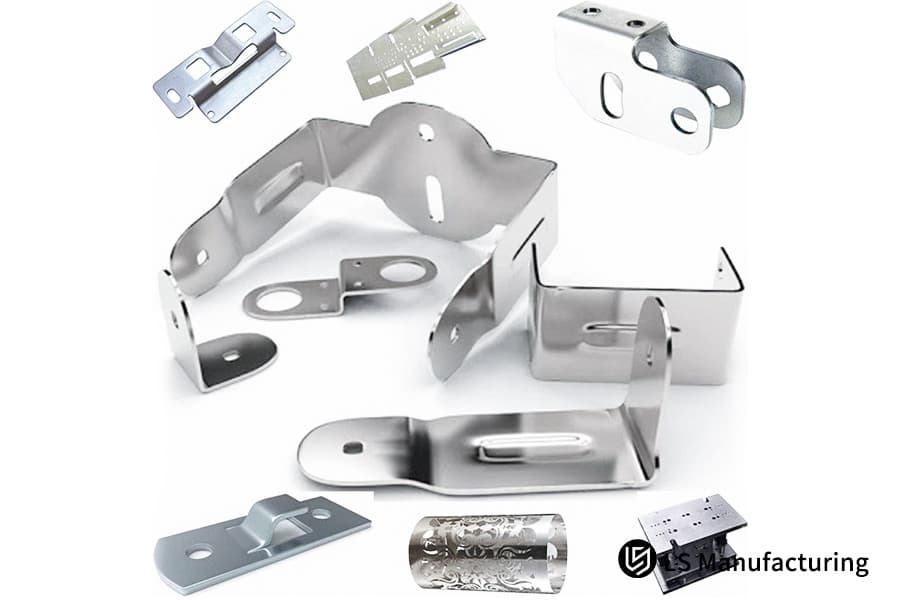
Figure 4: Measuring bent 304 stainless steel brackets for precision fit in industrial automation system assembly.
Why Are Sheet Metal Bending Services More Cost Effective When Integrated With Automated Laser Pre-Cutting?
Traditionally separate, laser cutting and sheet metal bending services create hidden costs through handling, re-fixturing, and cumulative tolerancing errors. An integrated manufacturing strategy solves this by using the laser not just to cut blanks, but to create intelligent features that enable faster, more accurate forming. This approach unlocks significant efficiency and precision gains:
Deploying Strategic Pre-Cut Features for Self-Locating Parts
We program our high-power fiber lasers to cut precision registration notches and bend reliefs simultaneously with the part profile. These features act as a mechanical guide on the press brake, allowing the operator to quickly and accurately locate the part against the back gauge. This eliminates manual measurement and trial-and-error adjustments, directly reducing fixture and handling time by over 20% for typical assemblies.
Enhancing Dimensional Accuracy Through a Unified Datum
This ensures that all features, holes, cutouts, and bend lines come from a single digital program and a physical datum on the laser bed. This completely eliminates the tolerance stack-up problem associated with moving a part from one machine to another and refixturing it. The advantage of metal bending services for custom parts is a significant improvement in the positional accuracy of holes relative to bends, which is a critical factor in automated welding or assembly in subsequent operations.
Quantifying Cost Savings in Medium-Volume Production
A cost analysis of a 500-piece order of a multi-bend enclosure shows significant savings by using the integrated approach. The cost savings are due to reduced non-value-added labor associated with secondary machine operations and misaligned bends. More significantly, there is a complete elimination of scrap and rework costs due to misaligned bends. This results in a cost savings of more than 15%, making a cost-effective metal bending approach in medium-volume production.
This integrated methodology, therefore, clearly illustrates that true cost efficiency is a result of smooth process flow, not necessarily a result of individual equipment operating speeds. By utilizing intelligent laser pre-cutting to enable self-fixturing and a unified digital thread, we take integrated metal bending services from a concept to a measurable competitive advantage in terms of increased precision at a lower total cost of medium to high-volume production runs.
Case Study: LS Manufacturing Medical Sterilizer Stainless Steel Frame High-Tolerance Custom Bending Project
High-tolerance metal forming is a critical element in medical device manufacturing, where equipment longevity is directly related to its integrity. This case study will illustrate how LS Manufacturing addressed a long-standing distortion problem with a sterilizer frame, effectively changing a critical assembly piece into a reliable and efficient solution through advanced engineering and custom metal bending services:
Client Challenge
A global medical OEM was experiencing repeated failure of their 316L stainless steel sterilizer frames during 100,000-cycle door fatigue tests, where distortion from weld-induced stresses, along with inconsistent bend angles from their previous supplier, were causing seal failure issues. The original multiple-part assembly, which was welded together, had a first-pass yield rate of less than 70%, which was creating significant production issues, along with high rework costs, and threatening a critical flagship product launch, which highlights the importance of reliable press brake metal bending.
LS Manufacturing Solution
The LS Manufacturing team redesigned this assembly, replacing the welded seam with a unified high-tolerance metal bending solution. We designed a long edge, single bend design for the main frame, utilizing a press brake with real-time angle compensation, which accounted for batch-to-batch variability in 316L material properties. Following this, a critical vacuum stress relief thermal cycle was performed on the material, which eliminated any latent torsion in this design, allowing for high-precision metal bending.
Results and Value
The redesigned frame has a flatness tolerance of 0.2mm, compared to 1.5mm. The integrated metal bending solution reduced welding activities by 60%, thus reducing the client's unit cost by 22% and cutting the lead time from 15 days to 6. The solution ensured our company's status as the sole-source provider for the client, thus proving that precision forming can directly lead to high-strength metal bending for use in critical applications.
The above case study is a clear example of how deep process engineering can address some of the most fundamental manufacturing issues. Through the use of innovative design, complex geometry bending, and post-process stabilization, we were able to achieve quantifiable benefits for the client, thus proving that strategic metal forming is a key factor in creating a competitive advantage.
Pass 100,000-cycle fatigue tests and cut 22% manufacturing costs with LS Manufacturing's high-tolerance metal bending services.

FAQs
1. Why does LS Manufacturing require a 3D model for precision metal bending service quotes?
With 3D models, we can obtain exact flat pattern dimensions and K-factor compensation, which are both required to guarantee that the final product will meet critical tolerance levels of ±0.05mm.
2. Can LS Manufacturing provide high-tolerance metal bending for Aluminum 7075-T6?
Yes. To ensure this high hardness level of this particular type of aluminum alloy, localized induction heating or specific cold working processes are implemented to guarantee a scratch-free bend, while still retaining its original T6 material properties.
3. How do you prevent scratches during sheet metal bending services for aesthetic parts?
Specific tooling, such as polyurethane dies, is implemented as a standard procedure, ensuring that the surface finish, or Ra level, of medical-grade stainless steel remains unchanged.
4. What is the typical lead time for custom metal bending prototypes?
Due to this, standard prototype delivery is generally within 3-5 business days, with a full-dimensional inspection report provided with the prototype.
5. Does LS Manufacturing assist with material selection guidance to help reduce costs?
Yes. Depending on your specific application environment, we can provide guidance on more cost-effective material alternatives, such as using high-strength carbon steel in lieu of stainless steel in a non-corrosive environment.
6. How do you manage large-scale batches of custom metal-bent parts?
We have fully automated robotic bending cells, which allow for 24/7 'lights-out' manufacturing capabilities, ensuring CPK stability on large-volume orders with highly competitive pricing.
7. What inspection reports will I receive with my precision metal forming order?
With every order, we provide a standard Material Test Report (MTR), a First Article Inspection (FAI) report, and a Certificate of Compliance (ISO Compliant) with a Certificate of Conformance (CoC).
8. Does your quote for custom metal forming services include shipping and logistics?
Our quotes can span the spectrum of international logistics from Ex Works (EXW) to Delivered Duty Paid (DDP), utilizing custom-built wooden export crates to guarantee parts remain deformation-free in transport.
Summary
Precision metal bending is the art of combining material stress management techniques with micron-level precision. At LS Manufacturing, we combine materials science into every stage of the service. We provide superior parts through DFM optimization, tolerance management, and quality traceability, creating a risk-free, high-efficiency supply chain. At the end of the day, we shape your very core competitive advantage.
Don’t allow substandard bending to destroy your precision assembly operations. Leverage LS Manufacturing’s free DFM assessment, carried out by senior experts, complete with a cost optimization report. We review your technical drawings, identify your springback risks, and provide quantified solutions. For your medical brackets or aerospace parts, we'll provide a transparent quote in 24 hours. Upload your STEP files today for a free project evaluation.
📞Tel: +86 185 6675 9667
📧Email: info@lsrpf.com
🌐Website: https://lsrpf.com/
Disclaimer
The contents of this page are for informational purposes only. LS Manufacturing services There are no representations or warranties, express or implied, as to the accuracy, completeness or validity of the information. It should not be inferred that a third-party supplier or manufacturer will provide performance parameters, geometric tolerances, specific design characteristics, material quality and type or workmanship through the LS Manufacturing network. It's the buyer's responsibility. Require parts quotation Identify specific requirements for these sections.Please contact us for more information.
LS Manufacturing Team
LS Manufacturing is an industry-leading company. Focus on custom manufacturing solutions. We have over 20 years of experience with over 5,000 customers, and we focus on high precision CNC machining, Sheet metal manufacturing, 3D printing, Injection molding. Metal stamping,and other one-stop manufacturing services.
Our factory is equipped with over 100 state-of-the-art 5-axis machining centers, ISO 9001:2015 certified. We provide fast, efficient and high-quality manufacturing solutions to customers in more than 150 countries around the world. Whether it is small volume production or large-scale customization, we can meet your needs with the fastest delivery within 24 hours. choose LS Manufacturing. This means selection efficiency, quality and professionalism.
To learn more, visit our website:www.lsrpf.com.