English




Automatic nesting laser cutting service recognizes a major blind spot whereby engineers inquire about what materials are used in laser cutting while ignoring the underlying issue of a 30% scrap rate, which is behind the rise in Unit Cost. The problem lies in the conventional practices whereby manual or simple algorithm-based nesting cannot perform complex gap nesting because of the absence of Kerf Compensation and Common Line Cutting.
LS Manufacturing offers an automatic nesting laser cutting service that utilizes advanced algorithms together with powerful fiber laser machines. In this regard, we manage to achieve over 85% material utilization through every cutting project. Our goal is to maximize every millimeter of the metal sheet without compromising quality. For more information on lowering the overall cost of your project, read further.
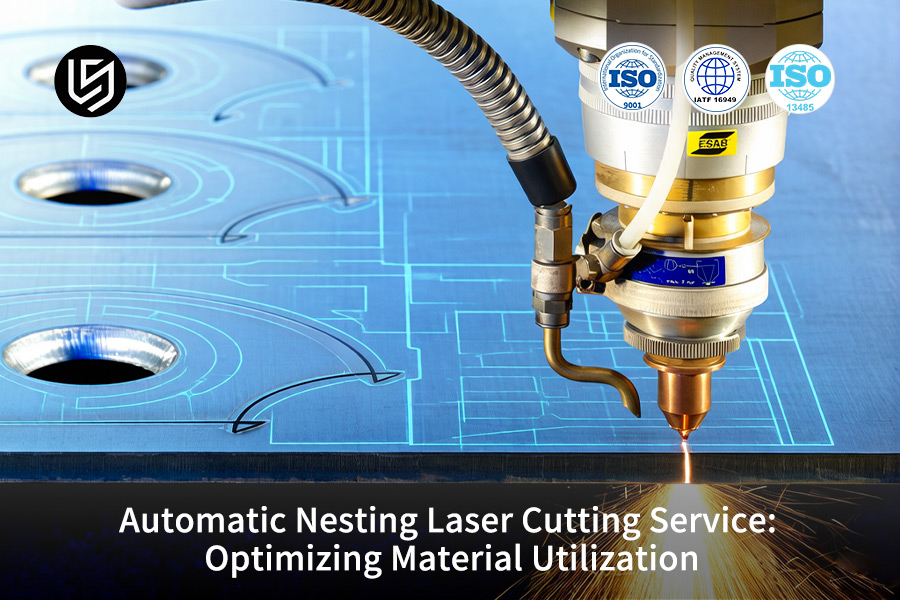
Automatic Nesting Laser Cutting: Efficiency Quick-Reference
| Key Function | How It Optimizes Material Use |
| Algorithm-Based Part Arrangement | The software is used for arranging parts in a manner that will save space through automatic nesting laser cutting parts. |
| Scrap & Remnant Management | The software allows us to make use of our remnants in previous jobs by using remnant sheets in a nesting process. |
| Common Line Cutting | Recognizes common edges between neighboring components to minimize cut length, process cycle time, and gas usage. |
| Our Dynamic Scheduling | Groups orders based on similar material specifications for nesting, ensuring high efficiency in utilizing sheets for several jobs simultaneously. |
| Result: Reduced Material Cost | Yields as much as 90% or higher material utilization rate, thus cutting down material cost per piece. |
| Result: Faster Production Turnaround | Enhanced nesting designs decrease overall machine processing and handling time, speeding up order delivery. |
| Result: Lower Environmental Impact | Makes less material scrap to recycle, making your manufacturing greener. |
This issue of wasted material can be overcome by means of an intelligent automatic nesting process. Our automatic nesting laser cutting process will allow you to save material and increase efficiency by optimizing the placement of each piece to reduce material waste and increase productivity. You will get many pieces out of one sheet of material, and reduce your costs per piece, resulting in efficient operations that are environmentally friendly.
Why Trust This Guide? Practical Experience From LS Manufacturing Experts
The automatic nesting laser cutting service is not only about theory but about practice. In our workshop, we are trying to squeeze out the maximum benefit from expensive alloys every day. We are not familiar with the theory only; we relyon it, because otherwise, a 30% loss rate will make it impossible to carry out a successful project. Our experience was acquired not in the ideal laboratory conditions but on the tough battleground of real manufacturing.
In essence, our approach is based on tried-and-tested methods, not on default settings provided by the software itself. We have gained experience, through successes and early, costly mistakes, about how Kerf Compensation and powerful laser cutting settings need to work together in order to achieve maximum efficiency for each material. Each difficult geometry that we have successfully nested for aerospace brackets or medical device parts proves our ability to optimize material use to its fullest extent, according to American Production and Inventory Control Society (APICS) guidelines.
The accuracy of the result is very important. The sheets which have been processed for critical industries all go through stringent processes, where optimized nesting is done without compromising the quality of the final product. It is because of our commitment to accurate and validated results that we follow the most up-to-date industry standards which include SAE International for material performance. All that you see here is what we employ every day to get maximum efficiency at minimal costs.
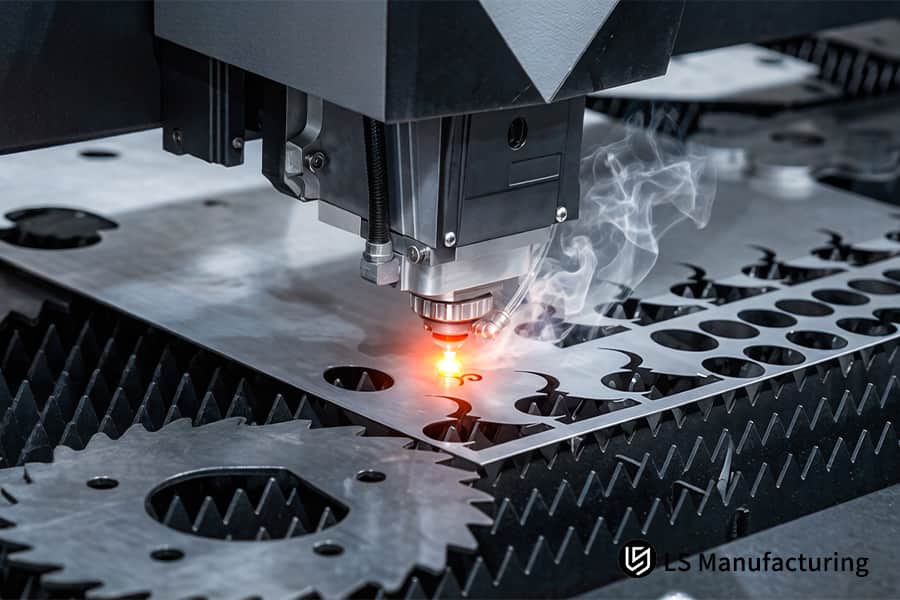
Figure 1: Fabricating a gear from carbon steel for heavy machinery with a precision laser cutting service.
Why Is Automatic Nesting Laser Cutting Service A Strategic Asset For B2B Cost Reduction?
Cost reduction in B2B manufacturing needs proactive waste prevention during the design for manufacturing stage. This paper will illustrate how an advanced automatic nesting laser cutting service has made this philosophy a reality in solving the difficult problem of scrap prevention in high mix laser cutting through attacking the major cost driver:
Topology Optimization via Cloud-Based Algorithms
Our algorithms are deployed in the cloud, and use advanced topology analysis to nest the uploaded geometry in real time. In our solution, the sheet is viewed as a dynamic medium, with algorithms performing rotations and translations of any form—even highly complex parts like brackets and organically shaped parts—into a perfect puzzle-fit. However, this process is intelligent and systematic; it determines the placement that maximizes material density before any cuts take place.
Dynamic Kerf Compensation Integration
Any precision consideration is thus rendered irrelevant where it is not made at the nest stage. For the above reason, the approach takes into account dynamic calculation of kerf to the nesting phase. Each unique combination of material and thickness, such as the combination of 6061-T6 aluminum, gets pre-configured during nesting, based on laser beam width for cutting through. As such, any tolerance stacking is eliminated, thereby ensuring no parts need to be rejected. Nesting becomes practical for high-precision laser cutting.
Real-Time Constraint and Priority Adjustment
Production rules that allow adjustment of priorities are used here. Engineers are given flexibility to set their own priorities; they may choose to prioritize efficiency in cutting numerous sheets from 304 material, or prioritize processing time for laser cut prototypes parts on an emergency basis. In any case, the program calculates the best possible course of action. This ensures alignment of laser cutting service with its commercial and technological objectives.
Scenario-Specific Rule Configuration for Legacy and Novel Parts
We create a series of nesting rules which allow us to group legacy components with known shapes together with newly-designed components. Our solution recognizes possibilities to have similar lines cut from separate components, with the common line cutting path being used to avoid the loss of material in between the parts. This is especially important when high-volume laser cutting with a mixture of legacy and newly-designed part libraries.
This paper emphasizes that strategic material cost reduction is a designed effect, not a guaranteed one. What sets us apart is our ability to accomplish this in a deterministic manner, using algorithms to do so. In solving the challenge of geometric wastage, we use computational topology and dynamic path planning to turn our automatic laser cutting service into a strategically valuable tool for laser cut structural parts.

How Can A Professional Laser Cutting Service Resolve The Bottleneck Of Inconsistent Part Tolerances?
A professional laser cutting service does not merely cut; it provides innovative solutions that account for the constraints imposed by physics. The fundamental challenge with tight nesting is managing thermal distortion, which may lead to dimensional variation in the parts. This paper highlights how a precision laser cutting service handles the entire thermal cycle of the process, ensuring dimensional consistency, thus transforming a common challenge into a predictable solution essential for laser cutting precision components:
Strategic Process Sequencing to Manage Heat Introduction
- Piercing Control: Perform "pulsed piercing" when using laser on metal material more than 5 mm to avoid "over-burn" during initial operation.
- Non-Sequential Cutting: Implement the "jump cut" technique to balance the distribution of thermal energy within the whole plate.
- Path Priority: Cut internal features of the part first before cutting its outer edges to prevent thermal stresses in final profiles.
Dynamic Parameter Control for Real-Time Thermal Mitigation
- Corner Management: Control automatically the intensity of power and cutting speed around the corner for constant heat input into the material.
- Real-Time Adaptation: Adjust dynamic parameters of the cutting process based on geometry and heat modeling to control warpage during the thermal deformation control.
- Gas Optimization: Optimizing assist gas to help reduce heat in laser cutting structural applications.
Physical Mitigation Integration for Part Stability
- Micro-Tabbing: Introducing automatically micro-tabs to lock small parts from warping because of heat.
- Cooling Zones: Programming automatically spots where to perform cutting process for tolerance-controlled batch cuts.
- Fixturing Logic: Using software fixturing technique for preventing part movements because of heat action, a usual approach in laser cutting production batches.
The methodology stresses that accuracy is achieved by design. The challenge of tolerance is solved by implementing a smart way of arranging, managing, and reducing parameters. The offered solution provides tolerance ±0.05mm in a dense placement through heat management, eliminating any fitting and achieving consistent results in high-tolerance laser cutting.
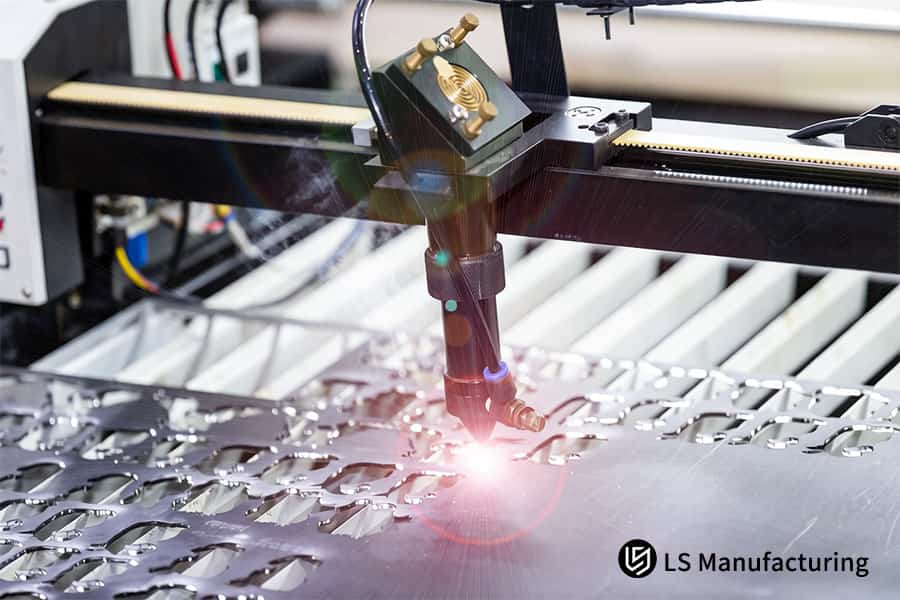
Figure 2: Cutting aluminum sheet for heat sink panels with an automatic nesting laser cutting service.
What Ensures The Peak Efficiency Of Automatic Nesting Cutting For Complex Geometry Components?
When it comes to complex geometrical figures, the major difference between the basic and the advanced services lies in the optimal usage of materials. Conventional nesting software does not properly arrange irregular figures and creates great material wastage. The current study highlights the mathematics behind our automatic nesting cutting technology that deals with complex customized part libraries.
| Function | Technical Implementation |
| Optimal Orientation Search | Minimal rotation is evaluated in small angular degrees (such as 0.1°) through exhaustive analysis to arrive at the best possible solution for nesting components. |
| Intelligent Gap Utilization | Small components are placed in natural gaps within bigger components, thereby optimizing the use of negative space during the process. |
| Internal Cutout Nesting | The system utilizes complex geometry optimization techniques to fit small, suitable components within cutouts within larger parent components. |
| Multi-Part Batch Optimization | In case of varied orders, all components are processed together in order to achieve global optimization within a batch of components. |
| Constraint-Based Rule Setting | Engineers can pre-set manufacturing rules (e.g., grain direction, minimum bridge width) that the algorithm must obey, ensuring nest quality for laser cutting intricate designs. |
We solve these issues with regard to our clients through the implementation of our approach that provides an exhaustive algorithmic optimization of the laser cutting with automatic nesting feature, allowing us to reach the maximum possible sheet utilization level. This allows us to create the laser cutting custom prototypes and laser cutting multi-variant batches in an efficient way, turning the issue of geometric complexity into a manageable variable.
Why Choose Material Optimization Laser Cutting For Large Scale Aerospace Grade Projects?
In the field of aerospace manufacturing, in which material expenses predominate and scrap is not an option, material optimization laser cutting involves a two-pronged approach: sheet utilization optimization and optimization of cutting times. The following report outlines the methods through which such improvements have been achieved, particularly when dealing with costly, high-performance alloys:
Strategic Part Grouping for Nested Efficiency
In addition to nesting according to geometry, we use sophisticated algorithms to nest parts from a large order taking into account common material thickness and machining parameters, thus making it possible to develop an optimized nesting solution with a single cutting trajectory for various types of parts. This results in a high material utilization laser cutting process that is especially important in the case of costly substrates such as titanium or Inconel.
Intelligent Lead-In/Lead-Out Path Optimization
Not only is geometric nesting optimized, but also optimization of the non-cutting "air move" time takes place. The software finds an efficient way of cutting pieces within the nest and decides where to make the entry and exit point of cutting (lead). That way, the movement of the head between cuts is minimized, which results in 20% faster processing of 10,000-piece orders in laser cutting large panels.
Dynamic Micro-Joint Application for Part Stability
In order to avoid moving small and nested components during fast laser cutting of parts for thin-walled aerospace laser cutting components, software engineers introduce micro-tabs, or "bridges," at certain places on the layout. These tabs need to be sufficiently durable in order to keep the piece in place during the laser cutting process but fragile enough to break after the operation for convenient post-cutting removal.
Post-Processing Consideration in Nest Design
The optimization is designed with regards to subsequent processing considerations. The nesting algorithm takes into account the space required for clamping, off-loading parts, and handling deburring equipment. Such consideration will ensure that the resulting layout does not work efficiently from a geometric point of view, but from a practical standpoint, it makes further processing of laser cutting aerospace components.
Here we have outlined the competitive advantage of the material optimization laser cutting process that we provide. To address both material and time cost, this methodology combines grouping of parts, optimized path cutting and stability management. In such a way, it ensures that all our quotes are competitive and based on predictable efficiency of aerospace manufacturing.
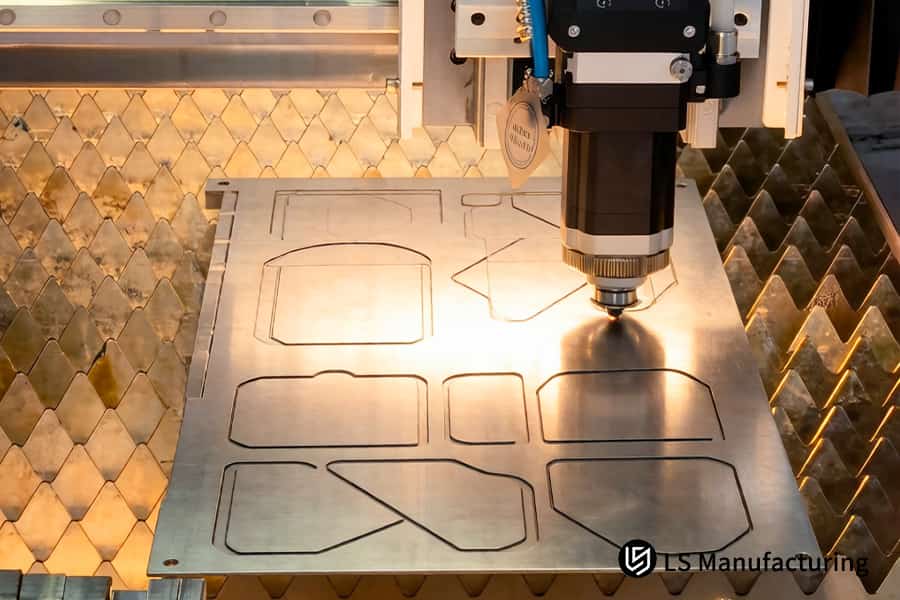
Figure 3: Etching 304 stainless steel for electronic housing components with automatic nesting cutting.
How Does High Material Utilization Laser Cutting Affect Your Annual Manufacturing Budget?
Fabrication costs are dominated by material expenditure, where waste directly erodes profit. A strategic laser cutting service must transcend basic cutting to become a tool for financial budget optimization. This document details how our high material utilization laser cutting methodology converts advanced nesting into direct, quantifiable annual savings:
Direct Material Cost Reduction Through Advanced Algorithms
- Algorithmic Nesting: Employs multi-objective optimization algorithms to maximize the number of parts per sheet, which in turn minimizes the quantity of materials purchased.
- Order Consolidation Logic: Consolidates different parts belonging to various orders in the same sheets to avoid partial sheets and avoid paying for unused materials.
- Scrap Minimization Protocol: Employs kerf correction and common line cutting to prevent wastage, especially when using laser cutting high-value alloys.
Operational Efficiency Gains from Integrated Planning
- Reduced Setup Time: Creates customized nesting solutions that decrease downtime and machine setups when moving from one job to another.
- Increased Throughput: Offers efficient routing and cutting sequences that maximize productivity through minimized processing times.
- Lower Energy Cost: Helps minimize energy costs through minimized runtime in relation to production volume.
Indirect Cost Avoidance via Supply Chain Optimization
- Lower Inventory Costs: Minimizes warehouse costs through minimal wastage and lower material inventory.
- Streamlined Logistics: Allows the ordering of lower material quantities while consolidating different orders into a single order per sheet utilized.
- Predictable Budgeting: Delivers predictable and consistently high output of material, providing accurate cost predictions for laser cutting large batches.
Lifecycle Value Creation and Strategic Impact
- Reduced Disposal Fees: Lowering physical waste lowers waste disposal and recycling costs.
- Sustainability Alignment: Higher material efficiency is aligned with corporate sustainability goals.
- Strategic Partnership Value: Lower costs based on calculations contribute to sustainable partnerships.
Our services provide budget optimization due to waste management, solving the problem of volatile prices with laser cutting technology that provides a high material utilization laser cutting. We ensure that you get measurable results like an 8% BOM reduction on a yearly basis, making our laser cutting service more efficient for laser cutting complex assemblies.
What Technical Parameters In Nesting Software Laser Cutting Drive Superior Edge Quality?
Achieving high quality of cut edges can be accomplished by ensuring precision in programming. This article explains some of the parameters used in programming nesting software laser cutting that ensure quality. These parameters make sure that instructions given in the programming stage are put into practice for better quality cut edges.
| Technical Parameter | Quality-Focused Implementation |
| Micro-Joint Configuration | Autonomous generation of micro joints (0.2-0.5mm) provides a stable assembly of parts, which constitutes one of the main objectives of our automatic nesting laser cutting service. |
| Thermal Sequencing | Smart sequencing of heating operations in an unsequential laser cutting sequence facilitates control of thermal effects necessary for edge quality control of precision parts. |
| Path Planning | Optimal planning of laser cutting paths for locating cuts within scrap material prevents appearance of surface defects when laser cutting precision parts. |
| Parameter Synchronization | Nest information specifies the most appropriate laser power and speed parameters autonomously based on data stored in the database. |
| Collision Avoidance | Complete path simulation avoids collision and ensures the reliability of laser cutting structural components. |
The inclusion of edge quality control technology in our nesting service is the immediate response to the issues arising from inconsistency of edges and burr removal process in order to deliver ready-to-use parts without any further processing. The management of heat input and parameter synchronization ensures delivery of high-quality parts in the form of Ra 3.2µm surface finishes, and our automatic nesting laser cutting service has thus become an invaluable resource for laser cutting high-tolerance assemblies.
Why Is A Precision Laser Cutting Service Essential For High Speed Modular Assembly Lines?
Interchangeability is one of the basic prerequisites of high-speed modular assembly, where dimensional variance causes interruptions in line operation. In this case, a precision laser cutting service must be able to produce accurately cut and identical parts with built-in traceability. This technical paper explains the technologies behind combining the precision of laser cutting and automated manufacturing process:
Integrated Digital Traceability from Nest to Part
Each plan created using our material optimization laser cutting software receives a unique digital tag that will be assigned to this cutting job and will also appear on the metal sheet as a Data Matrix code. In this way, we establish a digital link that allows us to track all elements of a particular laser cutting enclosure down to the material it came from.
CCD Vision-Based Remnant Utilization for Kit Completeness
To guarantee full kit completeness, we use CCD cameras to make secondary correction of sheet offcuts. This will help us to cut missing parts from offcuts without measuring, and consequently prevent us from getting into the condition when a missing part of a set may disrupt the entire laser cutting production line.
Predictive Quality Gates via In-line Metrology Correlation
We have pre-set digital quality gates for dimensions of parts that are critical. Through in-line metrology, we can have machines automatically corrected to produce the right dimensions of the next part that requires manufacture. Predictive quality control is essential for laser cutting automotive parts because not even a single batch of faulty parts should reach the assembly point.
Our solution resolves the issue of creating high quality and fully uniform parts needed for automatic systems. We have done this by implementing digital traceability, automated remnants management and predictive quality control at the precision laser cutting service. Our technical solution makes it possible for our products to serve as a dependable extension of your modular assembly system.
How Can Laser Cutting With Automatic Nesting Reduce The Carbon Footprint Of Your Supply Chain?
In fact, sustainable manufacturing is itself an outcome of efficient engineering, rather than simply the objective. Sustainable manufacturing can be ensured only by laser cutting with automatic nesting, thereby ensuring minimum consumption of materials and energy per unit. The following is the list of the technical requirements necessary for lowering the carbon footprint via laser cutting and nesting:
Direct Resource Minimization at Source
- Algorithmic Material Optimization: High material utilization laser cutting with 25% reduces the number of sheets purchased; thereby minimizing the greenhouse gases produced during the manufacture and transportation process.
- Waste Stream Reduction: Optimum packing of materials reduces solid waste generated; consequently less energy will be used in the process of disposing and recycling the solid wastes.
- Process Gas Efficiency: Lessened total cutting length in the optimized nesting reduces the requirement of the high energy gas like nitrogen required for laser cutting sheet metal.
Energy Consumption Optimization in Operation
- Reduced Machine Runtime: Laser cutting with automatic nesting produces optimal cutting paths that minimize machine running time and energy usage per run.
- Streamlined Material Handling: Combining multiple orders on fewer pieces of metal minimizes energy used in crane handling, loading, and moving material inside the plant.
- Lowered Ancillary Power Draw: Little waste means less running time and energy needed for shredding machines, balers, and dust collectors.
Lifecycle and Supply Chain Integration
- Design for Lightweighting: Precise cutting of materials makes it possible to produce lightweight structures, which help reduce emissions during the use phase, especially in the transportation industry.
- Supply Chain Synchronization: Stable yield leads to optimized inventory management, which means no need for energy usage in storing materials, as well as avoiding wastage through excess purchasing, an important principle in sustainable manufacturing.
- Verified Data for Reporting: The system provides verifiable data pertaining to material savings and process optimization that directly impacts Scope 3 emissions calculation.
This product is an effective response to the carbon footprint problem with the application of the previously mentioned technical approaches. Our strategy focuses on implementation – algorithm nesting reduces material requirements; optimal routing reduces energy expenditure; and data integration results in proper reporting. Therefore, our method becomes an indispensable tool in the laser cutting production batches.
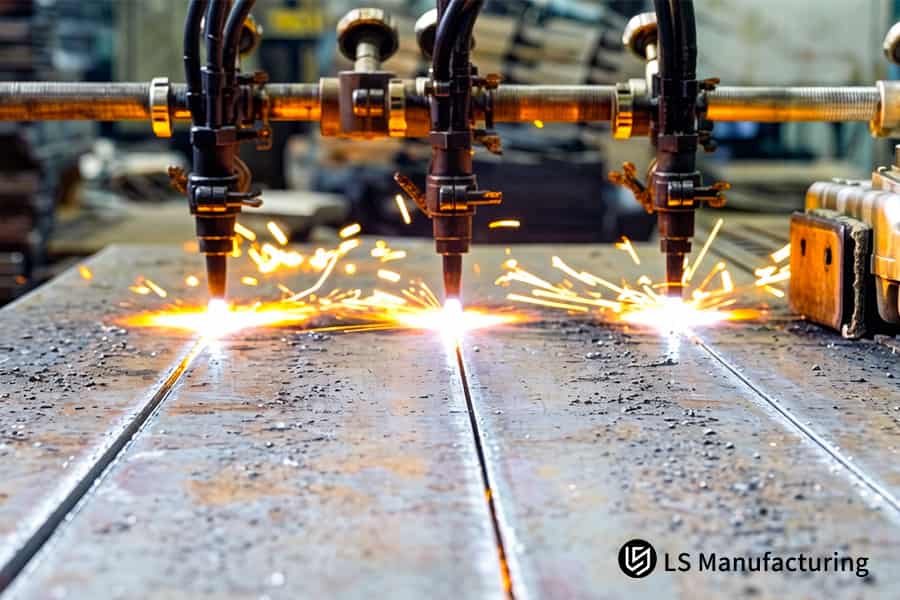
Figure 4: Cutting steel plates for automotive chassis parts using a high precision laser cutting service.
LS Manufacturing: 304 Stainless Steel Bracket Cutting Case (Energy Storage) With Automatic Nesting
The present case study highlights the problem-solving approach adopted by LS Manufacturing in addressing inefficiencies associated with producing complex brackets for their client in the energy storage industry. Incurring losses due to material wastage and delivery delays, the client needed a laser cutting service to manage large-scale operations with non-standard shapes at a faster pace, thereby making an automatic nesting laser cutting service.
Client Challenge
The project required 50,000 units of intricate, non-symmetrical 304 stainless steel mounting brackets. The previous supplier’s manual process achieved only 62% material utilization, leading to high scrap costs. Furthermore, production inefficiencies caused a critical 2-week delivery delay, which directly threatened the client’s product assembly timeline and project budget, creating an urgent need for a reliable, high-yield precision laser cutting solution.
LS Manufacturing Solution
The automatic nesting laser cutting service offered us a two-pronged technical fix. We re-nested the whole set using cutting-edge software, utilizing common-line cutting for optimum sheet utilization. Production occurred via a 12kW fiber laser system, allowing for high-speed laser cutting that achieved a 40% speed increase without sacrificing the necessary ±0.15mm tolerance on the 3mm material.
Results and Value
Through this solution, we reached an 88% material efficiency rate, saving our customer $35,000 in material costs. The lead time for the job was slashed from 21 to 12 days. Because of our perfect job completion, delivering zero-defect laser cutting and assembly-ready results, LS Manufacturing received the entire year’s supply agreement from the customer, forming a valuable relationship in the manufacturing industry.
This particular case proves the competence of LS Manufacturing in solving complex problems related to manufacturing. Thanks to algorithmic optimization paired with high-powered computing, our automatic nesting laser cutting service can provide guaranteed outcomes in the form of financial benefits and timely deliveries.
Save $35k on materials and cut lead time by 9 days. Request your free nesting optimization report.

FAQs
1. How accurate is your automatic nesting laser cutting service for thick plates?
For thick plates above 20mm, we manage to keep the gap of nesting at 5-8mm, while linear tolerance of dimensions reaches ±0.2mm. It guarantees the sufficient level of strength in structural elements.
2. Does LS Manufacturing provide laser cutting services for exotic materials like Titanium?
Yes, we cut high-valuable metals, such as titanium and Hastelloy, by applying automatic nesting cutting methods to minimize losses associated with this type of material.
3. Can you handle urgent orders using automatic nesting cutting?
With our software, we are able to layout thousands of pieces automatically in a mere 15 minutes' time. Coupled with our laser machines that work on 24/7, we are now able to offer our prototyping service within 24 hours.
4. Why is material-optimized laser cutting important for custom prototype development?
When designing and developing prototypes, we use nesting techniques to put multiple pieces having unique designs on a single piece of material. By doing so, you are able to save more than half the cost needed for molding and prototyping.
5. What file formats do you accept for laser cutting projects utilizing nesting software?
We support DXF, DWG, STEP, and native SolidWorks files. Our engineers will conduct a Design for Manufacturability (DFM) review to ensure the manufacturing feasibility of the proposed nesting layout.
6. How do you ensure high material utilization when laser cutting very small parts?
We apply a nesting approach referred to as "skeleton support" to make sure that small components do not get carried away by strong assist gas pressure while cutting. Moreover, we take advantage of the interstices between the scrap material pieces to nest the small components, thus maximizing material usage to the maximum possible degree.
7. What is the typical lead time for a precision laser cutting service quote?
Based on our advanced automation and estimation processes, we usually send out a quotation complete with the BOM within four to eight hours after you provide us with your drawings.
8. Can I request laser cutting with automatic nesting for my existing leftover sheets?
We can use photo-capture and recognition technology to identify your irregularly shaped material remnants and create a new nesting layout for them. This helps you fully utilize your existing inventory and minimize material waste.
Summary
In modern manufacturing, true efficiency comes from smarter material use. Through our core automated laser cutting nesting service, LS Manufacturing transforms technological depth into direct cost advantages. We leverage precise algorithms, high-power lasers, and rigorous quality control to solve the dual B2B challenge: controlling costs while maintaining uncompromising precision. By choosing us, you partner with an expert dedicated to optimizing your supply chain and competitive edge.
Are you frustrated by skyrocketing metal fabrication quotes? Don't let inefficient material nesting erode your profits. Contact the LS Manufacturing engineering team today to request a complimentary "Material Utilization Comparison Test." Simply upload your DXF part drawings, and within 12 hours, we will present you with an optimized nesting layout—along with a significantly more competitive quotation.
Achieve 88% material utilization for your laser cutting. Submit your DXF for a free nesting analysis.
📞Tel: +86 185 6675 9667
📧Email: info@lsrpf.com
🌐Website: https://lsrpf.com/
Disclaimer
The contents of this page are for informational purposes only. LS Manufacturing services There are no representations or warranties, express or implied, as to the accuracy, completeness or validity of the information. It should not be inferred that a third-party supplier or manufacturer will provide performance parameters, geometric tolerances, specific design characteristics, material quality and type or workmanship through the LS Manufacturing network. It's the buyer's responsibility. Require parts quotation Identify specific requirements for these sections.Please contact us for more information.
LS Manufacturing Team
LS Manufacturing is an industry-leading company. Focus on custom manufacturing solutions. We have over 20 years of experience with over 5,000 customers, and we focus on high precision CNC machining, Sheet metal manufacturing, 3D printing, Injection molding. Metal stamping,and other one-stop manufacturing services.
Our factory is equipped with over 100 state-of-the-art 5-axis machining centers, ISO 9001:2015 certified. We provide fast, efficient and high-quality manufacturing solutions to customers in more than 150 countries around the world. Whether it is small volume production or large-scale customization, we can meet your needs with the fastest delivery within 24 hours. choose LS Manufacturing. This means selection efficiency, quality and professionalism.
To learn more, visit our website:www.lsrpf.com.