Custom Vacuum Casting Services

Obtain high-fidelity, functional prototypes and low-volume production parts with accelerated lead times. Submit your design for expert manufacturing analysis and rapid quoting to receive certified castings in as few as 10 business days.

  • Rapid Prototyping Solutions Ideal for functional validation, small batches, and market testing with production-like material properties.
  • Exceptional Detail Reproduction Captures intricate features, fine textures, and complex geometries with high accuracy.
  • Wide Material Selection Simulates various engineering-grade thermoplastics, including ABS, PP, PC, and silicone rubber.
  • High-Quality Surface Finish Delivers near-production-grade surface quality, reducing the need for extensive post-processing.
  • Design Flexibility Efficiently accommodates design iterations and modifications with lower tooling costs.
  • Dedicated Project Support Ensures timely delivery and clear communication throughout the manufacturing process.

Start a New Vacuum Casting Project!

VacuumCasting Part 1
VacuumCasting Part 2
VacuumCasting Part 3

Get an instant quote today.

Get instant pricing, project lead times, and DFM feedback

STEP | STP | SLDPRT | STL | OBJ | 3MF | IGES | X_T | X_B | PRT | SAT | JT files

File size: 15MB

All uploads are secure and confidential.

Trusted by Engineers and Purchasing Leaders at the World's Most Successful Companies

ISO9001:2015 Certified
99.80%On-time Delivery
15+Years in Business
12000+Projects Delivered
±0.5%Dimensional Accuracy

Trusted bynumerous companies

ABB
BMW
Bombardier
Electrolux
FLIR
Google
I-Dent
Lamborghini
Tesla
ABB
BMW
Bombardier
Electrolux
FLIR
Google
I-Dent
Lamborghini
Tesla

At LS Manufacturing, our customers' trust is earned through 15+ years of expertise, ensuring ±0.5% dimensional accuracy and quality across 12,000+ projects, as demonstrated by ISO 9001:2015 certification and 99.80% on-time delivery.

What is
Vacuum Casting?

What is Vacuum Casting?

Vacuum casting is a highly versatile manufacturing process used to produce high-quality prototypes and low-volume production parts with properties closely resembling injection-molded components. This method excels at reproducing intricate details, fine textures, and complex geometries using silicone molds under controlled vacuum conditions to eliminate air bubbles and ensure uniform material distribution.

At LS Manufacturing, we specialize in advanced vacuum casting services ideal for functional testing, pre-series production, and market launch phases across automotive, consumer electronics, medical devices, and industrial design sectors. We address common prototyping pain points such as long lead times, high tooling costs, and material property inaccuracies by utilizing high-performance polyurethane resins that simulate a wide range of engineering-grade thermoplastics.

Utilize our integrated digital platform to accelerate your product development cycle. Upload your CAD model to receive a rapid quotation and comprehensive manufacturability feedback—enabling you to obtain high-fidelity, functional parts that meet stringent requirements for accuracy, material performance, and aesthetic quality.

LS Manufacturing Vacuum Casting Service

LS Manufacturing Vacuum Casting Service rapidly delivers high-fidelity prototypes and low-volume production parts with precision. Achieving dimensional accuracy within ±0.10mm in lead times from 5 working days, we utilize advanced silicone molds and engineering-grade polyurethanes to replicate complex geometries and functional properties for automotive, medical, electronics, and industrial applications. Our integrated process guarantees cost-effective iteration and a seamless transition to mass production.

Vacuum casting equipment
Vacuum casting workshop
Vacuum casting machine
Industrial vacuum casting
Vacuum casting production line
Vacuum casting tooling
Vacuum casting facility

LS Manufacturing Vacuum Casting Capabilities

CapabilityDetails

Standard Tolerance

±0.10mm on critical dimensions, with tighter tolerances achievable for engineered features.

Color & Finishing

Full Pantone/RAL color matching, transparent/opaque options, and textured to high-gloss surface finishes.

Maximum Part Size

2.3 × 1.3 × 0.6 meters chamber size for large-scale prototypes and functional components.

Daily Output

200+ parts per day capacity for rapid prototyping and low-volume production batches.

Lead Time

7-12 days standard turnaround; expedited options available from 5 business days.

Vacuum Casting: From Prototyping to Production

Accelerate your product development from concept to market with LS Manufacturing's advanced vacuum casting services. We provide precise, scalable, and cost-efficient solutions tailored to every stage of your development lifecycle.

Concept Validation

Quickly transform early-stage designs into tangible prototypes using precision 3D printing. This stage is ideal for assessing form, fit, and ergonomics without the expense or lead time of hard tooling.

Functional Prototyping

Produce 1 to 100 high-fidelity, vacuum-cast prototypes. Utilize engineering-grade materials to rigorously test mechanical performance, environmental resistance, and assembly fit, ensuring design integrity before production.

Low-Volume Production

Ideal for pilot runs, market launches, or bridge manufacturing. Efficiently produce 20 to 200+ production-equivalent parts with consistent quality, bypassing the long lead times and high cost of injection molding tooling.

Mass Production Transition

Seamlessly scale to full-volume manufacturing with our injection molding services. We ensure a smooth transition from prototype to mass production, delivering high-quality parts with optimized cycle times and unit costs.

Vacuum Casting Materials, Finish, Colors

Select from our comprehensive range of engineering-grade polyurethane and silicone materials to precisely match the properties of your production components. Our specialists help select the ideal material for your application requirements, with custom material solutions or technical support available.

Cast Silicone Materials

Shore A 10-60 silicone vacuum casting material

Shore A 10-60 Silicone

LS Manufacturing's standard vacuum casting silicone offers the optimal balance of flexibility and durability. It reliably reproduces fine details from complex masters while maintaining dimensional stability for multiple casting cycles, ensuring consistent part quality and maximizing your mold investment.

  • Shore A 10-20: Superior flexibility for deep undercuts and intricate textures.
  • Shore A 30-40: Balanced performance for most general-purpose applications.
  • Shore A 50-60: Enhanced rigidity for casting components requiring high dimensional accuracy.

Cast Urethane Materials

Soft rubber vacuum casting material

Soft Rubber

Engineered for flexible prototypes requiring tactile feedback, vibration damping, or ergonomic grips. Ideal for consumer electronics, automotive seals, and wearable device components.

  • LS Elastomer 8400: High tear strength and impact resistance for durable housings, gaskets, and protective covers.
  • LS Transparent T0387: Crystal-clear, soft material for optical covers, light guides, and medical device prototypes.
  • LS High-Temp Silicone: Maintains flexibility in thermal cycling applications such as under-hood automotive parts.
  • LS Medical/Food-Grade Silicone: Compliant with ISO 10993 and FDA standards for skin-contact and food-safe applications.

Note: Selecting the optimal die casting material is critical, based on application, geometry, environment, and budget. Contact our engineers for a data-driven solution.

Vacuum Casting Quality Assurance

At LS Manufacturing, quality is integral to every stage of the vacuum casting process, from master model preparation to final part delivery. Our certified quality management system, aligned with ISO 9001 standards, is designed to deliver consistent, high-fidelity prototypes and production parts you can rely on.

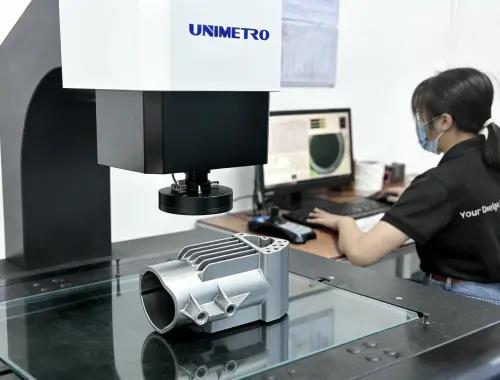
CMM coordinate measuring machine
Profile projector inspection
Height gauge measurement
Contour measuring instrument
ISO 9001:2015
ISO 14001: 2015
IATF 16949:2016
ISO 13485:2016

Advanced Inspection & Measurement

We employ precision equipment to validate every critical dimension and surface. Digital calipers and coordinate measuring machines (CMM) verify complex geometries, while specialized surface finish testers and optical comparators ensure that textures and details match the master model with exceptional accuracy.

Comprehensive Validation Testing

Each batch undergoes a multi-stage validation protocol. This includes rigorous dimensional inspection, visual and tactile surface finish analysis, and functional testing for fit and assembly. For selected materials, we perform additional tests for hardness (Shore A/D), tear strength, and color consistency to ensure performance meets specification.

Proven Quality Commitment

We maintain a first-article inspection (FAI) pass rate exceeding 95%. Our commitment extends beyond delivery: in the rare event of a non-conformance, we initiate immediate root-cause analysis and provide replacement parts at no additional cost, ensuring your project timeline remains secure.

Ready to partner with a quality-driven manufacturer for your next project? Submit your design today to receive a detailed quote and experience our commitment to precision.

Start Your Vacuum Casting Project

Why Choose LS Manufacturing for Vacuum Casting

With LS Manufacturing's professional vacuum casting service, you gain more than advanced equipment — you secure a commitment to high-fidelity prototypes, reliable lead times, and dedicated engineering collaboration for every stage of product development.

High-fidelity prototypes and low-volume vacuum casting parts
/01

High-Fidelity Prototypes & Low-Volume Parts

We combine engineering-grade materials with controlled process parameters to deliver parts with excellent dimensional accuracy, superior surface finish, and mechanical properties that closely match final injection-molded components.

Fast and reliable vacuum casting lead times
/02

Fast & Reliable Lead Times

From rapid prototyping to pre-series production, our streamlined workflow and in-house tooling enable industry-leading turnaround, with many projects completed within 5–10 business days from master approval.

On-demand engineering support for vacuum casting
/03

On-Demand Engineering Support

Our technical team provides design for manufacturability (DFM) feedback, material selection guidance, and process optimization—helping you reduce iterations, lower risk, and accelerate time-to-market.

What's Vacuum Casting Process?

Vacuum casting, also known as urethane casting, is a versatile manufacturing process that produces high-quality plastic and rubber parts with complex geometries and superior surface finishes. At LS Manufacturing, we follow a refined three‑step workflow designed to ensure precision, consistency, and fast turnaround for prototyping and low‑volume production.

The process begins with creating a precise master pattern, which defines the final part's geometry and surface quality. We typically use high‑resolution 3D printing for speed and cost efficiency, or CNC machining when extreme dimensional accuracy and material stability are required. Proper design considerations—such as uniform wall thickness and appropriate draft angles—are applied to ensure optimal mold release and part integrity.

A high‑grade silicone rubber is poured around the master pattern and cured under controlled conditions. After curing, the mold is carefully cut along pre‑defined parting lines and the master is removed, leaving a precise negative cavity. This flexible yet durable silicone mold can produce 15–50 high‑fidelity parts, making it ideal for small‑batch manufacturing without the cost of hard tooling.

Liquid polyurethane resin is precisely mixed, degassed, and injected into the silicone mold under vacuum. This critical step eliminates air bubbles and ensures complete material flow into fine details. After curing, parts are demolded and may undergo secondary operations such as trimming, sanding, painting, or assembly—delivering components that closely match final‑production quality in both appearance and performance.

Vacuum casting process

Vacuum Casting Applications Across Industries

Vacuum casting (urethane casting) is a cost-efficient solution for producing functional prototypes and small-batch production parts, bypassing the high cost and lead time of hard tooling. It delivers high-fidelity, end-use quality parts suitable for rigorous testing, market validation, and low-volume manufacturing across multiple sectors.

Automotive

Ideal for producing interior trim components, dashboard assemblies, under-hood prototypes, and aerodynamic fairings. This process enables realistic fit-and-finish validation, user experience testing, and performance evaluation of new designs before committing to production tooling.

Aerospace & Defense

Suitable for lightweight interior panels, ducting prototypes, antenna housings, and sensor covers. The method accommodates flame-retardant and high-performance materials needed for certification prototyping and low-rate initial production.

Medical & Healthcare

Used to manufacture housings for diagnostic devices, prototypes of surgical tools, ergonomic grips, and patient-specific anatomical models. The process supports biocompatible materials and strict tolerances required for functional testing and regulatory submissions.

Industrial Equipment

Applied in producing custom machine guards, control panels, jigs, fixtures, and housing for specialized machinery. Offers a fast and adaptable manufacturing route for custom, low-volume industrial components.

Electronics & Consumer Products

Enables rapid iteration of product enclosures, button panels, wearable device bands, and smart home components. Delivers excellent surface finish and color accuracy for design reviews, user trials, and crowdfunding campaigns.

Vacuum casting automotive parts
Vacuum casting aerospace parts
Vacuum casting industrial parts
Vacuum casting consumer products

3D Printing vs. Vacuum Casting vs. Injection Molding

Choosing the right manufacturing process is critical to balancing cost, lead time, and quality throughout your product development cycle. Below we compare three common methods to help you make an informed decision—especially when vacuum casting offers the optimal balance between speed, fidelity, and affordability for prototyping and low-volume production.

Comparison Criteria3D PrintingVacuum CastingInjection Molding

Tooling Cost

No tooling required

Low-cost silicone molds

High-cost metal molds

Lead Time

1–5 days

5–15 days

4–16 weeks

Part Quantity

1–50 units

20–500 units

1,000+ units

Tolerance

±0.1–0.5 mm

±0.15–0.3 mm

±0.05–0.2 mm

Surface Finish

Layer lines visible, often requires post-processing

Smooth, near-production finish, minimal post-processing

High-quality, ready for end-use

Complex Geometry

Excellent, supports intricate internal structures

Good for undercuts and fine details

Limited by mold design and draft angles

Material Options

Limited resins or filaments available

Wide range of urethanes (rigid, flexible, high-temp)

Broad selection of engineering-grade thermoplastics

Design Changes

Fast and low-cost iterations

Moderate cost, new master required

Very expensive, often new mold needed

When to Choose Vacuum Casting?

Optimize your development cycle and reduce upfront risk. Vacuum casting is the strategic manufacturing choice when you require functional prototypes or low-volume end-use parts that accurately replicate the material properties, mechanical performance, and surface finish of final injection-molded components—but without the high cost and long lead times of hard tooling.

Choose vacuum casting when you need to:

Conduct Rigorous Functional Testing and User Trials: Validate with parts that perform like production units.

Validate Market Demand: Execute cost-effective pilot runs or bridge production before committing to mass-production tooling.

Manufacture Complex Geometries: Produce parts with intricate structures, undercuts, and fine surface details that challenge standard 3D printing.

Utilize a Broad Range of Material Properties: Achieve diverse properties—from rigid to flexible—along with specific colors or textures in a single process.

This method effectively bridges the gap between rapid prototyping and full-scale production, providing speed, fidelity, and cost-efficiency for batches typically ranging from 10 to 500 units.

When to choose vacuum casting

Latest News

Stay updated with the latest news and announcements from LS Manufacturing. Explore our latest articles below.

empty image
No data

Our vacuum casting process utilizes cost-effective silicone molds instead of expensive steel tooling, allowing for functional prototypes and small batches that match injection-molding quality at a fraction of the cost and lead time.

We employ strict process controls and high-grade materials to ensure batch consistency. Each silicone mold typically yields 20-30 parts with minimal variation, and we conduct first-article and in-process inspections to maintain uniformity.

Yes. We offer a wide range of engineering-grade polyurethane resins that replicate the mechanical properties, surface finish, and durability of production plastics and elastomers, enabling accurate functional and ergonomic testing.

Design changes can be implemented rapidly. Modifications require a new 3D-printed master model, after which a new silicone mold is produced. This allows for significantly faster and more affordable iterations compared to hard tooling changes.

We provide detailed documentation including material certifications, first-article inspection reports with dimensional data, and surface finish analysis to support your design verification and quality assurance processes.

Vacuum casting excels at replicating complex features. The flexible silicone molds allow for easy demolding of deep undercuts and intricate textures that are challenging for other processes, capturing even the finest details from your master pattern.

Standard lead times range from 5 to 15 business days, depending on part complexity and quantity. This rapid turnaround is ideal for compressing development schedules and accelerating time-to-market.

Absolutely. We offer full Pantone and RAL color matching, and can apply a wide range of SPI/VDI standard surface textures directly in the mold, from high-gloss to textured finishes, meeting your aesthetic and branding requirements.

Yes. We offer materials with relevant certifications (e.g., USP Class VI, UL94) and operate within a controlled, ISO-compliant environment. Our process is widely used for medical device prototypes and automotive components requiring material validation.

Our quality commitment includes a comprehensive review and resolution process. We initiate immediate root cause analysis and prioritize the production of replacement parts at no additional cost to keep your project on schedule.

Upload your design files

and start production immediately

Get an Instant Quote