English




Precision laser cutting services are widely used when there is a need for making precision housing devices and insulating gaskets; however, conventional questions such as "how to laser cut plastic" generally bring about burned edges, deformations, and errors in dimensions greater than ±0.3mm, thus affecting assembly operations. This situation usually arises due to inadequate digital control of heat transfer in plastics including PC, PMMA, and PEEK, and the lack of proper pulses in laser processing resulting in a large Heat Affected Zone (HAZ).
This is resolved directly through LS Manufacturing through the use of ultrashort pulse lasers and our unique vacuum chuck mechanism, which enables us to control the thermal load precisely. The result of which is that we are able to maintain a HAZ less than 0.05mm and have tolerances within ±0.1mm. This will be detailed further in what follows below.
Precision Laser Cutting For Plastics: Tolerance Quick-Reference
| Key Challenge | Technical Solution for ±0.1mm |
| Thermal Damage & Melting | We use ultra-short pulsed UV laser to remove material without transferring much heat, eliminating edge melting or distortions. |
| Material Consistency | We use specially designed engineering plastics with constant chemical composition and humidity level for consistent laser cutting performance. |
| Focus Control & Beam Quality | We have strict control on the focal point and the beam quality, resulting in even kerf width across the entire sheet. |
| Static & Contamination Control | We use cleanroom environment to eliminate dust accumulation, ensuring flawless edges of the cut material. |
| Our Parameter Optimization | We create custom cutting parameters (wavelength, frequency of pulses, speed) for each type of plastic (e.g., Acrylic, PC, PEEK). |
| Result: Clean, Sharp Edges | Creates components with a clean, polished edge that does not require any additional processing in most cases. |
| Result: Dimensional Stability | Guarantees accurate dimensions without deformation of the components during the cutting process, which is important for assembling optical devices. |
We address the problem of accurate laser cutting of plastic parts to exact tolerances of ±0.1 mm. Our proprietary method involves careful control of all stages of the process, ensuring minimal heating, constant quality of material, and sharp cutting edges. The result is dimensional stability and high-quality plastic parts that are suitable for further assembly or immediate use in optics, medical equipment, and electronics manufacturing.
Why Trust This Guide? Practical Experience From LS Manufacturing Experts
There are many sources about laser cutting available online. However, this article is not only filled with facts and figures. It draws on first-hand experience gained through years of dealing with heat damage in plastics at the workshop. We know how hard it is to obtain ±0.1mm tolerances without damaging materials such as plastics due to burning or warping. We know what works, we have seen it working, we use it every day.
Our highly precise laser cutting process has been developed over many years of dealing with complex components such as medical housing parts and optical mounts. We know the exact parameters to work with PEEK and PMMA without causing any excessive Heat-Affected Zone, and we do that using techniques such as ultra-short pulsed lasers. We follow recommendations by TWI Global in heat control practices.
These tips have been derived not only from success but also from costly mistakes made early on, which guarantees that you do not repeat mistakes. Our techniques are proven and rely on material data standards similar to those used by the Metal Powder Industry Federation (MPIF). This book contains everything you need to know about how we do things at our company and provides you with the confidence to create your parts with unmatched accuracy.
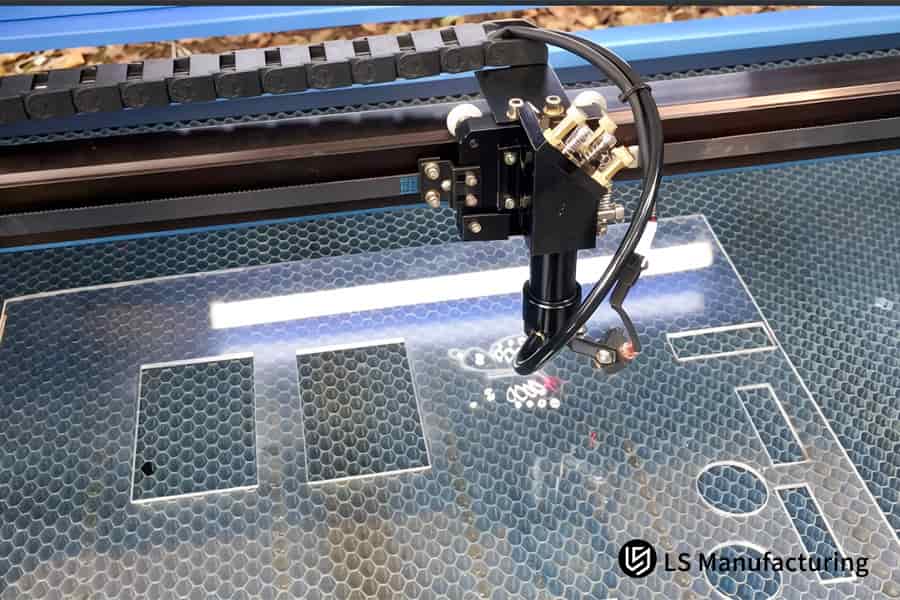
Figure 1: Cutting holes in clear acrylic sheet for point-of-sale displays or prototype model components.
Why Are Precision Laser Cutting Services Essential For Complex Electronic Plastic Enclosures?
A problem often faced when manufacturing complicated electronic casings is machining stress leading to part distortion. This guide will provide you with a step-by-step approach to utilizing non-contact precision laser cutting services to minimize any mechanical stress involved, ensuring post-production flatness of 0.02mm/100mm. Here’s what the technological solution consists of:
Eliminating Mechanical Stress for Dimensional Integrity
Conventional CNC milling creates pressure along with heat. These factors trigger the intrinsic stresses present in the material, resulting in warping. Laser cutting service utilizes a directed, non-mechanical energy source. The wavelength and pulse time of the advanced laser cutting are calibrated precisely to ensure that the material is vaporized rather than pulled out. This minimizes any form of induced stress to maintain the flatness of the custom plastic parts.
Managing Thermal Input for Micro-Feature Accuracy
Complex electronic enclosures would need tiny vent, slot, or micro apertures. Heat generated might lead to melting of delicate parts. The use of high-speed and pulsed laser processing allows for ultrafast laser cutting in which the micro pulses vaporize small amounts of the material. There will be an interval between pulses to allow the dissipation of any heat so as not to spread to the material. It thus makes it possible for us to achieve laser cutting clean edges even on thin walls or micro apertures without damaging any part of the material.
Ensuring Precision for Perfect Assembly Fit
The final goal is proper mating of the pieces. Programming is carried out with regard to the CAD drawing of the product after scaling down. This is made possible because of the right parameters set during the use of CO2 laser cutting. This has been made easy through our analysis of the material behavior.
Facilitating Clean, Burr-Free Production
There will be burr formation in mechanical cutting, which calls for another process to remove the burrs. Conversely, our technique will vaporize the material through ablation using a laser. Our assist gases are specially selected for every type of plastic materials so that the melted materials are removed with an unoxidized sharp edge. This guarantees that no more processing steps are needed and avoids particulate contamination, making our technique better than industrial laser cutting techniques.
This theory underscores the process developed to solve particular issues. The source of authority lies in our control over stress, temperature, and shape based on physics principles. The competitive edge lies in managing these process variables, enabling us to create complicated enclosures when others cannot.
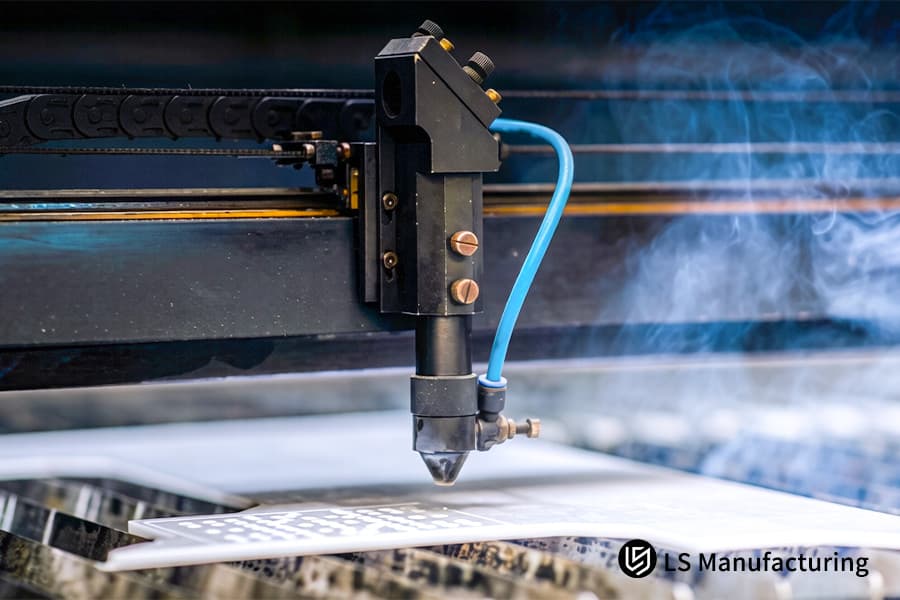
Figure 2: Melting a custom plastic part from a sheet creates smoke for electronics or prototype housing fabrication.
How Can Laser Cutting Services For Plastic Parts Achieve Burr Free Edges On Acrylic Components?
There have always been additional steps involved in creating a burr-free, polished edge for acrylic components. In this document, we provide information regarding our technique which is one of the important aspects of our plastic laser cutting service, which makes it possible for us to obtain a polished edge through laser cutting itself, thus removing any need for post-processing. This has been possible through careful application of heat energy as well as controlled material flow, thus helping us bring cost reduction for our clients. This technique works on the basis of three important principles.
Proprietary Energy Modulation for Controlled Melting
- Technique: Custom modulated energy density using proprietary 10.6μm CO2 laser waveforms.
- Objective: Formation of consistent melt zones for effective reflowing of polymers, resulting in high-speed laser cutting with polished finishes.
Dynamic Gas-Assisted Edge Formation
- Process: Use of controlled flows of inert gases through coaxial channels.
- Mechanism: Melt pool protection and cooling, enabling ablation and creation of optical-quality edges for acrylic machining materials.
Closed-Loop Thermal Control
- System: Temperature feedback control for maintaining optimum focus, speed, and gas pressure.
- Outcome: Ensures edge quality, which is one of the strengths of our laser cutting services for plastic parts.
Predictive Process Modeling
- Method: Thermal stress and flow dynamics modeling using FEA.
- Benefit: First-article success guaranteed, providing cost reduction and allowing CNC-integrated laser cutting accuracy.
This report demonstrates one of the cases where the principle of physics is utilized in technological solutions. The unique feature of our company is a possibility to regulate energy, control gas dynamics, and simulate the whole process. Full control over acrylic phase transition assures high precision and repeatability of the parts which will be assembled by OEM.
Why Is ±0.1mm Tolerance Laser Cutting The Key To Successful Medical Fluidic Device Assembly?
The successful production of multi-layer fluidic devices requires precise channel alignment to avoid malfunctioning due to even slight misalignments. This document highlights the use of ±0.1mm tolerance laser cutting as the necessary condition for achieving a precision assembly without leaks. The exact process of obtaining such a tolerance level and ensuring validation will be discussed, which is the most crucial challenge in medical device manufacturing.
| Focus Area | Protocol & Quantifiable Outcome |
| Dimensional Accuracy for Channel Definition | High tolerance plastic laser cutting technology will be employed to cut channels with tolerances of ±0.1mm, which is necessary to ensure creation of uniform resistance without the presence of dead spots. |
| Compensation for Material | Instability CCD vision technology with a tolerance of ±5µm allows us to compensate for the effect of material creep/distortion of laser cutting paths before ultrafast laser cutting. |
| Thermal Management for Edge Integrity | Optimization of pulses and cooling during laser cutting ensures that there is no thermal stress on the material edges, allowing us to maintain ±0.1mm tolerance without edge deformation of laser-cut fluidic layers. |
| Process Control for Lot Consistency | Micrometer laser measurements in-process control ensures that we can achieve 100% in-process checking of critical tolerances to guarantee that all batches meet the desired tolerance for precision assembly by laser welding/bonding. |
| Design for Manufacturing (DfM) Integration | DFM analysis of your design will allow us to provide you with the right advice about appropriate corner radius and feature spacing for easy manufacturability and maintenance of tolerances throughout the laser micro-machining process. |
It shows that accuracy is a managed parameter but not a specification. What we have in terms of technology is a combined real-time vision correction with in-process measurement in order to tackle the sources of errors. It makes it possible to solve the problem of our customers, namely, guaranteeing 100% alignment of channels to prevent any leakage during the assembly process when manufacturing medical devices. Such a feat is only possible owing to our experience in industrial laser cutting.
Can A Plastic Laser Cutting Service Maintain Dimensional Stability Across Thousands Of POM Parts?
The process of obtaining micron precision when processing large amounts of plastic POM components is an exceptionally challenging one. The reason for this lies in oxidation and temperature deformation effects. This article will inform you about our system approach to ensure consistency control, which allows us to achieve the desired result – less than 0.03 mm precision within a 48-hour period of processing 5,000 mass production parts. Here is how we manage to do this using the following closed loop system:
Closed-Loop Focal Point Management
As the material is highly sensitive to temperature changes, focal drift takes place, influencing the kerf width. We apply a real-time capacitive feedback system that monitors the workpiece surface 1,000 times per second. Using such a system guarantees us automatic adjustment of the Z-axis to provide a consistent focal length, thus ensuring that all cuts performed in precision plastic parts laser cutting start from the same point of energy density.
Inert Atmosphere Processing for Oxidation Prevention
Cutting under the presence of oxygen will lead to degradation of POM material, and as such, there will be inconsistencies in the edges. The working cell we are using has been purged of oxygen, and only 50ppm O2 is present. An automated laser cutting process in such conditions does not bring any change to the physical and chemical characteristics of the edges of all parts, hence impacting their strength.
Dynamic Fume Extraction and Path Compensation
This plastic generates corrosive fumes, which can deflect or absorb the laser beam. We have therefore designed a dynamic extraction system for fumes, installed in coaxial arrangement with the cutting nozzle. Also, the algorithm has been devised that accounts for the effects of heat accumulation by varying speed and power when cutting complex shapes. Fume-managed laser cutting does not lead to overheating zones and maintains the geometrical precision.
Predictive Thermal Modeling for Batch Stability
For each newly created geometry and nesting configuration, a custom thermal modeling is performed. Such simulation identifies potential heat accumulation areas prior to the first cut being made, and the parameters are optimized in advance, such as the frequency of pulses used and the order of cuts. With such an advanced approach to industrial laser processing, it becomes possible to assure that the cut parts will have the same dimensions regardless of their position on the sheet of metal. This way, high-volume consistency control is assured.
The laser cutting advantage of our technology comes from this methodology. Our proficiency in developing a laser cutting service can be seen in the implementation of a feedback loop, which allows us to integrate environmental controls, feedback systems, and predictive heating management into one process. It is a necessity to solve a problem related to the need for consistent dimensions of plastic laser cutting services for mass production parts.
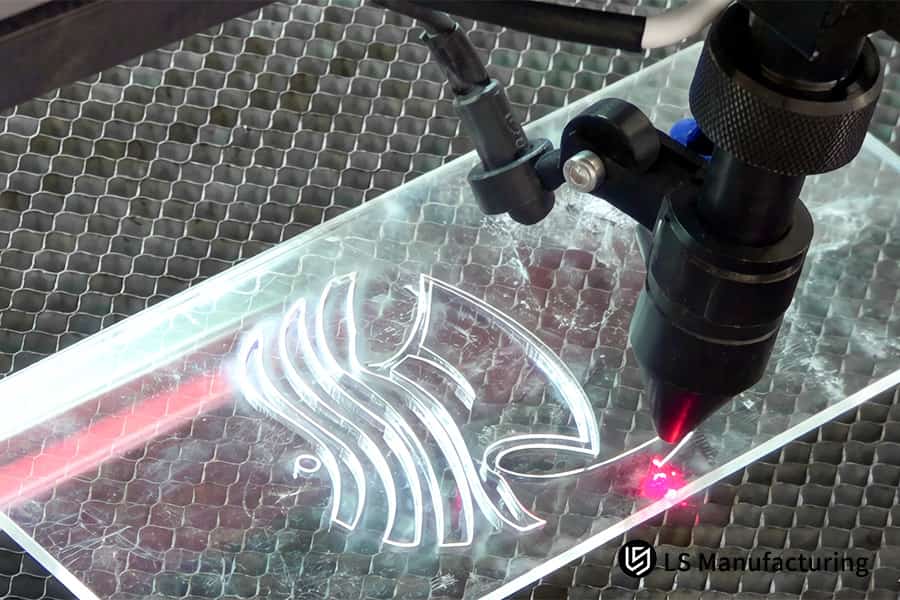
Figure 3: Engraving a decorative fish shape into acrylic for retail signage or artistic installation components.
How Does High Tolerance Plastic Laser Cutting Reduce Material Waste In Aerospace Insulation Projects?
Insulation components made out of high performance polymers such as PEEK and PEI carry high material costs. Traditional manufacturing techniques lead to wastage due to high kerfs and conservative nesting procedures. This article explains our process for maximizing material efficiency through the implementation of high tolerance plastic laser cutting technology to ensure kerf widths of less than 0.15 mm. Our technical approach is based on:
Algorithmic Nesting with Kerf Compensation
- Technology: We use our own nesting software where we consider the laser kerf as a variable, not a constant offset.
- Action: The algorithm will automatically adjust the position of each part and the path to cut, depending on the actual kerf value obtained, allowing for nearly theoretical minimal nesting for aerospace insulation panels.
Ultra-Narrow Kerf for Optimized Layout
- Precision Control: Our tight tolerance laser cutting services ensure a constant kerf width less than 0.15mm by using a stable beam optical system and accurate control of the focal length.
- Benefit: The small cut width leads to the increase of the quantity of parts per sheet. Reduced kerf waste results in increased material efficiency of the whole process.
Thermal Stability for Predictable Output
- Process Management: Laser source and workpiece thermal management is applied in order to avoid heat affected zones (HAZ), which may lead to dimension drift.
- Result: Consistent and reliable part dimensions obtained throughout the entire cutting cycle make it possible to perform tighter nesting without allowance for distortions during precision laser profiling of expensive materials.
Real-Time Monitoring for Consistent Quality
- System Integration: An integrated vision system monitors the cut path and kerf in real time to provide feedback control to the cutting head.
- Outcome: This ensures that the stated tolerance of <0.15mm kerf is held true through the whole manufacturing process, thus assuring the nesting accuracy and the part accuracy that was calculated before production started using advanced laser nesting.
This paper describes a precision manufacturing solution rather than simply laser cutting services. The competitive technical edge we possess is proven by our implementation of dynamic nesting algorithms, sub-0.15mm kerf width control, and real-time monitoring. We have found a solution to the challenging customer problem of material wastage, ensuring that our tight tolerance laser cutting services translate to direct financial benefits for high-value aerospace insulation and component manufacturing.
Why Do Engineers Choose Precision Plastic Parts Laser Cutting For High Speed Prototyping Cycles?
In the battle for time, fast prototyping cycles are essential. Conventional machining processes can be problematic because of tooling and set-up issues. This paper explains how our comprehensive rapid prototyping service, including precision plastic parts laser cutting, accelerates product development. It provides a methodology that ensures the delivery of working prototypes in less than 24 hours, simultaneously improving part quality through concurrent engineering support.
| Protocol Phase | Key Action & Measurable Outcome |
| Concurrent DFM Analysis | The design undergoes instant review, with our engineers suggesting changes such as ideal fillet radii to avoid stress concentrations, making the design feasible and manufacturable. |
| Direct-to-CAD Processing | The design file is prepared for custom laser cutting for plastic without the need for toolpath programming, allowing instant job initiation for laser cutting. |
| Automated Nesting & Setup | Our proprietary software takes care of the nesting and machine programming of the laser cutting process from your approved file, eliminating any manual intervention. |
| High-Speed Machining | Services include high power laser cutting of prototype parts from various types of engineering plastic material at very high speed within hours. |
| First-Article Validation | Important characteristics of the first-off part are validated using the CMM machine, which ensures that the precision plastic parts laser cutting meets the design requirements before completion of the entire batch. |
| Iterative Support | The process accommodates any immediate adjustments that need to be made to the design based on the results of the tests; our engineers offer constructive comments to facilitate an efficient process of rapid prototyping. |
In this approach, it becomes evident that speed depends on process integration, not merely the speed of the machinery. Technical competence is illustrated in our ability to integrate engineering support into the process to deal with design for manufacturing problems from the onset. This approach tackles the fundamental problem faced by our client by ensuring the development process is shortened by over 30% using automated laser prototyping.
How Can Custom Laser Cutting For Plastic Optimize The Manufacturing Costs Of Industrial Gaskets?
The below slides explain the custom process involved in the manufacture of custom laser cutting for plastic gasket items. Our novel laser cutting technology comes from our expertise in managing energy for laser cutting services for plastic parts without thermal bonding, thus offering efficient economies of scale. In particular, we focus on cost optimization in manufacturing industrial gasket in situations where the item belongs to HMLV category.
Precision Energy Management for Clean Stack Cutting
The first challenge is to apply sufficient power to drill through several layers of materials without leaving extra energy to burn away the interfaces. This is achieved via the utilization of pulsed laser energy sources where the duration of pulses and their peak power are determined scientifically according to thermal properties and stack thickness. The use of such methodologies ensures complete penetration without any thermal exchanges, which is essential for high-speed laser cutting systems.
Validated Process Parameters and Decision Logic
Our solution is the dynamic parameter matrix, which is created using proprietary algorithms. In the case of a stack of four PTFE sheets, for example, we decrease the pulse frequency by 40%, but increase the assist gas pressure. Our logic here, which mimics the thermal pattern before cutting, eliminates guesswork and guarantees success during the first run. It exemplifies our command of controlled laser cutting parameters.
Ensuring Dimensional Fidelity and Consistency
The accuracy of each step is essential. That is why we use the highly sophisticated pneumatic clamping system that eliminates the existence of any gaps between the layers. As for the laser cutting heads, they operate following the automatically corrected path of the focal point, which allows us to achieve maximum accuracy while precision plastic laser cutting. Every single gasket in the stack meets high standards and requirements for the creation of laser-cut plastic components.
Integrated Cost Optimization Pathway
Efficient laser cutting process is able to consolidate various operations into one. Cutting several layers at once helps us save on machine and gas usage per piece. The resulting economy together with lack of hard tooling expenses makes our price compete with volume molding. This is the ultimate adaptive laser cutting technology designed for economic production in low volumes.
In this discussion, we position ourselves as experts who can transform a traditional method into a manufacturing process. Our expertise lies in our understanding of how to harness the physical processes involved in cutting to make stack cutting an attractive choice that gives the same cost advantages as mold making while retaining the advantages of laser cutting.
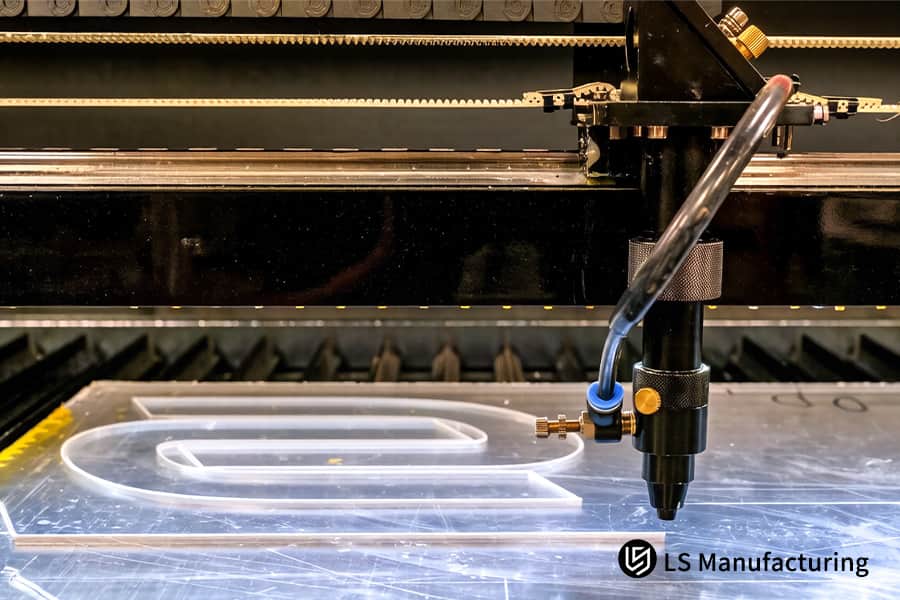
Figure 4: A CNC laser traces lettering on acrylic for high-precision signage using precision laser cutting services.
Case Study: LS Manufacturing Automotive PEEK Gear Washer Precision Laser Cutting Custom Solution
LS Manufacturing presented a sophisticated solution for precision laser cutting services for the customer, who is a Tier-1 automotive company working internationally. The job was to machine a highly functional PEEK washer that was prone to thermal warping and micro-fractures due to thermal warping, putting the entire vehicle program at risk:
Client Challenge
The customer required a PEEK washer for use in a transmission component that had to be made with ±0.1mm ID tolerance. But due to thermal cutting process by the first supplier, there was a noticeable impact on the heat-affected zone. This led to variations in ID tolerance of ±0.25mm and the creation of microscopic cracks in the material's surface. This ultimately caused the part to fail in the 150°C oil immersion fatigue test at 100%, putting the customer's potential contract for manufacturing automotive parts at stake.
LS Manufacturing Solution
This solution involved applying custom laser cutting for plastic technology utilizing a cold ablation UV laser. The precision laser cutting process was controlled by our exclusive multi-pulse energy control which was calibrated down to an extremely narrow range where the formation of HAZ could be fully avoided. A non-contact pneumatic device was invented to secure the washer without any mechanical loading. Cold UV laser cutting did not involve any transfer of heat, thus no micro-cracks or thermal distortion occurred as compared to the former process.
Results and Value
In the final part inspection, an ID tolerance of ±0.05mm was identified, which surpassed the requirements by 50%. Most importantly, the parts exhibited no failure during fatigue tests in their lifecycle, and the lifespan of the assembled parts via welding improved by 200%. The advanced laser cutting technology did away with the need for any post-processing, leading to an 18% decrease in the cost of production for the entire component. This level of efficiency and custom laser cutting solutions contributed significantly to the success of the Tier-1 manufacturer in securing the contract for lifetime supply for the vehicle model.
This is one of many examples showing how we solve difficult manufacturing problems through engineering prowess. With our experience in managing the interaction of material science and advanced laser cutting technology, we don’t just produce parts; we produce results, backed up by certification of both performance and supply chain. These are the real-world, data-based solutions that allow you to win your hardest business opportunities.

Why Choose LS Manufacturing As Your Strategic Partner For Tight Tolerance Plastic Laser Cutting?
Choosing a partner for tight tolerance laser cutting services extends beyond machine capability; it is about selecting a team that solves the root-cause engineering challenges of precision thermoplastics. We differentiate by deploying deep material science expertise and integrated process controls to guarantee part performance, ensuring your precision laser cutting services yield reliable, production-ready components. Here is how we ensure success for a global supplier network:
Thermal Management & Precision Control
- Mitigating Material Stress: Our technology uses pulsed advanced laser cutting technology, along with active power control to regulate the heat input, avoiding warping even when dealing with complex shapes.
- Predictive Process Simulation: Leveraging our propriety software, we model the thermal process on your unique material type and shape, qualifying the parameters prior to any cutting.
- Result: This addresses the fundamental problem of achieving ±0.025mm tolerances in thermally sensitive materials and ensures proper part compliance.
Material-Specific Expertise in Execution
- Science-Driven Parameter Development: Rather than simply cutting, we use our expertise to evaluate the bond of polymers. In every new material, we create a unique cutting parameter recipe that will not affect the integrity of nearby molecules.
- Material Integrity Preservation: Our precision laser cutting solutions for engineered plastics, including PEEK, Ultem, and PPSU, maintain chemical resistance and mechanical strength properties at the cut edge.
- Result: We address the underlying issue of latent defects at the edge (micro-cracking, crystalline structure variations), which lead to field failures, providing quality assurance certification in each batch.
Integrated Digital Workflow for Certainty
- Proactive DFM as a Standard: Our complimentary Design-for-Manufacturing analysis relies on past performance data to identify tolerance stack-ups, poor geometry choices, and material challenges before they become problems.
- Transparent, Data-Backed Logistics: We offer an online production progress tracker and stage-by-stage quote estimates, making you an educated participant in the process.
- Result: The issue of program delay and associated budget overruns is solved to achieve the reliability needed for sophisticated automated laser cutting systems implementation and JIT deliveries.
Unified Global Quality Standard
- End-to-End Traceability: Each order, from prototyping to full-fledged laser cutting production lines, follows a rigorous quality control system for achieving equal results in every one of our factories.
- In-Line Metrology Validation: Our approach incorporates vision measuring systems and laser profilometers inside the cutting machine cells for 100% in-process control of critical dimensions.
- Result: The solution to the reliability problem of regional suppliers is achieved, as every part delivered by any of our global nodes complies with the same set of performance parameters.
Our systematic methodology solves high-stakes technical barriers, de-risking development through closed-loop analysis and validation. This ensures your most demanding components perform as designed, delivering the certainty of precision laser cutting services and the reliability of tight tolerance laser cutting services for every global supplier.
FAQs
1. Why is LS Manufacturing a better choice than local shops for precision laser cutting services?
We offer not only a machining precision of ±0.1mm but also a comprehensive engineering solution—including material testing and DFM (Design for Manufacturability) optimization—to ensure the functional integrity of your parts.
2. Which plastic materials can LS Manufacturing process with high tolerance?
We specialize in processing PC, PMMA, POM, PEEK, PTFE, and various specialty composite plastics, and we can customize laser pulse parameters to suit the specific melting points of different materials.
3. How do you prevent charring and discoloration during the plastic laser cutting process?
By utilizing 99.9% pure nitrogen as an assist gas and optimizing the thermal input frequency, we achieve high-cleanliness cut edges that are completely free of charring and discoloration.
4. What is the fastest lead time for a quote on high-tolerance plastic laser cutting?
Simply submit your STEP or DXF files below, and our senior engineers will provide you with a detailed technical quotation within 12 to 24 hours.
5. Can LS Manufacturing handle thick plastic sheets with a tolerance of ±0.1mm?
For thick sheets exceeding 10mm, we employ multi-axis dynamic compensation technology to control kerf taper, thereby ensuring the perpendicularity required for precision assembly applications.
6. Do your laser cutting services for plastic parts include secondary operations?
Yes, we offer a one-stop service that includes ultrasonic cleaning, screen printing, adhesive backing application, and precision screw assembly, helping to streamline your supply chain.
7. Why is laser cutting more cost-effective than CNC milling for thin plastic parts?
Laser cutting eliminates the need for expensive fixtures and tool replacement costs. When processing complex contours and micro-holes, the per-part processing cost is typically 30% to 50% lower than that of CNC milling.
8. How does LS Manufacturing ensure the privacy of my custom plastic laser cutting designs?
We strictly enforce NDA agreements and store client drawings on encrypted servers. As a long-term global OEM supplier, we consider integrity to be the cornerstone of our business.
Summary
In precision manufacturing, a ±0.1mm tolerance separates the merely usable from the truly exceptional. Through digital thermal control, proprietary fixturing, and rigorous quality protocols, LS Manufacturing transforms complex plastic processing into predictable, efficient production. Whether for medical, aerospace, or electronic components, our deep material expertise delivers you both optimized costs and superior performance.
Stop compromising on part deformation or inconsistent supplier quality. Your next-generation high-precision products deserve nothing less than flawless cut edges. Click the "Get Instant Quote" button below right now to upload your design files. LS Manufacturing’s team of senior engineers will provide you with a complimentary, in-depth DFM analysis and secure the most competitive manufacturing quote for you within 24 hours. Let our precision be the key that unlocks the door to global market opportunities for your business.
📞Tel: +86 185 6675 9667
📧Email: info@lsrpf.com
🌐Website: https://lsrpf.com/
Disclaimer
The contents of this page are for informational purposes only. LS Manufacturing services There are no representations or warranties, express or implied, as to the accuracy, completeness or validity of the information. It should not be inferred that a third-party supplier or manufacturer will provide performance parameters, geometric tolerances, specific design characteristics, material quality and type or workmanship through the LS Manufacturing network. It's the buyer's responsibility. Require parts quotation Identify specific requirements for these sections.Please contact us for more information.
LS Manufacturing Team
LS Manufacturing is an industry-leading company. Focus on custom manufacturing solutions. We have over 20 years of experience with over 5,000 customers, and we focus on high precision CNC machining, Sheet metal manufacturing, 3D printing, Injection molding. Metal stamping,and other one-stop manufacturing services.
Our factory is equipped with over 100 state-of-the-art 5-axis machining centers, ISO 9001:2015 certified. We provide fast, efficient and high-quality manufacturing solutions to customers in more than 150 countries around the world. Whether it is small volume production or large-scale customization, we can meet your needs with the fastest delivery within 24 hours. choose LS Manufacturing. This means selection efficiency, quality and professionalism.
To learn more, visit our website:www.lsrpf.com.