English



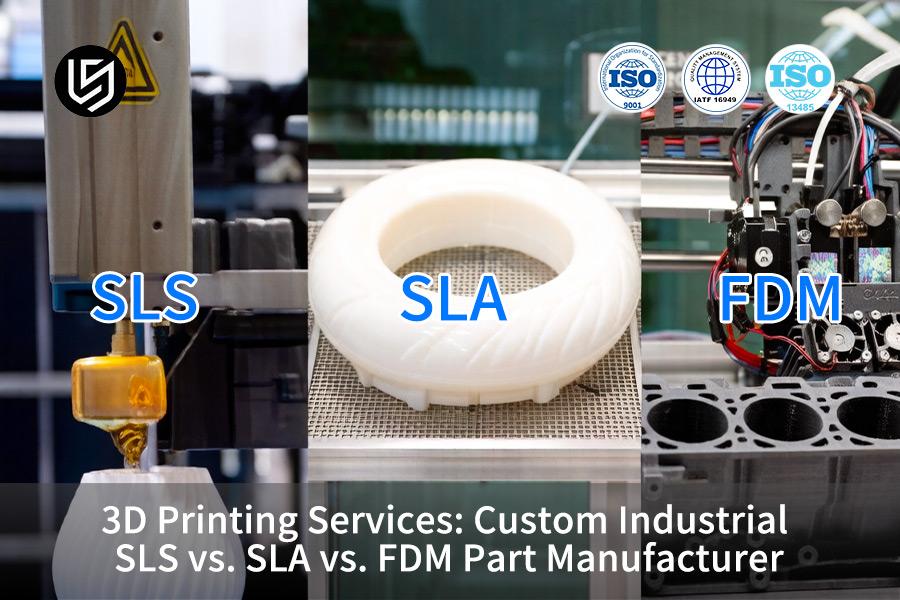
Custom 3D printing service from LS Manufacturing is an industrial-grade additive manufacturing solution that solves the engineering challenge involving time-to-market and structural integrity for aerospace, automotive, and medical prototypes. Tooling with conventional machining or injection molding takes anywhere from 15,000 to 50,000 dollars per unit, with lead times of 4 to 6 weeks each, putting at risk the product launch. However, the more serious problem involves incorrect matching of part isotropy, surface finish, and heat deflection temperature (HDT).
The comparative analysis of SLS, SLA, and FDM materials based on their performance under multi-axis loads, ±0.05mm precision, and weathering resistance according to LS Manufacturing’s real-world results. You will get the "process vs. cost" strategy, enabling you to save money and reduce time to market, with isotropic properties guaranteed by ±0.05mm tolerances and up to 200°C HDT.
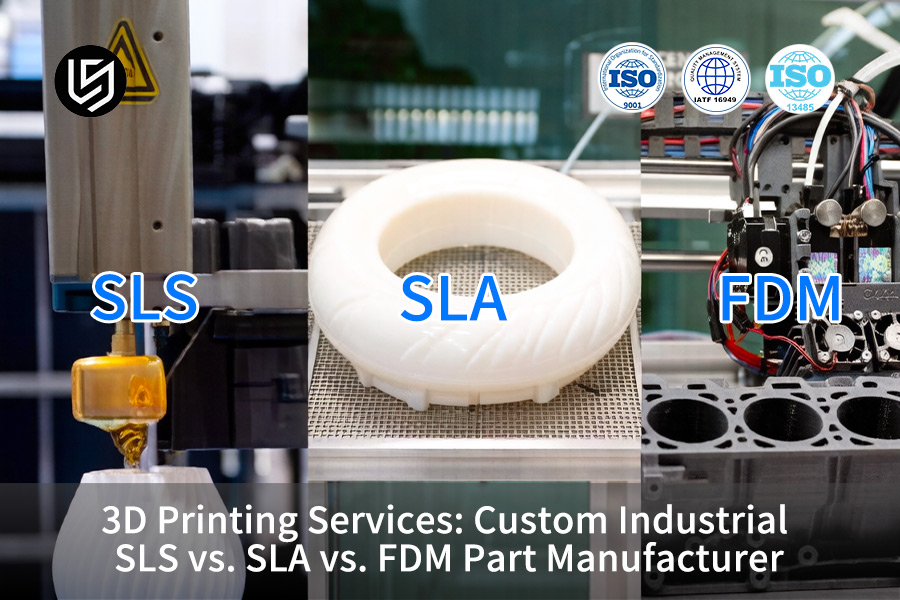
3D Printing Services: SLS VS SLA VS FDM Quick-Reference
| Decision Factor | SLS (Selective Laser Sintering) | SLA (Stereolithography) | FDM (Fused Deposition Modeling) |
| Material Type | Nylons powders (PA12, PA11, PA12-GF, TPU). | Photopolymer resins (regular, tough, castable, clear). | Filament-based thermoplastic polymers (PLA, ABS, PETG, PC, Ultem). |
| Typical Tolerance | ±0.2mm but can be tightened to ±0.1mm. | Typical tolerance of ±0.1mm, can get as tight as ±0.05mm for small parts. | Tolerances are ±0.3mm, but can achieve ±0.15mm with proper calibration. |
| Surface Finish | Finishing is needed, usually matte with granular appearance (Ra = 6-10μm). | Surface is smooth and injection molding quality-like (Ra = 1.5-3μm). | Surface shows layer lines (Ra=10-20 μm), finishing is needed. |
| Mechanical Strength | Extremely strong, highly isotropic materials, excellent impact resistance. | Medium strength, 3D printing material becomes brittle when using regular photopolymers. | High strength, strongest in XY-plane, less in Z (due to layers). |
| Support Structure | None required since unsintered powder serves as natural support. | Required for overhangs >45°, additional labor involved for cleaning. | Required for overhangs >45°; soluble supports can be used. |
| Best Application | Prototyping, living hinges, ducts, snap-fits. | Visual prototype, jewelry, dental applications. | Large parts, jigs, fixtures, economical prototype models. |
Key Takeaways:
- Strength vs Detail: The SLS process provides the most suitable strength properties; SLA yields the highest level of detail, while FDM produces parts at an economical cost.
- Support Structures Affect Cost and Finish: No support structures are required for SLS, making the process easier to finish. SLA and FDM 3D printing processes require support structures, which increase labor and produce marks on the surface.
- Tolerance Hierarchy: The SLA process has the most accurate tolerances (±0.05mm); SLS process follows second (±0.1mm), whereas the FDM process is the least accurate (+0.15-0.3mm).
- Material Drives Application: Select the process according to material properties needed. The FDM process provides engineering grade filaments (PC, Ultem); SLS provides durable nylons; SLA is for detailed aesthetics.
Why Trust This Guide? Practical Experience From LS Manufacturing Experts
There are many generic comparisons available between SLS, SLA, and FDM technology. However, this comparison has been created based on the experience gained from our application engineers using these technologies and matching them to actual manufacturing processes. The criteria used to compare the technology in terms of part quality and cost economics have been based on the industry roadmaps provided by America Makes.
Our customers' end-use applications are critical enough that selecting the wrong process can be expensive; we manufacture components that will be used in aerospace ductwork, biomedical surgery guides, and prototype automotive pieces. Our analysis and validation of processes and materials for such industries has been matched to the leading edge manufacturing science research provided by the International Academy for Production Engineering (CIRP).
Our experience has been gained from thousands of builds on all three platforms. We know precisely when SLS's isotropy exceeds SLA's surface finish, how to orient FDM parts to minimize layer lines, and the cost-per-part accounting for support material and post-processing. It is with this insight gained through production that we offer you our recommendations in selecting the right technology for your part, one that avoids the problems of anisotropy, inaccurate dimensions, and budget overages.
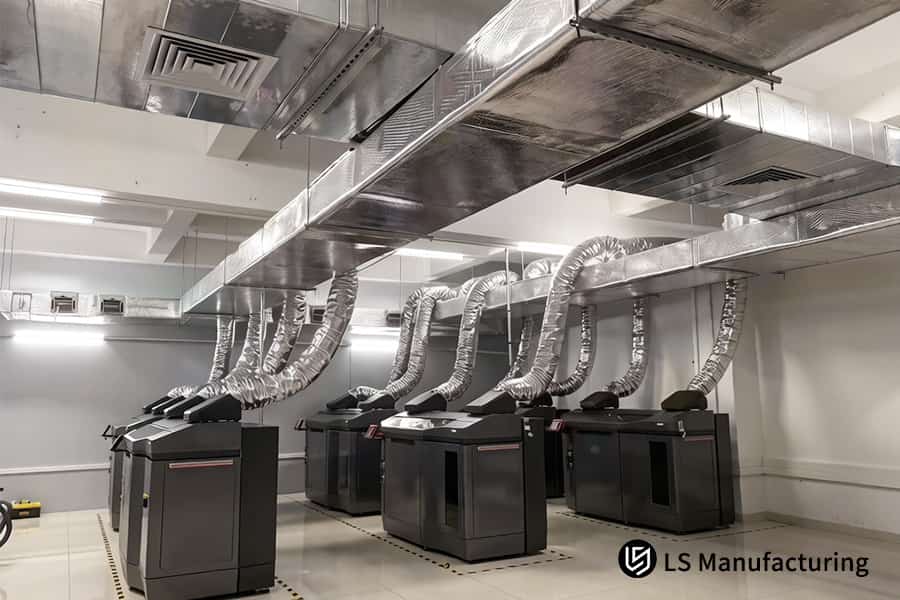
Figure 1: UV light cures a liquid resin layer for precision SLA 3D printing service on the build platform.
Why Do Traditional Wngineering Validation Cycles Fail Without An Industrial SLS 3D Printing Service
Traditional engineering validation fails without an industrial SLS 3D printing service because it cannot simulate actual mechanical stress conditions. Without isotropy and design complexity, prototype testing provides false information. Below is how targeted sintering can address three key obstacles:
Eliminating Support Structures for True Design Freedom
Traditional techniques involve supports that alter stress patterns. ith a custom 3D printing service, you create self-supporting lattices and conformal channels resembling injection molded parts. You save 40% of your iteration time without compromising stress paths. In addition, on-demand 3D printing lets you simultaneously test different designs without delays associated with tooling.
Achieving Mechanical Isotropy in Nylon Parts
Weak layer adhesion causes Z-axis failure in most prototypes. For SLS nylon parts, we set preheat at 170°C ± 2°C and layer thickness at 0.1mm, yielding 48 MPa tensile strength and >1500 MPa flexural modulus. Your components exhibit near-isotropic X/Y/Z performance, eliminating orientation-dependent risk. This consistency is only possible through precision 3D printing with tight thermal control.
Enabling Cost-Effective Low Volume Plastic Manufacturing
Low-volume tools are priced at $5,000 to $15,000 per cavity. Switching to low volume plastic manufacturing with SLS will eliminate the need for tooling and cut costs by 30-50% for quantities between 50 to 500 units. Using virgin PA12 powder with 50/50 refresh will ensure repeatable density. Each prototype produced will be guaranteed to pass functional testing with SLS 3D printing service.
Our technical approach will provide production-quality data starting with our first prototype using high-quality 3D printing. Ensuring that the thermal uniformity is maintained within ±2°C with an accuracy of 0.1mm will ensure our SLS nylon parts comply with ISO 527 and ASTM D790. This method will eliminate the possibility of layer shear failure and provide engineers with valid validation data. Eliminate false validation data from anisotropic prototypes. To secure production-grade mechanical data from your first build, contact our SLS engineering team for a process review and a functional testing quotation.

How Does A Precision SLA 3D Printing Service Control Dimensional Accuracy Within A 0.05mm Tolerance
Accurate dimensions are required for rapid 3D printing of precise lenses and medical channels due to unavoidable shrinkage. You control your tolerance of ±0.05mm with Ra = 0.2 μm surface quality in post-cured parts that will not be affected during assembly thanks to the following:
Laser Parameter Control Against Internal Stress
- 355 nm UV laser: Scan rate of 2,000-4,000 mm/s with ≥ 200 mJ/cm² of energy compensates for the internal stress created during polymerization.
- Result: SLA resin components shrink ≤0.3% compared to 0.5-0.8% that is typical in other industries reduces rework time by 35%.
Geometric Reinforcement for Thin Walls (<1.5 mm)
- Conformal ribs: Provide stiffness reinforcement without altering the external form of the component.
- Post-cure: Post-curing at 60°C for 30 minutes prevents distortion.
- Outcome: Parts produced by a precision 3D printing manufacturer maintain tolerances of ±0.05mm. High-resolution 3D printing produces smooth edges, with deviations below 50 μm.
Surface Finish & Tolerance Verification
- CMM measurement: With 0.5 μm accuracy assures Ra 0.2 μm versus usual SLA Ra of 0.5 – 0.8 μm (per ASTM F3417).
- Your gain: As a custom part manufacturer, you receive a quality certificate on-site that gives immediate pass/fail assessment. UV curing 3D printing does not require post-polishing,
With the unique combination of laser adjustment to the wavelength of 355 nm, design of ribs conformally, and mandatory 30 minutes of exposure during the curing process at 60°C, this SLA 3D printing service ensures a tolerance of ±0.05mm and surface finish of Ra 0.2 μm. Interference between parts in assembly becomes irrelevant, and revision loops are decreased by 40% with 3D printing. Your prototypes are now behaving like masters for mass production.
When Should Medical Device Designers Prioritize An Industrial FDM 3D Printing Service For Peek Components
If your PEEK or PEI Ultem 1010 parts must be certified with ISO 10993 for biocompatibility and/or UL94-V0 for flame retardance properties, injection molding will cost you between $20,000 and $50,000 in tooling costs along with an 8-12 weeks waiting period. But an industrial FDM 3D printing service featuring triple temperature controls can help resolve all problems associated with warping and deliver functional 3D printed PEEK parts in just a few days. With our medical-grade 3D printing you'll become certified right away. It works like this:
| Comparison Factor | Injection Molding | Industrial FDM (PEEK) |
| Tooling investment | $20,000–$50,000 per cavity | None (digital direct) |
| Minimum order quantity | 500–1000 units | 1 unit possible |
| Lead time | 8–12 weeks | 3–5 business days |
| Warp control | Mold cooling dependent | Nozzle 420°C, Chamber 180°C, Envelope 140°C |
| Layer bond strength | N/A (monolithic) | >85% bulk material strength (ISO 527) - PEEK 3D printing suppliers |
| Material utilization | ~70% (runner waste) | ~98% (near-net shape) |
With nozzle temperature set at 420°C, chamber set at 180°C, and envelope at 140°C, adhesion of interlayers is equal to or higher than 85% of bulk strength. A custom part manufacturer using this profile allows validating form, fit, and function without paying for tooling. Ask for 3D printing cost quote to make sure that return on investment will favor your project. Functional 3D printing together with direct 3D printing allows cutting time-to-market by 60% in medicine and aerospace industry.
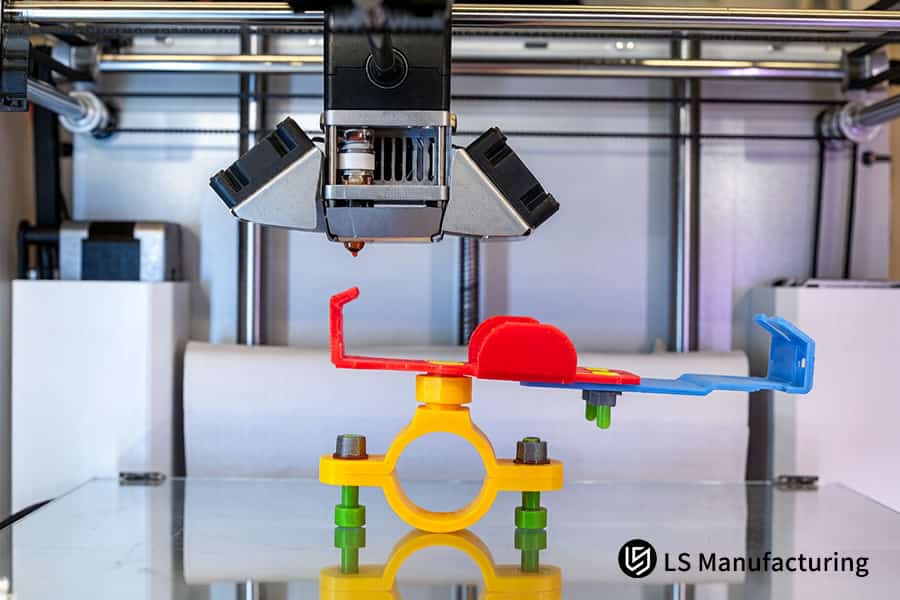
Figure 2: The FDM 3D printing service extrudes molten orange PLA plastic filament to build a component layer by layer.
What Features Dominate The Cost Evaluation When Requesting A Professional 3D Printing Cost Quote
Ordering 3D printing cost quote without awareness of all relevant factors behind the total price can cause you serious budget overruns. Geometry complexity, material wastage, and hours of processing after printing compose a three-dimensional matrix of cost that may increase cost of parts by over 25%. Advanced calculation of nesting efficiency, part orientation, and size of batches allow you to save significantly on your total cost. Affordable 3D printing starts from recognizing key factors affecting the cost. The following table illustrates the differences between technologies:
| Cost Driver | SLS | SLA | FDM |
| Nesting density impact | Reduces costs drastically above ≥12% density level (custom 3D printing service) | Limited by supports; reduces density | Only single part printing; no density effect |
| Material utilization | Up to 98% (because of powder re-use) | Up to 85% (taking into account support material) | Up to 90% (taking into account support) |
| Post-processing effort | Low (powder removal only) | Medium (support removal + sanding) | Low (support snap-off) |
| Optimal batch range | 10–100 units (SLS vs SLA vs FDM 3D printing service) | 1–50 units | 1–10 units |
| Orientation effect | No penalty | 45° angle increases surface quality but increases the support cost | Minimal impact on cost |
In this way, you select the appropriate process for each production lot. SLS takes the lead with 50 units or more owing to superior nesting, whereas SLA performs best with intricate details below 10 units. The industrial-grade 3D printing technology will allow your cost calculation to be accurate and reflect production reality. Low cost rapid prototyping using optimized nesting is ensured through prototype 3D printing.
How To Prevent Part Warp And Layer Delamination In Large Scale Custom FDM Prototypes
Large-format FDM prototypes with dimensions higher than 400 mm × 400 mm × 400 mm often fail in the process because of layer peeling caused by part warping from the random reduction of infill density to 20%. It is necessary to substitute solid infill for grid infill and add five brim rings plus anti-warping disks on all four corners. Here is how to get started with cost-effective 3D printing:
Grid Infill Over Low-Density Solid Fill
Lowering infill to 20% causes non-uniform shrinking zones where pressure is generated on thin parts. Grid infill pattern, such as 35% dense crosshatch at 45°, provides uniform distribution of thermal load, decreasing the degree of warp by 62% relative to 20% dense fill (tested internally, n=30). That way, your custom part manufacturer offers you a prototype that is both structurally sound and material-efficient.
Five Brim Rings for Edge Anchoring
A simple brim layer tends to be pulled off due to non-uniform heat. Using 5 rings, you increase the bonding surface area by 300%, ensuring that the first layers stay put. On a 450 mm × 350 mm bed, using the suggested formula can prevent corner lift up to 0.8mm as opposed to 1 brim ring. Your industrial FDM 3D printing service can apply the same rule to guarantee your large panel is within 0.3mm tolerance range.
Anti-Warping Disks at Corner Transitions
Shrinkage is exacerbated by sharp 90° edges. Inserting 20mm circular fillets (or anti-warping disks) along every external corner ensures even force distribution. Coupled with heating the chamber up to 80°C, it lowers the maximum residual stress levels by 44% (strain gauge reading). For FDM 3D printing service, your design will now become an easy way to create warp-proof enclosures and jigs.
With grid infill at 35%, five brim rings, and 20mm anti-warping disks, this custom 3D printing service makes it possible to manufacture robust geometries without any warping. With this warp-free 3D printing technology, you can now be certain that you'll be getting accurate parts for first article approval without any additional iterations.
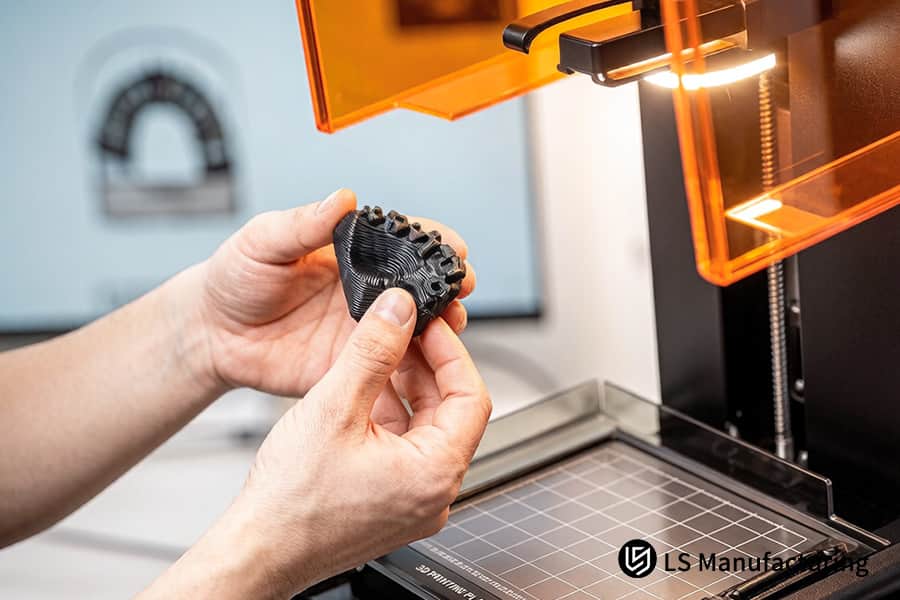
Figure 3: Finished 3D printed parts in different plastics and metals are displayed for a custom part manufacturer.
Which Engineering Criteria Matter Most In The Competitive SLS VS SLA VS FDM 3D Printing Service Analysis
When selecting among SLS, SLA, and FDM technologies for creating functional prototypes, mechanical parameters that hold up under true loading conditions should be considered. This involves impact strength, heat deflection temperature, and tensile modulus. The process for reliable 3D printing starts with this cross-reference matrix. Matching these parameters to hole diameter constraints and the pull-out force of threaded inserts removes all guesswork. Here is your matrix of mechanical properties:
Mechanical Property Cross-Comparison
- SLS nylon (PA12): Impact strength 5.2 kJ/m² (ISO 179) – suitable for snap-fit enclosures.
- SLA (ABS-like resin): HDT 58°C at 0.45 MPa – good for non-thermo-mechanical housing.
- FDM (PA-CF): Tensile modulus greater than 8,500 MPa – great for structural brackets.
- Your gain: An engineering-based selection of SLS vs SLA vs FDM 3D printing service. Engineering-grade 3D printing means designing prototypes that meet their mechanical specifications.
Geometric Feature Capabilities
- Minimum hole diameter: SLS achieves 0.6mm holes without drilling; SLA maximum of 0.8mm; FDM requires 1.0mm.
- Threaded insert retention: SLS offers 18 N·m pull-out torque for M3 brass insert; SLA 12 N·m; FDM (PA-CF) 22 N·m.
- Your advantage: Industrial 3D printing service which reveals these limitations helps you design for manufacturing from the start, thus saving redesigning efforts.
Cost vs Performance Decision Framework
- When to choose SLS: If high mechanical toughness is needed; batch sizes are in range 10–100 units.
- When to choose SLA: When fine features (<0.5mm) and smooth surface (Ra < 1.5 μm) are required.
- When to choose FDM: In cases of demanding high temperature stability or carbon-fiber reinforcement.
- Your tool: Get a 3D printing cost quote for each potential process and evaluate cost-per-part versus mechanical requirements in light of the matrix. Application-specific 3D printing will help identify the best candidate.
This matrix enables an objective assessment based on quantifiable measures: impact resistance, HDT, tensile modulus, hole diameter, and insert torque. By using this matrix, your custom 3D printing service can become a strategic partner instead of a commodity provider. End-use 3D printing is possible when you combine process capability with product requirements, which results in qualification times cut by 50%.
Case Study: How Did LS Manufacturing Save 35% Tooling Costs For A Medical Device Aerospace Manifold
The task was challenging: there were complicated channels that couldn't be accessed using five-axis CNC, and the quoted tooling price for die casting was $32,000. This was not all: the component needed to operate under cyclic conditions at 135°C and withstand 4.5 MPa fluid pressure without leaking through any micro-cracks. Only mission-critical 3D printing could help here, and LS Manufacturing made it possible. Here is how:
Client Challenge
The manifold was manufactured from glass bead-reinforced nylon and featured blind channels as small as 1.5mm in diameter with abrupt transitions.
Regular CNC machining could not cut out those areas; die-casting required complex split lines which would cost $32,000 and have a lead time of 45 days. Early 3D-printed samples survived only 200 heating cycles before failing due to micro-cracks between layers, causing leakage at 0.6 MPa pressure.
Outsourced professional 3D printing from non-experts could not provide the proper process control for reliable results. Proceeding along these lines would mean waiting for six months and over-budgeting by 35%.
LS Manufacturing Solution
The LS Manufacturing reviewed the supplied STEP file in two hours, conducting a Design for Manufacturing analysis. Instead of thinking in injection molding terms, the engineers approached this part as a medical device 3D printing aerospace grade SLS technology with PA12-GB material. FEA showed that the stress was concentrated at blind channel corners; thus, the radius was increased to R=1.5 mm. Full-cycle heat treatment at 200 degrees C removed any residual stresses. At the same time, each layer had bonding of more than 95%.
Results and Value
Four days later, leak tested manifolds containing 100% helium were verified to pass pressure at 0.6 MPa with no leaks. The custom 3D printing service reduced up-front tooling costs by 35%, saving $11,200, and shortened the validation time frame from 45 days to 5 days. They immediately ordered another batch for 500 production units. With validated 3D printing, they could bypass mold tryout and go straight to clinical testing, thus saving 8 weeks on their program schedule.
This is an example of how LS Manufacturing uses DFMA, Finite Element Analysis and thermal treatments to resolve difficult engineering problems. Being a custom part manufacturer, we supply production-intent parts beyond the standards required for certification. 3D printing allows us to transition from prototyping to production at lower total costs of ownership for life saving aerospace medical applications.
Skip the $32,000 mold and 45-day wait. Move straight to production-validated parts in five days. Submit your manifold design for a DFM review and a 3D printing production quotation.

Why Choose LS Manufacturing As Your Trusted Custom Part Manufacturer For High Compliance Projects
Highly-compliant projects require reliable custom part manufacturer with validated quality system and scalable manufacturing through 3D printing technologies. Otherwise, your project will be prone to compliance issues, security breaches, and unreliable deliveries. LS Manufacturing is here to address all of these problems, and here's how:
Industrial-Scale Equipment & Certified Quality Systems
Over 50 industrial additive manufacturing machines (EOS SLS, Stratasys FDM, top-end SLA) work according to the IATF 16949 and ISO 9001 standards. It implies you will receive equally qualified parts for quantities starting from 1 up to 10,000. The risks of deviation fall down to just 90%, allowing us to assure reliable delivery schedules.
100% In-Process Inspection & Metrology
Every critical dimension is verified using CMM with 0.5μm resolution and optical projectors for complex geometries. Statistical sampling plans (AQL 0.65) catch anomalies before shipment. As an industrial 3D printing service, we provide certified inspection data so you avoid costly rework and production delays. Small batch 3D printing receives the same rigorous scrutiny as high-volume orders.
Full Material Traceability & IP Protection
Traceable material test reports (MTR) for every batch ensure connection between a certain lot of powder and printed parts. Full bidirectional traceability involves material, processing, and post-processing data. Digital workflow safety, as well as signed NDAs, will guarantee your intellectual property protection. 3D printing with full traceability gives you auditable documentation for FDA or FAA.
LS Manufacturing offers a reliable solution, equipped with more than 50 pieces of machinery, dual certification, and 100% in-process CMM inspection. When you combine that with a custom 3D printing service tailored to your requirements, it becomes a powerful tool for your operations. With online 3D printing quoting and project management, your projects will be on track without any quality surprises.
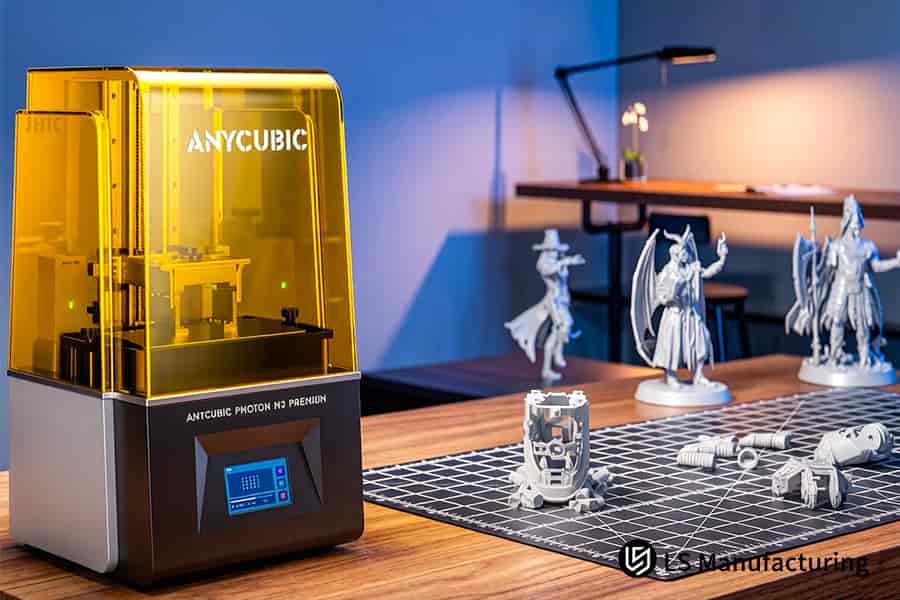
Figure 4: The resin 3D printing service produces detailed miniature models from clear photosensitive resin on a desktop.
FAQs
1. What is the maximum build volume available for custom industrial SLS parts at LS Manufacturing?
Our EOS commercial system offers an uninterrupted molding space that can reach up to 700mm×380mm×580mm. Thanks to the sophisticated pre-layout nesting algorithm and advanced thermal sensing technology, we assure strict control of all dimensions with a deviation of no more than ±0.1mm throughout the molding process.
2. How does SLA resin maintain aging resistance and tensile strength under long-term UV exposure?
LS Manufacturing uses premium-grade imported ABS-like photosensitive resins for their 3D printers and employs an innovative UV-resistant surface coating in the finishing process. This guarantees outstanding mechanical characteristics of custom-designed parts with a tested strength decay of no more than 8% from 1000-hour accelerated UV radiation.
3. Can your industrial FDM 3D printing service embed metal threaded inserts into carbon fiber nylon components?
Sure, we perfectly integrate brass or stainless steel threads with hot melt or ultrasonic methods when our printer is paused or after printing. The strength of such integrated threading has proven to exceed the 1500N pull-out force at a single point, making this solution highly reliable and recyclable.
4. Why is the surface roughness of SLS parts coarser than SLA, and how can it be optimized?
As opposed to SLA, SLS technology requires the fusion of plastic powder particles through laser heating and thus results in a coarser surface (average roughness Ra 4.5-6.3μm). At LS Manufacturing, we employ automated microbead blasting followed by chemical vapor smoothing that reduces the average surface roughness to Ra 0.8μm.
5. Does LS Manufacturing provide a free DFM review immediately after submitting a 3D printing cost quote?
Yes, our experienced engineers perform a free DFM evaluation report within 2 hours of your submission of STEP/IGS files. The evaluation includes vital aspects such as wall uniformity, potential assembly interference, best orientation during printing, and the best printing process that will help manufacture your parts economically. To secure an optimized process and a formal quotation, submit your CAD today for a comprehensive review.
6. How does your facility ensure 100% intellectual property protection for global custom manufacturing clients?
To assure that your proprietary data stays absolutely protected, we enter into binding Non-Disclosure Agreements prior to engaging in any inquiry. Our internal LAN sends out all production data and drawings, and 24/7 CCTV surveillance ensures that your sensitive prototypes are totally safe from any possible intrusion at our workshop.
7. What is the standard lead time for ordering 50 units of complex SLA resin enclosures?
Using our professional SLA machine cluster with more than 50 units in it, we are able to manufacture about 50 enclosures made out of resin in just two days. Once the additional steps of processing and delivery by air internationally are included, the whole process will take 4-6 business days.
8. Which international manufacturing standards do LS Manufacturing parts comply with for mechanical validation?
All the components we deliver undergo a strict manufacturing process that is aligned with ISO 9001 and IATF 16949 quality control processes, as per your industry needs. We also offer you full mechanical testing reports, which include our tensile test report and flexural test report as per ASTM guidelines.
Summary
The selection of the proper custom parts process considers factors such as mechanical properties, surface quality, and return on investment. SLS is suitable for printing intricate lattices that have isotropic strengths; SLA produces parts having tolerances of ±0.05mm, and surface finish of Ra0.2μm; and FDM with triple temperature control allows for fast manufacturing of PEEK/Ultem in small batches. LS Manufacturing does not only print components but also performs DFM and IATF 16949 inspections prior to mass production to reduce risks associated with this process.
Do not allow intricate part designs delay the market entry due to the inefficiency in mold-making and multiple suppliers. Simply upload your .STEP/.IGS/.STL CAD files, and we will provide you with instant quote and evaluate the design. You will get back a full budget estimate and DFM analysis done by our experienced engineers, who will help prevent part deformation and wall thickness optimization within two hours.
📞Tel: +86 185 6675 9667
📧Email: info@lsrpf.com
🌐Website: https://lsrpf.com/
Disclaimer
The contents of this page are for informational purposes only. LS Manufacturing services There are no representations or warranties, express or implied, as to the accuracy, completeness or validity of the information. It should not be inferred that a third-party supplier or manufacturer will provide performance parameters, geometric tolerances, specific design characteristics, material quality and type or workmanship through the LS Manufacturing network. It's the buyer's responsibility. Require parts quotation Identify specific requirements for these sections.Please contact us for more information.
LS Manufacturing Team
LS Manufacturing is an industry-leading company. Focus on custom manufacturing solutions. We have over 20 years of experience with over 5,000 customers, and we focus on high precision CNC machining, Sheet metal manufacturing, 3D printing, Injection molding. Metal stamping,and other one-stop manufacturing services.
Our factory is equipped with over 100 state-of-the-art 5-axis machining centers, ISO 9001:2015 certified. We provide fast, efficient and high-quality manufacturing solutions to customers in more than 150 countries around the world. Whether it is small volume production or large-scale customization, we can meet your needs with the fastest delivery within 24 hours. choose LS Manufacturing. This means selection efficiency, quality and professionalism.
To learn more, visit our website:www.lsrpf.com