English



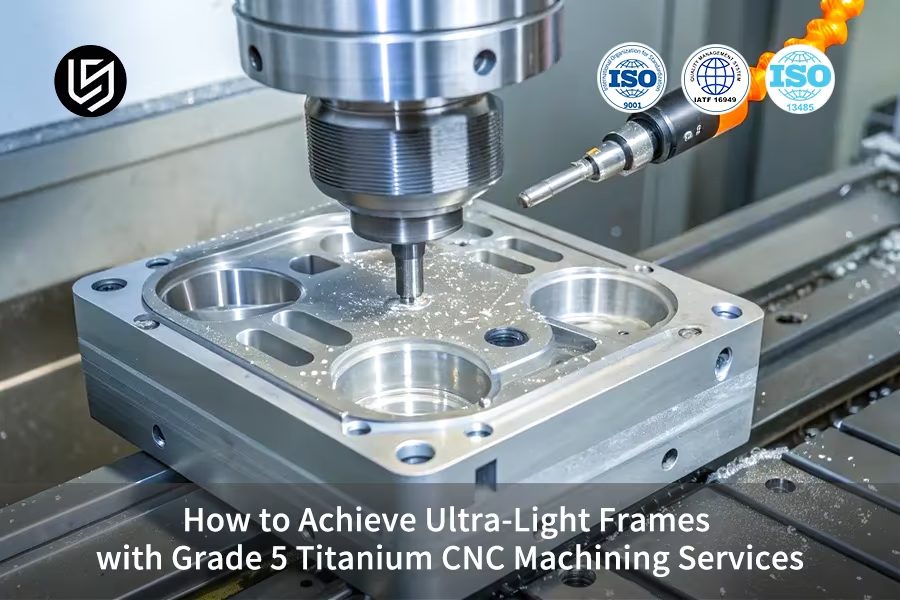
Grade 5 titanium CNC machining services are a necessity for projects that require cutting weight to be a non-negotiable factor, yet strength is still a prerequisite for the part in question. The physical makeup of titanium causes extreme tool wear and distortion, particularly for thin-walled parts with a part thickness of less than 0.8mm, leading to a high rate of scrap parts. This is where LS Manufacturing's multi-physics simulation plays a part in the process, where thermal stress is proactively mitigated to guarantee part integrity from the very first cut.
The fundamental problem is that people do not understand the low modulus of elasticity and reactivity of titanium, which is often confused with the hardness of the metal in question. This is where the 70 Bar high-pressure internal coolant and PCD tooling come into play, where the thermal-mechanical balance is perfectly understood to create a deterministic process with extreme accuracy, where tolerances for complex frames are kept to a precise ±0.01mm.
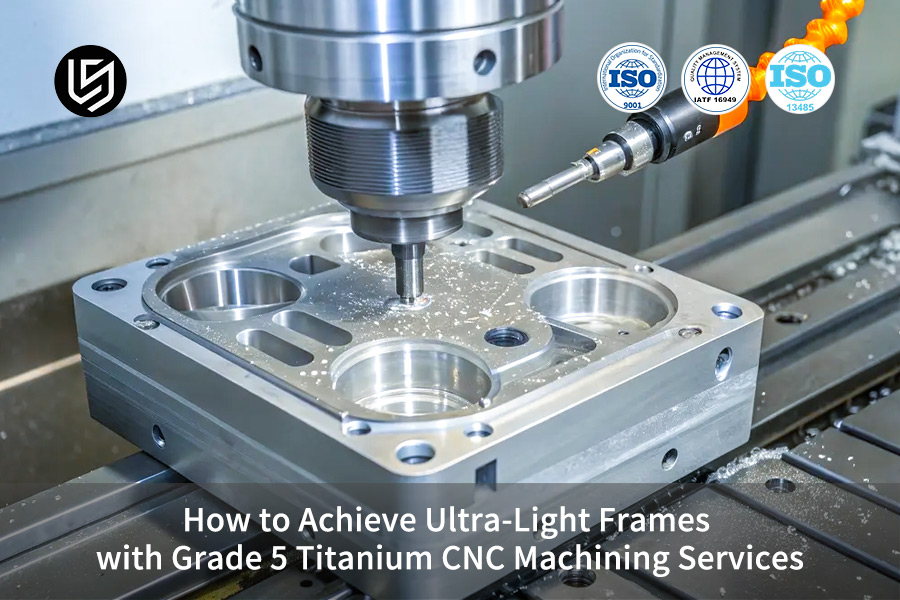
Ultra-Light Frames With Grade 5 Titanium: A Manufacturing Guide
| Key Challenge | Engineering Solution |
| Achieving High Strength-to-Weight Ratio | Although the strength of the grade 5 titanium is unmatched, the reduction in weight by the complex internal geometries, rather than the simple pocketing process, requires complex machining techniques. |
| Minimizing Material While Maintaining Rigidity | The machined parts with thin ribs and walls tend to vibrate and deflect during the machining process. This requires high stability from the machine and expertise in CNC machining complex geometries. |
| Managing Heat & Stress in Thin Sections | The low thermal conductivity of the Titanium makes it difficult to machine complex geometries without warping the part. We use high-pressure coolants and stepwise stress-relieving machining techniques. |
| Design for Additive/Subtractive Hybrid | The best design for the machined parts is a hybrid of the subtractive and the additive machining process. |
| Our Integrated Approach | We use multi-axis machining with in-process monitoring and topological optimization software to intelligently minimize the material to the barest minimum and machine it only when absolutely necessary. |
| Result: Structural Efficiency | We provide frames that are substantially lighter compared to the traditional aluminum frames while maintaining or exceeding the required stiffness and strength specifications. |
| Result: Performance-Optimized Design | Allows for the creation of components that take ultra-lightweight CNC machining design to the extreme for aerospace, motorsport, or other high-performance applications. |
Our answer to the fundamental question of how to take the high potential of the grade 5 titanium material's weight to strength ratio and make it a reality for ultra-lightweight structural frameworks is that we are masters at machining ultra-complex features and controlling thermal stress to maximize the stiffness of your design while minimizing its weight for ultimate performance in extreme environments.
Why Trust This Guide? Practical Experience From LS Manufacturing Experts
There's no shortage of theory and debate about machining, but trust us when we say that this is a guide created by people with their hands in the trenches, fighting to make an ultra-lightweight grade 5 titanium frame a reality with a wall thickness of less than 0.8mm without any form of thermal distortion or tool failure. We don't just design ultra-lightweight components; we live in a world where designing and manufacturing ultra-lightweight components for extreme environments, where failure is not an option, is a daily fight to save lives in aerospace and medical devices, or to get that edge in motorsport.
Our expertise is not only acquired but also earned after years of success and the right amount of failure in the early days of our journey. We have perfected a deterministic method, which includes multi-physics simulation for pre-emptive stress management, along with our proprietary 70 Bar high-pressure coolant and PCD tooling technology, to deliver the extreme ±0.01mm tolerances that define the true ultra-light range, with a methodology that meets the stringent criteria set by the National Association for Surface Finishing (NASF).
The knowledge that we provide is based on our daily lives, and every strategy for dealing with reactivity and low elastic modulus is put to practical test. Our expertise is based on the fundamental principles set by the Aluminium Association (AAC), which are then applied to deal with the challenges posed by working with titanium. We provide the practical insights that enable you to go light and strong from the first part itself.
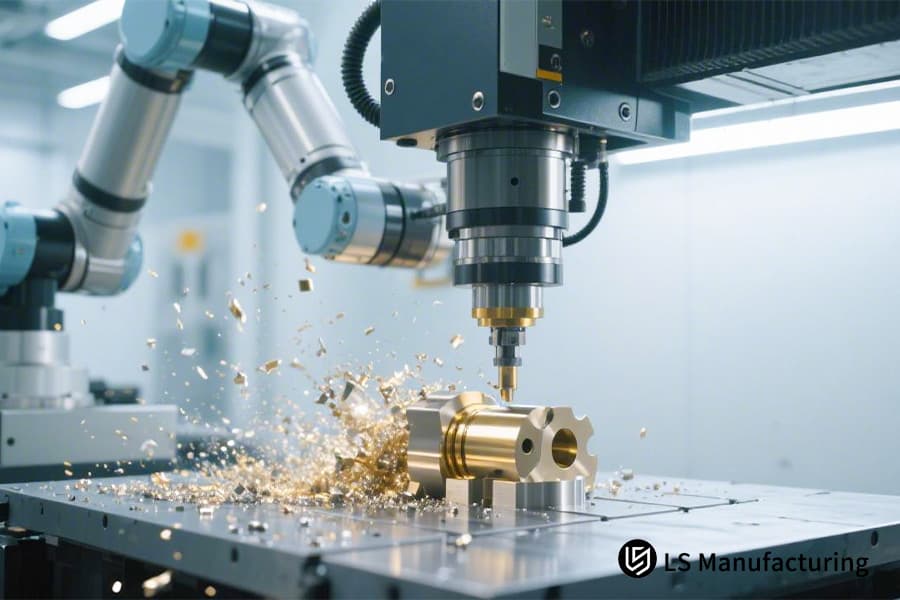
Figure 1: A robotic CNC machine mills grade 5 titanium with high speed for lightweight aerospace structural parts.
How Do Professional Grade 5 Titanium CNC Machining Services Define The "Fatigue Life" Standards For Ultra-Lightweight Frames?
For ultra-lightweight frame construction, the definition of fatigue life does not only extend the bulk material properties but also extends down to the nano-scale surface condition. In this document, we will outline the methodology we have developed to create a superior standard by utilizing our advanced surface integrity engineering capability with our high-end grade 5 titanium CNC machining services to transform the subsurface into a performance asset.
Material Challenge and Performance Criteria
The pursuit of extreme light-weighting in grade 5 titanium CNC machining creates a fundamental conflict between the wall section and the fatigue life requirement. In the traditional machining process, damage to the subsurface does not become evident but serves as a site for crack nucleation in the fatigue process.
Engineering Surface Integrity as a Design Parameter
We consider the machined subsurface to be a functional surface. Our precision titanium CNC machining process controls two key parameters: the subsurface depth due to work hardening (<50μm) and the residual stress profile. This is not achieved by accident or intuition but by strategies for the removal of the material that consider the integrity of the surface as a specifiable and verifiable parameter.
Precision Machining Parameter Optimization
Microscopic stress concentrators play a key part in the determination of the lifespan of the material. We have optimized our CNC cutting strategies, particularly the step-over and scallop parameters, to avoid periodic marks on the machined surface by the cutting tool. This requires a combination of programming strategies and the use of good CNC machines that provide a uniform and isotropic surface finish to the machined part.
Validation Through Predictive and Empirical Analysis
Our benchmark is not based upon assumption, but rather correlation. We measure micro-hardness and subsurface distributions of residual stresses and correlate them to fatigue testing. We are able to make predictions regarding lifespan based upon characteristics of the machined surface, effectively moving the quality gate from the final part to the CNC machining process.
The document again emphasizes the need for controlled causation in the fatigue life definition exercise. Our claim to authority is based upon our detailed process approach to specifying and delivering surface condition to our clients, providing them with a tangible competitive advantage based upon performance.

How To Manage Thermal Deformation In <0.5mm Thin-Wall Precision Titanium CNC Machining?
The pursuit of accuracy in thin wall machining processes with a wall thickness of less than 0.5mm for ultra-light titanium CNC machining is, in effect, a constant fight against thermal deformation, owing to the low thermal conductivity of titanium, which often results in thermal hotspots and, therefore, warping and deformation of parts. As a solution to this problem in thin wall machining processes, our strategy is to systematically address this problem as a variable:
Active Thermal Management at the Cut Interface
- High-Pressure Coolant Strategy: Utilize the potential of 70+ bar high-pressure coolant to break the chip, break the thermal barrier, and instantly remove heat.
- Precision CNC milling parameters: Optimize the parameters to efficiently manage heat input and avoid temperature rise of the entire piece beyond 80°C.
Mitigating Machining Stresses Through Path Planning
- Layered, Symmetric "Onion-Skin" Machining: The layered and symmetric machining technique can be effectively utilized for the proper distribution of residual stress and for the prevention of "springing" of the CNC machining parts.
- Adaptive CNC toolpath generation: The axial and radial depth of cut needs to be varied for the proper and uniform distribution of stress.
Real-Time Thermal Compensation
- In-Process Metrology Integration: The non-contact metrology probes can be effectively utilized for the determination of the part geometry and machine thermal growth during the machining process.
- Dynamic Offset Adjustment: The CNC machining process will adjust the tool offset according to the real-time data and compensate for the predicted thermal drift before it becomes a dimensional error.
Process Validation and Control
- Predictive Simulation: The FEA technique can be effectively utilized for the simulation of the thermal-structural interaction and validation of the machining techniques employed for the machining of the part.
- Empirical Verification: The in-process sensor measurements and the final CMM measurements can be effectively utilized for the validation and refinement of the CNC process control model for the given part geometry.
While this document is certainly about the capabilities of our machine, it is also about our proactive approach to system design. What makes us unique and our competitive edge is our deterministic sensor-informed protocol for providing titanium CNC machining services. We are able to guarantee our thin wall machining to be both predictable and very successful, where others must compromise.
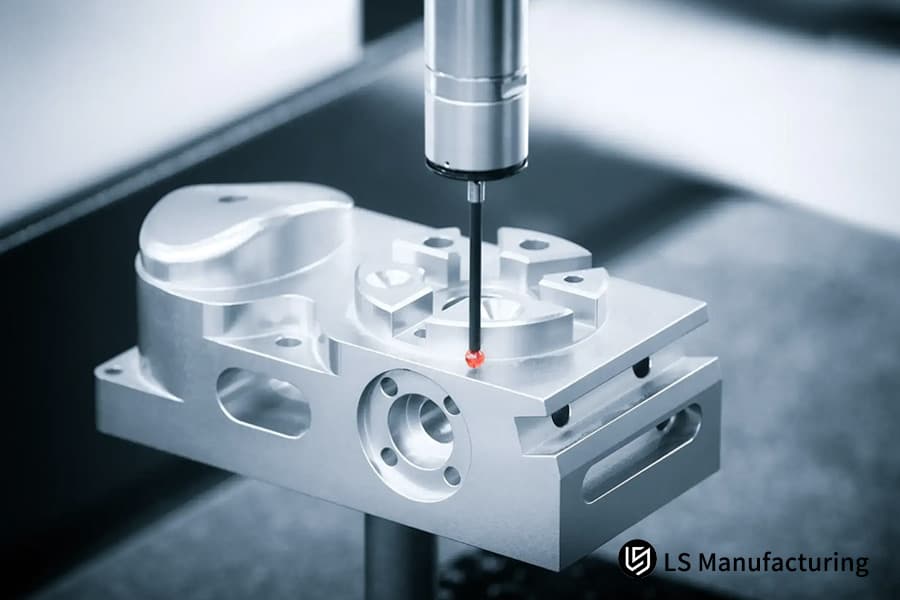
Figure 2: Measuring a grade 5 titanium workpiece with a probe for an ultra-light aerospace or medical component CNC machining services.
How Can DFM Optimization In Custom CNC machining Reduce Titanium Frame Costs?
The cost of titanium parts is not so much driven by the actual material costs of the titanium, but by the actual cost of machining this part. As such, proactive DFM optimization during the design phase is critical to cost control. This document will show how our proactive approach to design management can solve costly design issues and offer direct cost savings of 25-30% in machining time without sacrificing performance, giving the client a quantifiable competitive edge:
| DFM Challenge in Titanium Frame | Our Optimization Proposal | Direct Impact on Machining Cost |
| Sharp internal corners requiring extended CNC machining | Optimize internal fillet radii (R) to standard tool sizes. | Eliminates 30% of non-value-added tool-wearing "clean-out" times. |
| Deep, narrow pockets with high aspect ratios | Optimize wall depth/width ratio with strategic inclusion of draft angles. | Allows for effective CNC machining with short tools for more than 40% increase in metal removal rates. |
| Non-standard hole sizes and fastener geometries | Standardize to standard drill sizes, tap sizes, and unified fastener styles. | Improves tool efficiency and the entire CNC machining process. |
The above analysis clearly indicates that cost control starts with the digital part. Our expertise in CNC machining services provide valuable DFM optimization guidance for our clients based on part geometries, focusing on the key cost drivers of part production times and tooling. This enables our clients to obtain a more competitive quote for our CNC machining for titanium frames and move the conversation from the cost of parts to the value of the parts.
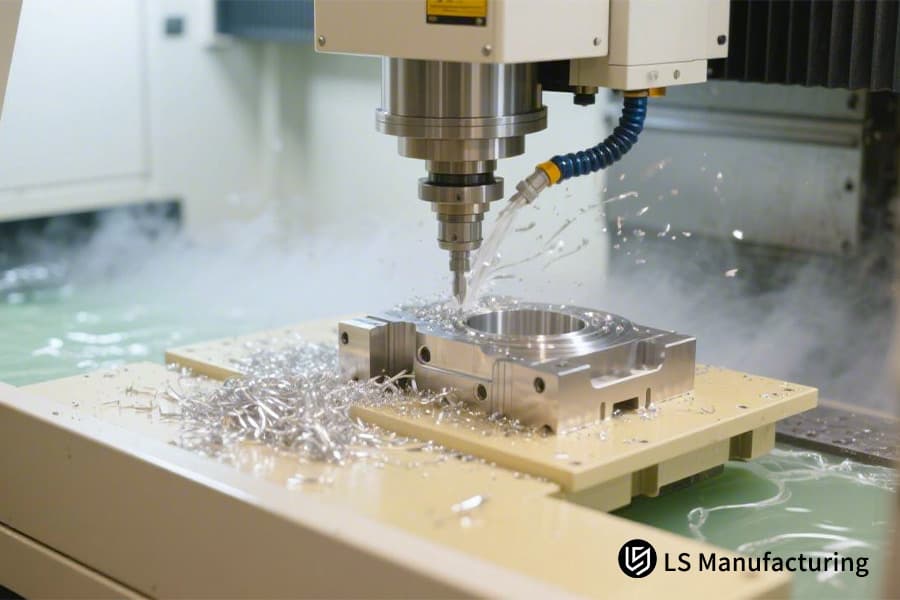
Figure 3: Machining a precision grade 5 titanium bracket with coolant for a lightweight aerospace assembly.
LS Manufacturing: Achieving 35% Weight Reduction In High-Strength Aerospace-Grade Titanium Drone Frames
The case study seeks to provide insight into the process followed by LS Manufacturing in order to provide a technological leap to a space start-up company's flagship product, a drone, where there has been a significant requirement to reduce the weight and increase the structural integrity of a ckey titanium alloy frame component for the "Central Fold Hub" of the drone, moving beyond the limitations of traditional custom processing to provide a solution that meets the requirements for flight:
Client Challenge
The client's "Central Fold Hub," made of aerospace-grade grade 5 titanium, was not surviving the dynamic forces of 10G. Not only was the traditional approach 150g overweight, coming in at 450g, but it also had implications for the payload and flight times of the drone prototype. However, the real challenge was that the design for machining the component was inefficient, resulting in an inefficient use of titanium and creating unknown stress points that were causing the component to fail.
LS Manufacturing Solution
We worked on the basic topology of the critical part and efficiently designed the lattice and lightweight CNC machined parts for maximum rigidity to weight ratio. The 5-axis CNC machining process has been utilized to efficiently machine this complex part in one setup, avoiding any misalignment and assembly stresses that could be a problem in other processes. The final process of vacuum stress relief has been utilized to ensure stability in the microstructure for extreme conditions.
Results and Value
The final assembly of the hub assembly resulted in a 35% weight reduction to 293g, and it was able to pass a 15G impact test, a 50% increase in safety margin. Our precision machining and rapid prototyping solution provided a 40% reduction in total lead time for the client, giving them a critical flight test window three weeks ahead of schedule.
The project exemplifies the importance of our capacity to solve intricate problems related to weight, strength, and time through a high degree of technical collaboration. At LS Manufacturing, we don’t simply manufacture parts; we deliver performance envelopes that enable innovators to push the boundaries of what is currently possible with today’s materials and engineered CNC machining technology.
Transform your design into flight-ready titanium frames that are 35% lighter and stronger with LS Manufacturing's Grade 5 CNC services.

Why Is 5-Axis CNC The Only Way To Achieve Contoured Surfaces And Max Weight Reduction For Titanium Frames?
For CNC machining for titanium frames that demand complex shapes and critical weight reduction, the limit of 3-axis machining has been reached. Topology-optimized shapes with organic forms and freeform surface finishes demand control of the cutting tool orientation. In this case, not only is 5-axis CNC machining desirable but also necessary. It enables the cutting tool to have optimal interaction with the workpiece, eliminates stress concentrations like witness lines, and ensures dimensional accuracy in a single setup, thereby addressing the fundamental issues of machining titanium parts:
Eliminating Stress Concentrators via Tool Vector Control
- Constant Normal Vector Machining: In this case, the cutting tool maintains a constant normal vector to the complex surface of the workpiece.
- Result: This eliminates stair-stepping cusps and scallops, which are common in 3-axis machining. This eliminates microscopic notches in the surface that lead to cracks in the workpiece due to cyclic stresses.
Achieving Uncompromised Spatial Accuracy in One Setup
- Single Setup Machining: More than 95% of all features are machined in a single setup.
- Benefit: It eliminates the buildup of error that occurs due to repeated re-clamping operations, thereby ensuring critical bore and interface position tolerances within ±0.025mm.
Precision Machining of Organic, Load-Optimized Geometries
- True 3D Contour Following: The ability to simultaneous CNC machining allows the cutting tool to follow complex lattice or aerodynamic surface topologies with high accuracy.
- Impact: This allows for the precise manufacturing of the most efficient and material-conserving geometries as predicted by advanced FEA analysis, which are impossible to produce using conventional 5-axis milling operations.
Synergizing Mass Reduction with Structural Integrity
- Strategic Internal Cavity Milling: This allows for the precise machining of complex internal cavities with optimized wall thickness profiles.
- Outcome: This allows for maximum weight reduction in non-structural material while maintaining and enhancing structural integrity in load paths as predicted by CAE analysis.
This analysis clearly proves that the only technology that can enable the next-generation titanium frame is indeed the 5-axis CNC machining process. We derive our technical authority from our proprietary process-centric methodology that considers the intricacies of tool path kinematics as the primary variable of engineering. We promise our clients a deterministic solution that can produce performance-critical and mass-optimized designs that are not only aerodynamically and structurally robust but also meet the most stringent requirements of the CNC machining application.
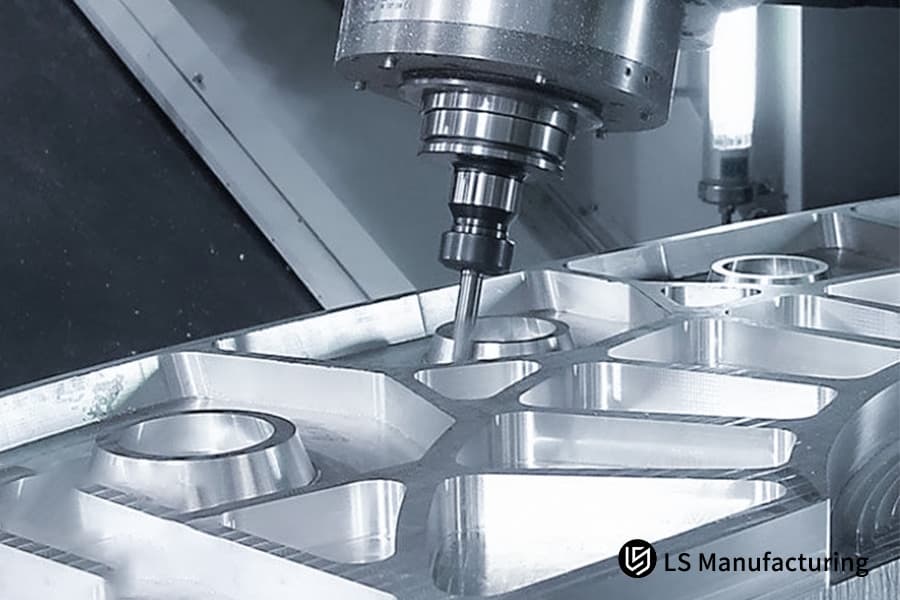
Figure 4: Machining a high-tolerance Ti-6Al-4V alloy housing for a satellite propulsion system component.
How Does LS Manufacturing Ensure Batch-To-Batch Consistency For Grade 5 Titanium Machined Parts Through Its SPC System?
The ultimate test of our technical authority for our B2B clients is our ability to provide consistent quality from the first article to the production batches. For the grade 5 titanium machining, the inherent variability of the titanium and the intricacies of the CNC machining services process are indeed the biggest quality risk factors for us. We will now reveal to the reader our SPC-based quality consistency methodology that dynamically links quality with the process so that the assembly line fit issues become a thing of the past:
| Control Pillar | Our Method & Metric | Outcome for Batch Production |
| Real-Time Process Capability Monitoring | Monitoring of Critical-to-Quality (CTQ) dimensions with Cpk > 1.33 as control limit. | Proactive process drift correction prevents non-conformances from occurring, providing statistical predictability. |
| In-Line Dimensional Verification | Automated on-machine probing and periodic CMM checks integrated within the CNC machining cycle. | 100% lot verification of critical features, providing a digital record of every batch, which enables closed-loop CNC machining. |
| Full Material and Process Traceability | Each component batch is associated with a mill certificate, heat treat log, and full CNC machining process report. | Complete pedigree available, which enables root cause analysis and meets extremely stringent aerospace/medical grade requirements. |
The system helps us address our key risk concern of our clients: variability in high-volume orders. Our solution: quality becomes a live, data-driven function of the precision CNC machining process itself, not a post-production audit. Our documentation and CNC machining services protocols provide evidence-based certainty necessary for high-value applications, ensuring that the first part and thousandth part are functionally identical, providing guaranteed interoperability.
What Are The Key Factors Influencing Real-Time Quotes For Grade 5 Titanium CNC Machining Services?
In order to achieve a fast, accurate, and transparent quotation analysis for grade 5 titanium CNC machining services, a thorough dissection of all factors affecting costs needs to be done. This document provides a clear price breakdown, going beyond mere estimates to reveal exactly how factors such as material markets and complexity affect pricing, as well as what we are doing about it to ensure our clients benefit from a cost optimization strategy:
Material Sourcing & Inventory Strategy
We reduce the price volatility associated with aerospace-grade titanium by utilizing long-term supplier agreements and strategic levels of stocked material, thereby removing quotes from short-term market price fluctuations. This directly relates to your CNC machining quote and provides a more stable and cost-effective material line item.
Precision Machining & Tooling Economics
The crux of price breakdown lies in time spent during machining and tool wear. This is optimized by employing high-efficiency CNC machining protocols, which utilize advanced toolpath strategies and specialized coatings to maximize material removal rate and tool life. This data-driven approach to the CNC machining process reduces non-value-added time, thereby directly affecting the cost of machining.
Design Complexity & Manufacturing Efficiency
The most important factor is part geometry, particularly the presence of deep cavities, close tolerances, and thin walls. Our quotation analysis provides immediate suggestions for DFM optimization, such as adjusting fillet radii or standardizing hole sizes, to simplify the precision CNC machining process and save 20-30% in cost without compromising performance.
Integrated Costing Model & Rapid Quotation
We utilize a proprietary costing model that considers all cnc cost factors: materials, machine time, tooling, and secondary operations such as heat treating. By asking for a complete data package (3d models, drawings, specifications), we can simultaneously consider these factors and provide a comprehensive quote that considers DFM suggestions in just 4 hours to help speed your decision process.
This process of quotation analysis methodology highlights the fact that true cost optimization happens only with proactive engineering and not just procurement. We offer a transparent and actionable price breakdown to clients that not only highlights the cost drivers but also provides solutions before the order is placed. This data-transparent approach to grade 5 titanium CNC machining services maximizes the value of every part that is manufactured.
As A Global Precision Manufacturer, How Does LS Manufacturing Protect IP And Ensure On-Time Delivery?
For high-value and proprietary parts, building the trust of clients happens around two non-negotiable pillars: the absolute security of intellectual property and the absolute guarantee of on-time delivery. This document will show the reader the systems and protocols that LS Manufacturing has put in place that turn these into not just promises but actual practices for our clients around the world:
Comprehensive Intellectual Property Safeguards
- Secure Data Handling: End-to-end encryption for all design files and communication.
- Controlled Physical Access: Proprietary projects run in a dedicated environment with access logged and monitored in our production cells.
- Legally-Binding Protocols: Execution of a Non-Disclosure and IP agreement is a requirement for initiating a project.
Transparent, Proactive Schedule Management
- Live Client Portal: Real-time order tracking with our integrated ERP from CNC machining to shipment.
- Predictive Logistics: Automated notifications for schedule changes and shipment tracking.
- Dedicated Program Management: Single point of contact for accountability and communication.
Certified Processes and Proven Partner Vetting
- ISO 9001:2015 Certified QMS: Governs all precision CNC machining quality processes.
- Rigorous Internal Audits: Supplier audit-level reviews of our internal processes and supply chain.
Uncompromising Commitment from Quote to Delivery
- Proactive DFM Planning: Early analysis to ensure reliable scheduling for complex parts.
- On-Time Delivery Guarantee: Backed by our integrated planning and advanced CNC machining control.
This framework shows that our delivery guarantee and intellectual property protection are built into the DNA of our operations. LS Manufacturing gives you the benefits of a real-time dashboard and the safety of a fortress, so that you can innovate freely and make plans with confidence, supported by a partner whose operations are built to de-risk your critical program risks.
FAQs
1. How does LS Manufacturing address the extremely high tooling costs associated with machining Grade 5 titanium?
By utilizing custom-developed coated carbide tools and optimizing the cutting paths, we are able to improve tool life by 30% compared to conventional methods. These cost savings are immediately reflected in the quotes we provide to our clients.
2. What is the minimum wall thickness LS Manufacturing can achieve for ultra-lightweight frames?
LS Manufacturing has successfully and consistently provided aerospace-grade titanium alloy components with a wall thickness of 0.4mm through completely automated 24/7 production operations.
3. Does LS Manufacturing accept small-batch custom orders?
Yes. LS Manufacturing has a dedicated prototyping division to cater to high-end custom orders ranging from 1 to 50 pieces. LS Manufacturing provides expert advice on the process to facilitate a smooth transition from prototyping to mass production.
4. How does LS Manufacturing ensure that the physical properties of titanium alloys are not compromised during the machining process?
LS Manufacturing carefully controls temperature increase and cutting forces during machining. Moreover, standard vacuum annealing procedures are implemented post-machining. This ensures that titanium alloy's tensile strength and yield strength are not compromised in any way.
5. Why do LS Manufacturing's quotes include DFM (Design for Manufacturability) recommendations?
Because LS Manufacturing wants to be your partner in technology. By intervening early in the process to ensure optimal design, we can eliminate inefficient machining processes, resulting in a total cost of ownership that’s more than 20% lower for you—right from the source.
6. Does LS Manufacturing offer surface finishing services for titanium alloy parts?
Yes, we provide a complete solution for all your needs with our one-stop service that includes anodizing, sandblasting, electroless nickel plating, and PVD coating for the enhancement of wear resistance or corrosion resistance of the frames.
7. How is LS Manufacturing's machining precision verified?
LS Manufacturing uses Hexagon Coordinate Measuring Machines (CMM) for 100% digital scan checking of critical dimensions for each and every batch of the machining process. Detailed quality inspection reports are provided as the official standard for final acceptance.
8. What materials are required to obtain a formal quote from LS Manufacturing?
You simply need to provide us with your 3D model files in STEP/STP format and the specifications in PDF format. We’ll take care of the rest for you within 4 hours!
Summary
The art of attaining the perfect balance in ultra-lightweight grade 5 titanium alloy frames requires not only sophisticated 5-axis cutting techniques, but also profound knowledge and understanding of the mechanical properties of the grade 5 titanium alloy. At LS Manufacturing, we have extensive experience in aerospace manufacturing, and with our micron-level precision in cutting parameters, your concepts are not only converted to reality, but also guarantee the perfect blend of aesthetics, strength, and ultra-lightweight performance.
Are you ready to overcome the hurdles in your lightweight design? Don't allow your lightweight design to be hindered by the complexities involved in the manufacturing process. Simply upload your 3D CAD files, and our team of experts will not only offer you a complimentary CNC machining DFM report and cost optimization checklist in just 4 hours, but will also help you overcome the hurdles in your lightweight design.
Achieve the perfect strength-to-weight ratio for your critical frame with LS Manufacturing's Grade 5 titanium CNC machining expertise.
📞Tel: +86 185 6675 9667
📧Email: [email protected]
🌐Website: https://lsrpf.com/
Disclaimer
The contents of this page are for informational purposes only. LS Manufacturing services There are no representations or warranties, express or implied, as to the accuracy, completeness or validity of the information. It should not be inferred that a third-party supplier or manufacturer will provide performance parameters, geometric tolerances, specific design characteristics, material quality and type or workmanship through the LS Manufacturing network. It's the buyer's responsibility. Require parts quotation Identify specific requirements for these sections.Please contact us for more information.
LS Manufacturing Team
LS Manufacturing is an industry-leading company. Focus on custom manufacturing solutions. We have over 20 years of experience with over 5,000 customers, and we focus on high precision CNC machining, Sheet metal manufacturing, 3D printing, Injection molding. Metal stamping,and other one-stop manufacturing services.
Our factory is equipped with over 100 state-of-the-art 5-axis machining centers, ISO 9001:2015 certified. We provide fast, efficient and high-quality manufacturing solutions to customers in more than 150 countries around the world. Whether it is small volume production or large-scale customization, we can meet your needs with the fastest delivery within 24 hours. choose LS Manufacturing. This means selection efficiency, quality and professionalism.
To learn more, visit our website:www.lsrpf.com.