English



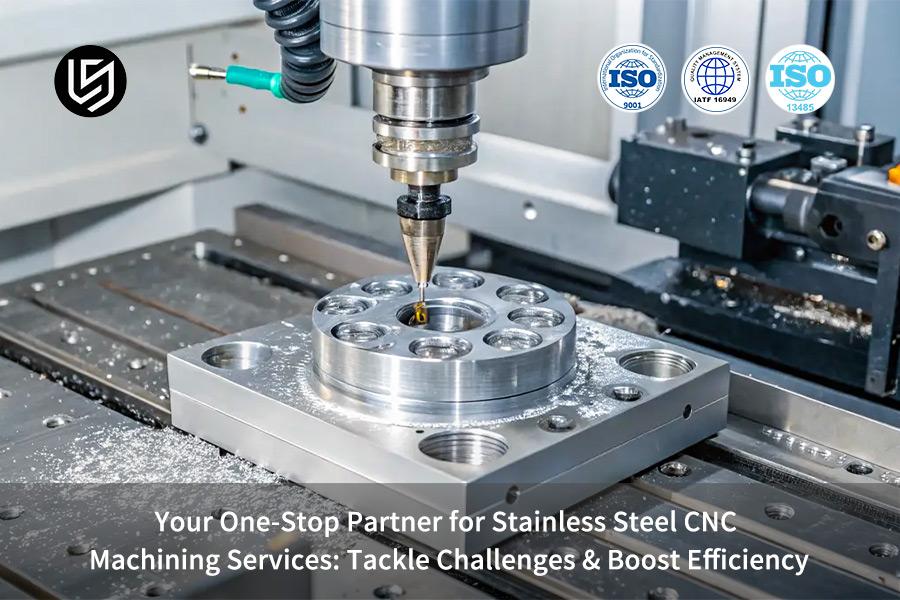
Stainless steel CNC machining services can come with unforeseen costs of delays and tool failures, as most shops incorrectly use carbon steel parameters on gummy, heat-sensitive stainless steel alloys. LS Manufacturing avoid such waste by utilizing a machining system designed for each material, proactively working with the properties of work hardening and thermal distortion to guarantee timely completion and cost-effectiveness.
We guarantee performance, not just tolerances. Our complete engineering process uses evidence-based solutions such as specially designed parameters for 17-4 PH H1150 (Vc=120m/min, fz=0.08mm/tooth) and cryogenic machining with in-process compensation to control stress and deliver results such as improving flatness from 0.2mm to within 0.05mm, guaranteeing corrosion resistance and perfect assembly.
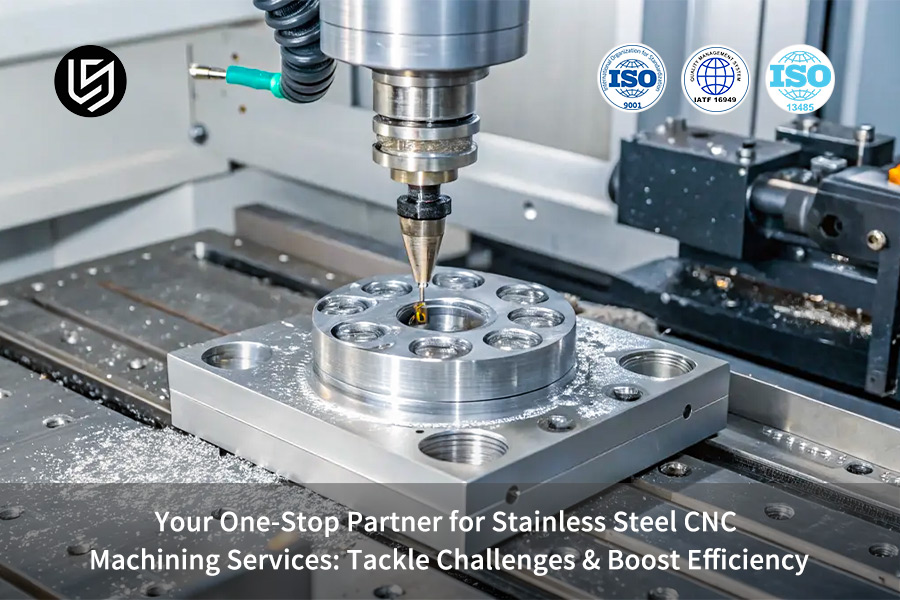
Stainless Steel CNC Machining: Key Considerations
| Critical Factor | Our Manufacturing Strategy |
| Work Hardening & Tool Wear | Stainless steel CNC machining parts are known to rapidly harden under cutting forces; we utilize specialized geometries that are always sharp, rigid setup systems, and constant feed rates to combat heat and wear. |
| Chip Control & Evacuation | Stringy chips can re-cut the surface of a part during machining; we utilize high-pressure coolant systems and chip breaking tooling to ensure efficient chip removal. |
| Thermal Distortion Control | Thermal stress can warp thin sections during machining; we utilize balanced roughing systems to combat heat-related warpage. |
| Surface Finish Integrity | Stainless steel parts require precise surface finish to meet specifications; we avoid "built-up edges" through proper speeds/feeds, coatings, and sometimes specialized finishing processes. |
| Material Grade Selection | We assist in determining which stainless steel grade to use: 303 (free-machining), 304/316 (corrosion-resistant), or 17-4 PH (precipitation hardening). |
| Our Process-Optimized Approach | We utilize high-torque and high-rigidity machines that are designed to work well with coolant-through tooling systems and have been optimized to machine all stainless steel grades. |
| Result: Dimensional Stability | Delivers parts that hold precise dimensions and have accurate geometric integrity without warpage caused by stress/heat. |
| Result: Corrosion & Wear Resistance | To guarantee that the machined piece possesses full corrosion and wear resistance as defined by material specifications. |
We help you overcome unique stainless steel CNC machining challenges such as work hardening, heat control, and obtaining high-quality finishes. With our expertise, you can count on machined parts that are dimensionally stable, corrosion-resistant, and meet precise specifications for high-performance applications in industries such as medicine and food processing.
Why Trust This Guide? Practical Experience From LS Manufacturing Experts
While many claim to be stainless steel machining specialists, only those who have done it can say they really know it. We have tamed the difficulties of working with 304 and 17-4PH stainless steel alloys, such as their "gumminess," heat sensitivity, and work hardening tendencies. We have used this practical, real-world know-how to develop a one-stop-shop that will prevent your project from experiencing common pitfalls of delays and cost overruns.
We address key inefficiencies through a structured approach, utilizing specific cutting parameters, strategic cooling techniques, and in-process compensation. This methodology, which is in line with strict industry guidelines such as those set by SAE International, enables us to control thermal distortion and tool wear. The outcome is a predictable process, optimal surface quality, and a substantial increase in your overall efficiency.
Working with us means working with an engineering team that controls the entire process from material to performance. We utilize accurate and proven processes, as defined by industry models such as those set by the Aluminium Association (AAC), to ensure that each and every thread and tolerance is designed for maximum reliability. It is through this kind of control that we do not simply manufacture components; we manufacture certainty, and your stainless steel difficulties become your strengths.
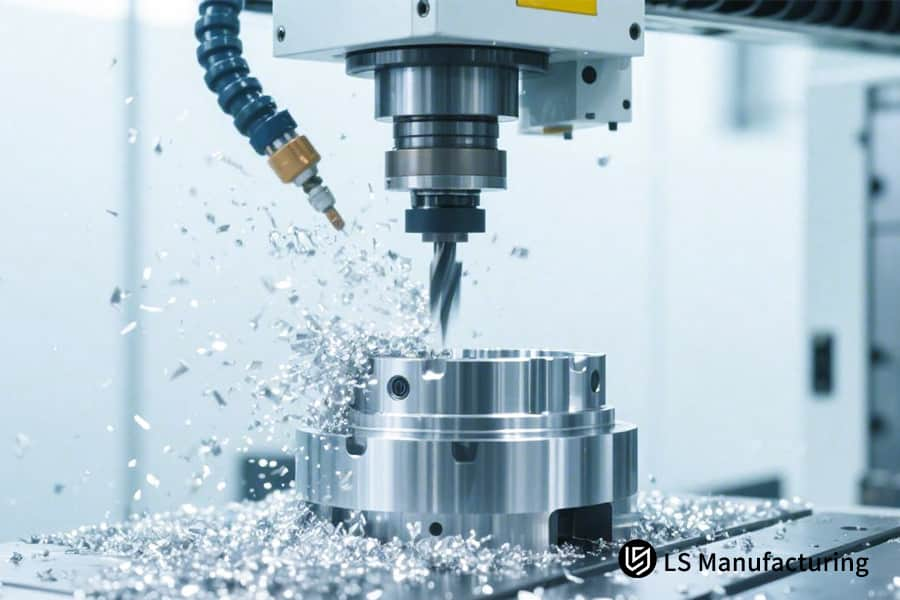
Figure 1: Efficiently machining high-precision stainless steel cylindrical components for custom industrial fabrication services.
How To Maximize Material Removal Rates By Optimizing Stainless Steel CNC Machining Strategies?
To achieve high efficiency CNC machining in stainless steel materials, a paradigm shift is needed from merely increasing the speed of machining to the intelligent management of the machining load and heat. Aggressive removal of materials is often prevented by high heat buildup, wear, and distortion. We propose a systematic roughing strategy optimization in such a way that it balances cutting force and heat dissipation:
High-Pressure Coolant with Trochoidal Milling
We use systems of coolant of more than 70 bar and trochoidal tool paths. This enables us to create a small radial cut and then go axially to create a full depth cut. We use high-pressure coolants that reach the cutting zone to break down chips, cool instantly, and stop re-cutting. This process ensures that we avoid any work hardening that might result in thermal stress. This enables us to increase feed rates and tool life by over 30%. This is the principle behind our reliable stainless steel CNC machining services.
Zonal Parameter Allocation Based on Part Geometry
machine a complex part can cause it to vibrate in weak points and waste potential in rigid points. Our CAM programming system enables us to zone a part. This way, we can maximize our parameters in rigid points of a component to achieve optimal high efficiency CNC machining. In addition, we can minimize feed rates and speeds in weak points of a component through our system to avoid chatter. This ensures stability in the CNC machining process.
Dynamic Feed Control for Load Consistency
Among the key factors for tool failure is the sudden change in load caused by tool engagement and cornering. For our system, we have used material-specific force models for dynamic variation of federate. By this "intelligent control," it is possible to maintain a constant chip load. This eliminates the shock condition for tool failure by chipping and vibration. It is therefore possible for us to achieve high-speed CNC machining of hard alloys such as 316L.
This level of knowledge reflects the depth of engineering and not the generality of capability. With this level of knowledge, we can promise a guarantee of 25-40% efficiency improvement for any process involving the machining of 316L through optimization of tool path strategy for roughing operations. It is this systematic approach for roughing strategy optimization that makes us different from others and turns the problem of machining stainless steel into an answer for cost-effectiveness.

How Can Professional Stainless Steel CNC Machining Services More Than Double Tool Life?
One of the key contributors to costs and inconsistencies in the processing of stainless steel is the unpredictable nature of tool wear. However, it is not just a matter of utilizing the best tools available. In order for tool life extension to be consistently achieved, a systematic approach must be taken so that tooling can be accurately matched against the behavior of the specific CNC machining material. This allows tooling to get beyond the unpredictable nature of tooling and make it an optimized tooling asset:
Application of Material-Specific Tool Technology
- Advanced Coating Selection: Leveraging specialized tooling for stainless steel processing that incorporates AlCrN and TiAlN coatings for reduced adhesions and thermal issues.
- Optimized Tool Geometry: Leveraging tooling for the processing of stainless steel materials that incorporates a strengthened core and polished flutes for enhanced chip removal and tool edge retention during CNC machining for stainless steel parts.
Implementation of Validated, Data-Driven Cutting Parameters
- Material-Specific Parameter Sets: Utilizing existing cutting parameter sets that have been validated for specific materials, e.g., 17-4 PH H900: Vc = 100 m/min; fz = 0.05 mm for optimal cutting conditions and minimizing stress.
- Process Stability Focus: The process parameterization is aimed at ensuring that heat buildup and tool failure as a result of stress do not occur, as they are key causes of tool failure. We therefore ensure optimized CNC machining services.
Enforcement of a Proactive Tool Management Protocol
- Preventive Replacement Strategy: Tools are replaced based on spindle load and time spent cutting, as opposed to waiting for tool failure. We therefore preserve the work pieces.
- Consistent Output Guarantee: We achieve this in ensuring quality of work pieces and consistency in production for high-volume precision CNC machining services.
This framework provides an outline of a structured approach to an engineering discipline. Using tools and technology designed for the job, coupled with empirical data and management strategies, we are able to extend tool life by 50-100%. A structured approach to tool life extension is an integral part of our value-driven approach to CNC machining services.
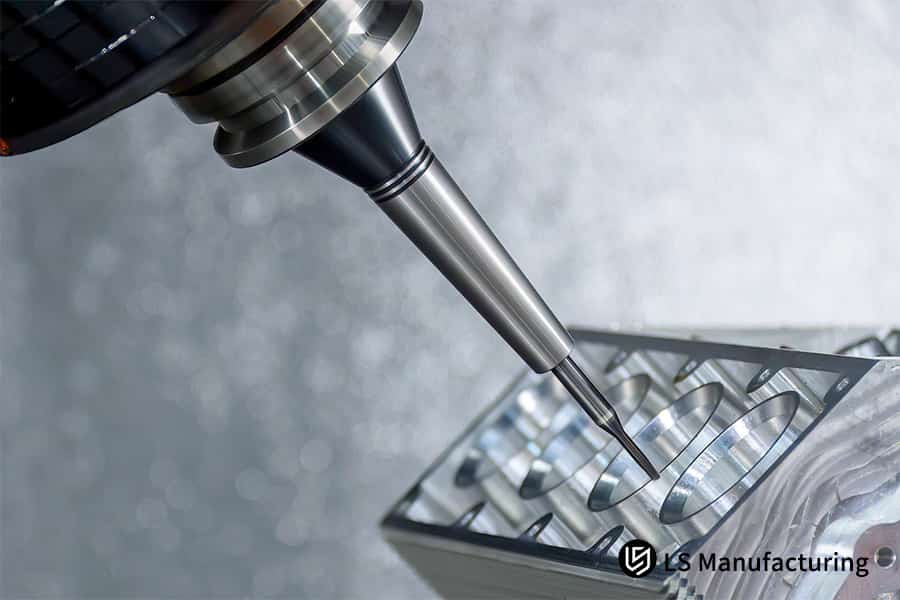
Figure 2: Precision CNC machining services high-tolerance stainless steel for industrial machinery and equipment manufacturing.
How Do Precision Stainless Steel CNC Machining Services Control Part Deformation And Ensure Dimensional Stability?
To achieve micron-level accuracy in complex stainless steel parts, we take a forward-thinking approach to counter internal stresses and deformation during machining. The following methodology describes our approach to systematically control the entire manufacturing lifecycle for dimensional integrity:
Pre-Processing Stress Simulation and Path Optimization
Finite Element Analysis (FEA) simulates the stress redistribution during the material removal process. This virtual prototyping guides us in developing optimum tool path strategies such as symmetric and balanced CNC milling operations, thus reducing the imbalance in latent stress. In the case of a large thin-walled vessel, such pre-emptive simulation reduced the post-machining spring-back by over 40%, thus providing a stable platform for all subsequent precision stainless steel CNC machining steps.
Multi-Stage Machining with Strategic Stress Relief
The machining sequence of multi-stage machining involves a series of steps: rough CNC machining, stress relief by methods such as vibration aging, semi-finishing, natural aging, and finally finishing. This staggering of machining operations ensures that the internal stresses are relieved in a controlled manner, thus preventing any distortion in the parts. This protocol is essential for distortion control for stainless parts like long structural beams, where it maintains straightness within ±0.05mm.
In-Process Metrology and Adaptive Compensation
Before the final finishing, an on-machine probe is used to measure the critical features. A comparison is then made to the CAD model, and a compensated tool path is automatically generated. This is a closed-loop in-process measurement and compensation. Up to 70% of the predicted error can be corrected, enabling the achievement of tight flatness and position tolerances for large fixtures during the CNC turning of the final passes.
This three-pillar methodology is a structured approach that goes beyond conventional machining. It is a direct management of the entire stress deformation lifecycle. Clients are offered a first-pass success for mission-critical parts. This is a direct result of our deep process knowledge. This is the definitive differentiator for applications where nominal dimensions are insufficient and where guaranteed accuracy is a necessity.
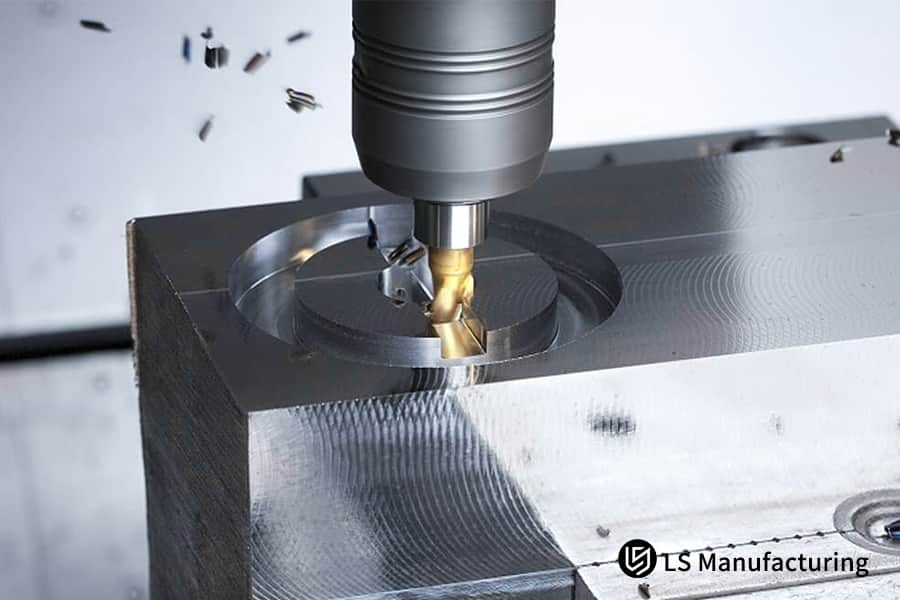
Figure 3: Cutting high-precision stainless steel parts with CNC machining for industrial manufacturing services.
How Do One-Stop CNC Machining Services Address The Unique Machinability Of Different Stainless Steel Alloys?
Effective stainless steel alloy CNC machining requires specific strategies based on the metallurgical properties of each material. This document provides a list of basic material-specific machining parameters and techniques for efficient processing of major grades of stainless steel alloys. This document is a critical technical guide for mitigating processing risks and ensuring reliable processing results in precision CNC machining operations.
| Alloy Type / Common Grades | Key Machinability Challenge | Primary Countermeasure in CNC Machining | Typical Parameter Adjustment (Example) | Essential Tooling Consideration |
| Austenitic (e.g., 304, 316) | High work hardening and gummy chips causing built-up edge. | Employ high-pressure coolant and sharp, positive-rake tools to fracture long chips. | Use higher feed rates (>0.15 mm/rev) to cut ahead of the work-hardened layer. | Uncoated or TiN-coated carbide with polished flutes. |
| Martensitic & Precipitation-Hardening (e.g., 440C, 17-4 PH) | High hardness and abrasiveness causing tool wear. | System rigidity and use of low speeds with medium feeds. | Decrease the CNC machining cutting speed (e.g., 60 to 90 m/min for annealed 17-4 PH) to manage tool wear and heat generation. | Rigid tooling (e.g., hydraulic tooling) and wear-resistant tooling (e.g., CBN tooling) for hardened conditions. |
| Duplex (e.g., 2205) | High strength and toughness causing high cutting forces. | Balancing the factors to manage the high cutting forces without generating excessive heat, thereby altering the microstructure of the metal. | Medium cutting speed with reduced depth of cut to effectively manage the mechanical forces. | Rigid tooling with good geometry and hot hardness (e.g., AlCrN). |
Differentiation in the machining process in relation to alloys is of prime importance for the predictability of tools, cost control, and quality. The technical expertise in CNC machining for different grades of alloys will enable clients to enjoy the benefits of validated machining protocols for their projects, eliminating trial and error. The technical expertise in CNC machining services will enable us to achieve quality and efficiency in high-value projects, making this document a definitive guide for competitive advanced CNC machining scenarios.
How Does System Certification Ensure End-To-End Quality And Traceability In CNC Machining Services?
For mission-critical industries, component reliability is not up for argument and is supported by a process-based system that is certified. This document will outline how a strong CNC machining services quality system goes beyond mere compliance requirements and is able to effectively manage risks, deliver total material traceability, and demonstrate auditable evidence of control. The methodology used is discussed in detail in the following sections:
Foundational Certification: The Framework for Control
- Mandatory Baseline: Implementation of the ISO 9001 standard creates the process discipline and improvement process necessary for all precision CNC machining.
- Sector-Specific Rigor: Adherence to the ISO 13485 for medical machining requires stringent design controls, process validation, and risk management activities, which directly supports client submissions.
Ensuring Unbroken Material and Process Traceability
- Chain of Custody: Establishing a direct link between each batch of finished parts and the original Mill Test Certificate (MTC) for the raw material alloy used.
- Process Documentation: Capturing tool wear, inspection results, and machine parameters for each job, allowing for precise historical analysis and accountability.
Controlled Post-Processing for Performance
- Validated Cleaning: Performing cleaning operations, with cleaning procedures qualified for industry cleanliness standards (e.g., aerospace, medical components).
- Verified Passivation: Performing and auditing nitric or citric acid passivation procedures, ensuring the optimal chromium oxide layer for corrosion resistance per ASTM A967.
This structured methodology translates into verifiable action, offering clients a defendable technical position in audit situations. Our integrated CNC machining services quality system helps clients avoid supply chain risks by ensuring each CNC machined component is fully documented and traceable. It provides clients with evidence-based compliance and component consistency necessary for competitive quality manufacturing, and it is the foundation of our technical CNC machining partnership for quality-critical applications.
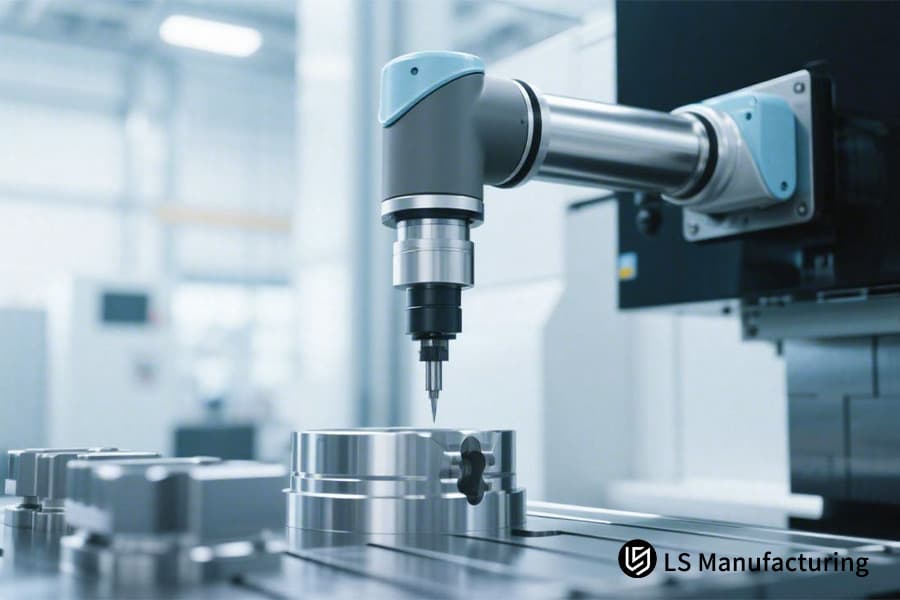
Figure 4: Operating high-efficiency CNC equipment for custom stainless steel components in precision industrial applications.
LS Manufacturing: High-Efficiency Precision Project For Large Stainless Steel Mixing Tanks
This case study will highlight how LS Manufacturing was able to deliver a definitive one-stop solution case study for a well-known food equipment manufacturer in dire need of critical manufacturing solutions. We were able to solve the primary issue of large stainless steel vessel machining by using integrated advanced CNC machining and finishing techniques. The project explanation is as follows:
Client Challenge
The client needed several large and complex 316L stainless steel mixing vessels for their application, which included internal ribs and nozzles. The previous supplier was unable to consistently deliver on the critical internal surface finish of Ra < 0.8μm, which is a hygiene requirement. Additionally, low CNC machining efficiency and high post-weld distortions were causing longer lead times for this project.
LS Manufacturing Solution
Our integrated machining service commenced with kinetic simulation to optimize the tool path. A high-efficiency milling approach was used for the internal volume. High-pressure coolant (120 bar) is employed to deal with the temperature and chips. A fine finishing 'mirror' tool path is programmed for the critical sanitary surfaces. All the weld preparations are precision 5-axis CNC machining. Then, automated electropolishing and passivation are carried out to ensure a pristine finish.
Results and Value
Project results included a 30% improvement in the efficiency of the machining. In addition, the quality of the internal surface finish is now consistently better than before. It is now at Ra.0.6μm. It is now possible to have a 50% reduction in the distortion of the component after the weld. It ensures first-time-fit assembly. Quantifiable results have enabled the client to attain the necessary industry certifications. LS Manufacturing is now established as the strategic single-source supplier for these vital components.
This LS Manufacturing food machinery case demonstrates the considerable benefits of matching process engineering with execution. By providing a comprehensive CNC service that offered quantifiable improvements in quality, speed, and reliability, we have overcome a key production bottleneck. Our approach is vital for companies facing critical intricate processes where engineering precision is a key factor for commercial success.

How Do Custom Stainless Steel CNC Machining Services Integrate The Supply Chain To Achieve Rapid Delivery?
To deliver custom stainless steel CNC machining solutions in a timely manner, businesses need to do more than simply offer high spindle speeds; they need to offer a fundamentally integrated manufacturing system. This document illustrates how effective supply chain integration transforms individual machining operations into a seamless system of accelerated productivity. The following analysis identifies the primary operational strategies that allow fast turnaround machining services and regular schedule compression:
| Integration Strategy | Core Action | Direct Benefit & Quantifiable Outcome |
| Strategic Raw Material Inventory | Having stocked levels of standard stainless steel alloys (e.g., 304, 316) in standard forms (rounds, plates). | Removes the lead time from the procurement phase; minimizes the material sourcing phase by 3-7 days, allowing immediate start of precision CNC machining. |
| Internalized Process Chain | Having our own control of the CNC machining, stress relieving, welding, and finishing processes (passivation, electropolishing). | Removal of time delays caused by external vendors; reduces time between processes by over 50%. |
| Digital Project Management & Visibility | Allowing our clients to have access to our project status information online in real-time, tracking the project from receipt of material to final inspection and shipping. | Allows us to proactively mitigate delays; increases the probability of delivering our project on time. |
Through the elimination of the traditional supply chain delays and information deficiencies, we can directly address our client’s main concern: project schedule uncertainty. Agile CNC manufacturing enables us to convert our theoretical speed into a hard outcome of reduced lead time. This technology framework is essential in high-value projects where time-to-market is a major factor in the competitive environment. It offers a definitive competitive edge in delivering reliable high-end CNC machining applications.
Why Is LS Manufacturing's One-Stop Service The Essential Choice For Complex Stainless Steel Parts Projects?
For intricate high-value parts, success in a project depends on a smooth integration of material science, advanced processing techniques, and stringent controls. This gives a clear definition of why choose LS Manufacturing: as your one-stop stainless steel machining partner, we are a total solution provider that assumes responsibility for the entire process to ensure validated results. Our closed-loop engineering process offers a guarantee:
Application-Driven Reverse Engineering
Firstly, we engage in a process of reverse engineering based on the environment that part is to be placed in – stress, corrosion, etc., and determine what properties are required in that specific environment. This process determines what alloying process and advanced stainless steel CNC machining are required to ensure that the part can perform at an ultimate level instead of merely meeting specifications.
Integrated Process Control for Guaranteed Outcomes
The post-machining activities, such as welding, are internalized rather than outsourced. This enables our company to dictate and control the sequence of the process, such as a passivation process per ASTM A967, which ensures the outcome of the process without the risk of incompatibility with different suppliers.
Total Cost of Ownership (TCO) Optimization
The entire process is simulated to avoid any hidden costs in the process, such as distortion caused by aggressive machining methods. This process is integrated into our company’s project pricing model, which converts the variable costs of dealing with different suppliers into a fixed investment in precision stainless steel CNC machining.
Our company resolves the fundamental disconnects between design, material, and process that plague complex projects. Our company is a true solution provider, and we guarantee success by owning the entire value chain. Such comprehensive stainless steel CNC machining expertise is what sets the leaders apart when performance, schedule, and cost cannot be left to chance.
FAQs
1. How does the pricing for stainless steel CNC machining differ from that of standard steel machining?
Although the cost of stainless steel machining by a CNC machine is higher than the cost of machining standard steel by a CNC machine per unit, the primary factor for this cost difference is the time required for machining the material due to the careful cutting strategy used for machining stainless steel. Additionally, the cost of tools may also differ.
2. Which grades of stainless steel can you machine? What level of precision can you achieve?
We work with all grades of stainless steel, including 304/316 series, 17-4PH, 440C, etc. We provide precision up to an accuracy of ±0.025mm, geometric accuracy up to 0.05mm, and surface smoothness up to Ra 0.8 microns and finer based on the material and geometry of the parts.
3. How do you ensure that the corrosion resistance of stainless steel parts is not compromised after machining?
We ensure and enhance the corrosion resistance of stainless steel components by closely monitoring and managing heat input during cutting operations, using special cutting fluids, and applying conventional post-machining passivation treatments in accordance with ASTM A967. Passivation inspection reports can be made available upon request.
4. Do you offer a complete service package ranging from machining to welding and surface finishing?
Yes, this is the essence of our one-stop-shop concept. We offer a full range of services from CNC machining through TIG welding, stress relieving, sandblasting, electropolishing, and passivation, etc.
5. What is the Minimum Order Quantity (MOQ)? Do you support prototyping?
We can handle both single piece prototyping and small batch production with an MOQ of only one piece. We strongly encourage prototyping as a best practice for design and manufacturing process validation, hence effectively managing project risks.
6. Can you handle parts that require specialized surface finishes, such as mirror polishing or plating?
Yes, we can handle parts that require special surface treatments such as mirror polishing and plating. We have specialized surface treatment capabilities for mirror polishing and electroplating, either in-house or through our certified high-quality partner network. We have full quality control for the entire process as part of our one-stop solution for customers.
7. How do you ensure quality consistency for parts during mass production?
We guarantee quality consistency for parts during mass production through a multi-layered quality assurance system that includes standardized process control sheets, statistical process control (SPC) monitoring of critical dimensions, first-article inspection, and batch inspection. We have various certifications such as ISO 9001 for effective quality management system operations.
8. How do I start a new project and obtain a detailed quotation?
Please provide your 3D models (STEP) and 2D drawings (PDF), including material grade, heat treatment status, quantity, material characteristics, and tolerances. We will then carry out a manufacturability analysis and provide a transparent quotation within 4 hours.
Summary
In the field of stainless steel CNC machining, what is meant by "one-stop partner" is not a list of equipment, but rather a high level of engineering expertise. It is about turning material challenges such as thermal deformation and work hardening into a predictable, efficient, and traceable system of manufacture. It is about turning the risks and uncertainties of your project into a guarantee of success.
For your next demanding stainless steel CNC machining project, send us your drawings of the parts you need machined. In return, our Application Engineering group at LS Manufacturing will provide you with a detailed "Project Strategy Briefing" document within 4 hours, including material and process feasibility analysis, identified efficiency improvements, and preliminary manufacturing cost simulation.
📞Tel: +86 185 6675 9667
📧Email: info@longshengmfg.com
🌐Website:https://lsrpf.com/
Disclaimer
The contents of this page are for informational purposes only. LS Manufacturing services There are no representations or warranties, express or implied, as to the accuracy, completeness or validity of the information. It should not be inferred that a third-party supplier or manufacturer will provide performance parameters, geometric tolerances, specific design characteristics, material quality and type or workmanship through the LS Manufacturing network. It's the buyer's responsibility. Require parts quotation Identify specific requirements for these sections.Please contact us for more information.
LS Manufacturing Team
LS Manufacturing is an industry-leading company. Focus on custom manufacturing solutions. We have over 20 years of experience with over 5,000 customers, and we focus on high precision CNC machining, Sheet metal manufacturing, 3D printing, Injection molding. Metal stamping,and other one-stop manufacturing services.
Our factory is equipped with over 100 state-of-the-art 5-axis machining centers, ISO 9001:2015 certified. We provide fast, efficient and high-quality manufacturing solutions to customers in more than 150 countries around the world. Whether it is small volume production or large-scale customization, we can meet your needs with the fastest delivery within 24 hours. choose LS Manufacturing. This means selection efficiency, quality and professionalism.
To learn more, visit our website:www.lsrpf.com.